Introduction
In today’s busy digital world, just posting content on every social platform won’t work anymore. Your business deserves better than scattered efforts and wasted resources. A smart strategy for choosing platforms and planning content helps brands thrive online. Meanwhile, others just survive.
Think of your social media presence like a garden. You wouldn’t plant tropical flowers in Arctic soil, would you? Similarly, your brand needs the right environment to flourish. This guide will help you pick the best platforms for your audience and make content that resonates.
Understanding the Foundation: Why Platform Selection Matters
Every social platform has its own ecosystem. Instagram users scroll for visual inspiration during their morning coffee. LinkedIn professionals hunt for industry insights between meetings. TikTok viewers crave entertainment and authenticity during their downtime. Trying to be everywhere simultaneously drains your budget, burns out your team, and dilutes your message.
Brands that do well on a few platforms often do better than those with weak presences on many channels. Quality beats quantity every single time. The secret lies in strategic selection rather than blind coverage.
Decoding Platform Demographics: Where Does Your Audience Live?
Before starting any social media plan, you need clear answers to one key question: where does your target audience spend their time?
The Platform Landscape in 2025
Different platforms attract distinct demographic groups and serve unique purposes:
Facebook remains the broadest-reaching network, particularly effective for reaching audiences over 30. With smart advertising tools and features for building communities, it shines at managing customer relationships. It also targets users based on age, location, interests, and spending habits.
Instagram leads in visual content. It draws in younger users seeking aesthetic inspiration, behind-the-scenes looks, and authentic stories through images, Reels, and Stories.
LinkedIn stands unmatched for business-to-business marketing. Professionals gather here seeking industry expertise, thought leadership, and networking opportunities. Studies indicate that 80% of B2B leads originate from LinkedIn, making it indispensable for companies targeting other businesses.
TikTok captures Generation Z’s attention with short-form video content. This content emphasizes creativity, trends, and entertainment. Brands willing to embrace authentic, less-polished content find remarkable engagement here.
Pinterest functions as a visual search engine where users discover ideas, plan projects, and seek inspiration. It performs exceptionally well for lifestyle brands, DIY content, recipes, and design-focused businesses.
Twitter (X) facilitates real-time conversations, news sharing, and customer service interactions. Its fast-paced environment suits brands that are comfortable with frequent posting and immediate engagement.
The Strategic Selection Framework: Matching Platforms to Goals
Choosing platforms shouldn’t be guesswork. Follow this systematic approach to identify where your brand belongs:
Step 1: Define Your Business Objectives
What outcomes do you actually want from social media? Be specific. “Increasing brand awareness” means something entirely different from “driving direct sales” or “establishing thought leadership.”
Your objectives determine platform suitability. Launching a new product? Instagram and TikTok excel at generating buzz. Building B2B relationships? LinkedIn delivers unmatched professional networking. Driving website traffic? Pinterest and Facebook offer robust conversion pathways.
Step 2: Research Your Audience Thoroughly
Go beyond surface-level demographics. Develop detailed customer personas, including their pain points, interests, online behaviors, and preferred content consumption patterns.
Where do they seek solutions to their problems? What time of day are they scrolling? Do they prefer educational content, entertainment, or inspiration? These insights guide not just platform selection but content creation too.
Step 3: Analyze Your Content Capabilities
Honestly assess what content formats your team can consistently produce. Video-heavy platforms like TikTok and YouTube demand different resources than image-focused Instagram or text-based LinkedIn.
Match your content strengths to platform requirements. A company with strong written expertise might thrive on LinkedIn publishing articles. Brands with visual products naturally fit Instagram and Pinterest. Service businesses explaining complex concepts could leverage YouTube tutorials.
Step 4: Evaluate Competitor Presence
Examine where your competitors maintain active, engaging presences. This doesn’t mean copying their strategy, but understanding the competitive landscape informs your positioning.
Identify gaps in competitor content that you can fill. Perhaps they dominate Instagram but ignore LinkedIn, creating an opportunity for you to capture professional audiences.
Step 5: Start Small and Scale Strategically
Begin with one or two platforms where you can truly excel. Master them before expanding. This focused approach helps you refine your voice, see what works, and create lasting processes.
Once you have good quality and engagement on your first platforms, consider expanding wisely. Use performance data and business growth to guide your decision.
Content Planning: The Blueprint for Consistent Engagement
Platform selection sets the stage. Content planning delivers the performance. Without a solid plan, even the best platforms fall apart due to inconsistency and hurried fixes.
Building Your Content Pillars
Content pillars are the three to five core themes around which all your social content revolves. They ensure variety while maintaining focus and brand coherence.
For example, a fitness brand might establish pillars like
- Educational: Workout tips and nutritional advice
- Motivational: Success stories and inspirational quotes
- Community: User-generated content and challenges
- Promotional: Product launches and special offers
- Behind-the-scenes: Team culture and brand values
Pillars prevent repetitive content while ensuring every post serves a strategic purpose aligned with business goals.
Creating Your Social Media Calendar
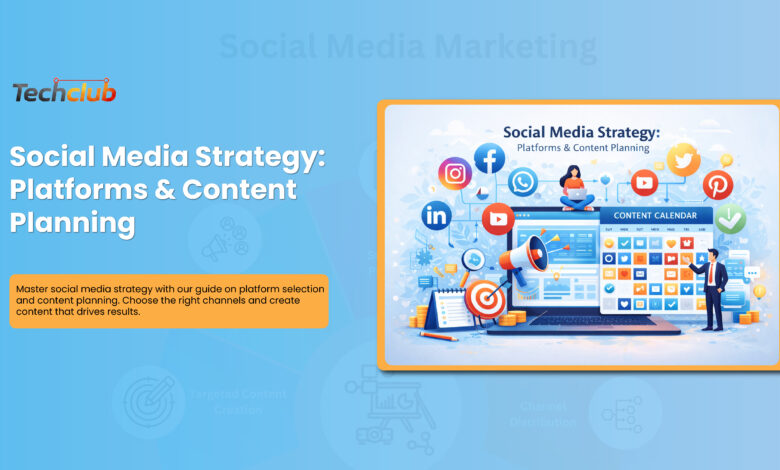
A content calendar transforms vague intentions into concrete execution plans. It answers the fundamental questions: what, when, where, and why you’re posting.
Essential Calendar Components:
Platform specification: Clearly identify which network receives each piece of content. Different platforms require different approaches, and your calendar should reflect these nuances.
Content type: Note whether you’re publishing images, videos, carousel posts, Stories, articles, or user-generated content. This helps balance formats and maintain visual variety.
Copy and creative assets: Draft captions and headlines and identify required visuals. Preparing these elements in advance prevents rushed, substandard content.
Publishing schedule: Determine optimal posting times based on when your specific audience is most active. Research shows engagement rates vary dramatically by day and hour.
Campaign alignment: Connect individual posts to larger marketing initiatives, product launches, or seasonal campaigns, ensuring cohesive messaging.
Performance tracking: Designate space for recording engagement metrics, allowing you to identify top-performing content types and refine future strategy.
Balancing Content Types: The 70-20-10 Rule
Avoid falling into promotional content traps. The 70-20-10 framework provides healthy content balance:
- 70% Educational/Entertaining: Value-driven content addressing audience interests, solving problems, or providing entertainment
- 20% Shared Content: Curated industry news, user-generated content, and relevant third-party materials
- 10% Promotional: Direct product promotions, sales announcements, and calls-to-action
This distribution builds trust and engagement before asking for anything in return, establishing your brand as a valuable resource rather than just another advertiser.
Developing Platform-Specific Content Strategies
Generic, copy-paste content across platforms wastes opportunities. Each network has unique best practices and user expectations requiring tailored approaches.
Instagram Strategy
Instagram users expect high-quality visuals and authentic storytelling. Leverage multiple content formats:
Feed posts showcase polished brand imagery and professional photography. Stories offer behind-the-scenes glimpses and time-sensitive updates. Reels capitalize on trending audio and creative video editing. IGTV hosts longer-form content like tutorials or interviews.
Post consistently, aiming for two to three feed posts weekly supplemented by daily Stories. Use relevant hashtags strategically—research indicates four to five targeted hashtags outperform hashtag stuffing.
LinkedIn Strategy
LinkedIn audiences crave professional insights and industry expertise. Share thought leadership articles, data-driven analysis, and career development resources.
Maintain a professional yet approachable tone. Long-form posts sharing genuine experiences or lessons learned often generate significant engagement. Publish one to two times weekly, with consistency valued over frequency.
Participate in relevant LinkedIn groups and engage thoughtfully on others’ content to expand your network organically.
TikTok Strategy
TikTok rewards creativity, authenticity, and trend participation. Polished, corporate content typically underperforms compared to genuine, personality-driven videos.
Jump on trending sounds and challenges while adding your unique brand perspective. Post frequently—successful brands publish daily or multiple times daily to maintain visibility in the algorithm.
Keep videos concise, entertaining, and immediately engaging. The first three seconds determine whether viewers keep watching or scroll past.
Facebook Strategy
Facebook’s mature audience appreciates community-building and comprehensive content. Mix text posts, images, videos, and live streams to maintain feed diversity.
Leverage Facebook Groups to build loyal communities around shared interests related to your brand. Invest in targeted Facebook Ads to amplify organic reach, particularly for time-sensitive promotions.
Post once daily maximum. Research shows that posting too frequently on Facebook can actually decrease engagement rates rather than increase them.
Measuring Success: Analytics That Actually Matter
Creating content without measuring performance resembles driving blindfolded. Strategic analytics reveal what’s working, what needs adjustment, and where to invest resources.
Key Performance Indicators by Objective
Different goals require different metrics:
Brand Awareness Goals: Track reach, impressions, follower growth rate, and share of voice compared to competitors.
Engagement Goals: Monitor likes, comments, shares, saves, and engagement rate (total engagements divided by reach).
Conversion Goals: Measure click-through rates, website traffic from social, lead generation, and actual sales attributed to social channels.
Community Building Goals: Track comment sentiment, user-generated content volume, and community interaction rates.
Avoid vanity metrics that look impressive but don’t impact business outcomes. Ten thousand followers mean nothing if they never engage with your content or convert to customers.
Continuous Optimization Process
Social media strategy isn’t set-and-forget. Implement regular review cycles:
Weekly reviews spot quick wins. They highlight trending topics to join, viral content to use, or underperforming posts to tweak.
Monthly analysis looks at how well content performs. It compares different post types, formats, and timing to improve your strategy.
Use insights to inform future content decisions. If video posts consistently outperform images, shift resources towards video production. When certain topics generate exceptional engagement, create more content around those themes.
Avoiding Common Pitfalls
Even well-intentioned strategies stumble over predictable mistakes:
Inconsistency destroys momentum. Sporadic posting confuses algorithms and audiences alike. It’s better to publish twice weekly consistently than to post daily for two weeks and then disappear.
Ignoring engagement kills relationships. Social media is a conversation, not a broadcast channel. Respond to comments, answer questions, and interact with your community regularly.
Chasing every trend dilutes your brand. Not every trending topic deserves your participation. Evaluate whether trends align with your brand values and audience interests before jumping in.
Neglecting analytics wastes opportunities. Data tells you exactly what your audience wants. Ignoring it means repeating mistakes while missing winning formulas.
Moving Forward: Your Action Plan
Building an effective social media strategy requires deliberate planning and consistent execution. Start by:
- Conducting thorough audience research to understand where they gather online.
- Select two or three platforms that align with your goals and capabilities.
- Defining three to five content pillars that reflect your brand’s value proposition.
- Creating a content calendar and planning at least one month ahead.
- Establishing measurement frameworks that track meaningful business metrics.
- Committing to consistent publishing schedules that your team can realistically maintain
- Reviewing performance monthly and adjusting based on data-driven insights.
Remember that social media success rarely happens overnight. The brands winning in this space commit to long-term consistency, audience understanding, and continuous improvement. Your strategy will evolve as you learn what resonates with your specific audience.
The difference between scattered social media activity and strategic social media marketing comes down to planning. Choose your platforms wisely, plan your content deliberately, measure what matters, and adapt based on evidence rather than assumptions. Your audience is waiting—meet them where they are with content that truly serves their needs.

