
Search is changing faster than at any point in the last twenty years. Instead of scrolling through ten blue links, more and more people now get their answer straight from an AI: a ChatGPT response, a Google AI Overview, or a Perplexity summary.
That shift created a brand new discipline. Generative Engine Optimization, or GEO, is the practice of shaping your content so AI systems cite it inside their answers. This guide explains what GEO is, how it differs from classic SEO, and the exact tactics research says actually work.
The short answer: Generative Engine Optimization (GEO) is the practice of structuring content so AI search tools like ChatGPT, Google AI Overviews, and Perplexity cite it in their answers. The term comes from a 2023 Princeton and Georgia Tech paper, which found that adding statistics, quotations, and cited sources can improve visibility in AI answers by up to 40 percent.
What Is Generative Engine Optimization?

Generative Engine Optimization is the discipline of making your content retrievable, trustworthy, and quotable for AI powered search engines. While traditional SEO fights for a position in a list of links, GEO fights to become one of the sources an AI model cites when it builds an answer.
The term was coined in a November 2023 paper titled “GEO: Generative Engine Optimization” by researchers at Princeton University, Georgia Tech, and IIT Delhi, later presented at the ACM KDD 2024 conference. The team built a benchmark of about 10,000 queries, simulated how generative engines retrieve and compose answers, and tested nine content changes against unoptimized pages.
The results were striking. Adding verifiable statistics, adding expert quotations, and citing credible sources lifted a page’s visibility in AI generated answers by up to 40 percent. The revealing loser was keyword stuffing, which produced no gain at all. That single finding is the foundation of modern GEO: evidence beats keywords when an AI decides whom to cite.
How Is GEO Different From Traditional SEO?
The simplest way to see the difference is to think about what each one optimizes for. SEO optimizes for ranking. GEO optimizes for citation. Here is how the two compare side by side.
| Traditional SEO | Generative Engine Optimization | |
|---|---|---|
| Goal | Rank high in a list of search results | Get cited inside AI generated answers |
| Target system | Search ranking algorithms | AI models that retrieve and synthesize |
| Main metric | Position, organic clicks | Citation frequency, share of model |
| Core tactic | Keywords, links, technical health | Statistics, quotes, cited sources, clear structure |
| User journey | User clicks your link | User reads your content inside the answer |
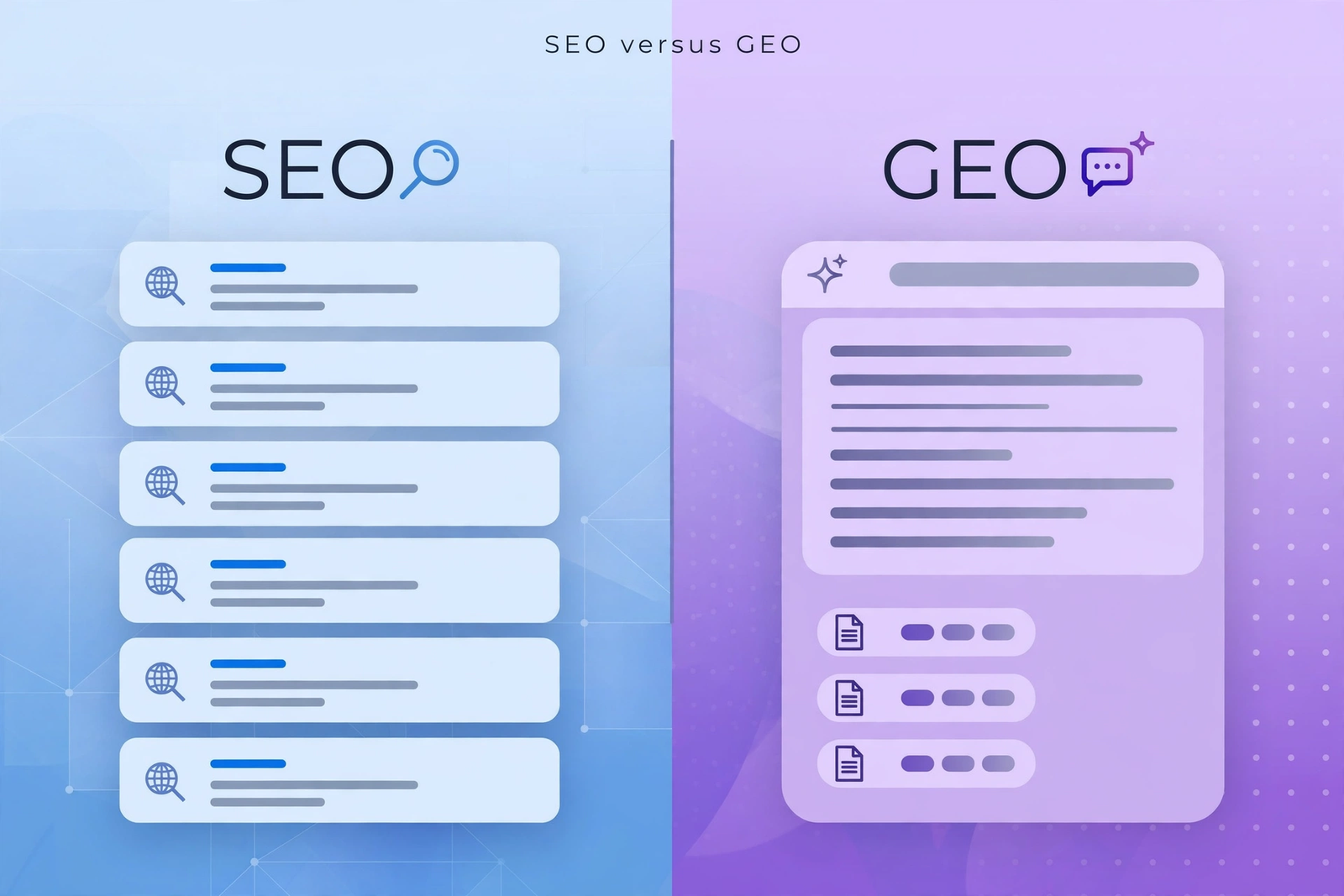
GEO does not replace SEO. The same research and every serious practitioner agrees that strong traditional SEO is the foundation, because AI engines use ranking and quality signals to decide which pages are even worth retrieving. Think of GEO as a second layer on top of solid SEO, not a substitute. For the Google specific side of this shift, see our guide on how to rank in Google AI Overviews.
Why Does GEO Matter So Much in 2026?
Because the click is disappearing. Industry analyses consistently report that a large and growing share of Google searches now end without any click, as users read the AI generated summary and move on. When an AI Overview appears, the traditional results below it get far less attention.
But there is an upside hidden in that shift. The overview cites its sources, and those citations are the new premium placement. Pages that would never crack the top three organic spots can still win visibility if an AI quotes them. Analysts report that many AI citations go to pages outside the traditional top ten, which means smaller sites can compete on clarity and evidence rather than domain authority alone.
AI referred traffic also converts remarkably well, because a visitor who arrives from an AI answer has already had their question half answered and arrives with high intent. In 2026, being quotable is becoming as valuable as being clickable.
How Do AI Engines Decide What to Cite?
Researchers describe three gates your content must pass: retrieve, trust, and cite. First the engine must find and parse your page, which fails silently on sites with weak technical SEO or blocked content. Then it must judge your claims credible against everything else it retrieved. Finally your passage must survive extraction and be quoted inside the answer, competing for a small number of citation slots.
Each gate suggests a tactic. Clean technical SEO and fast pages help retrieval. Named authors, publication dates, and outbound links to authoritative sources build trust. Short, self contained, factual passages win the citation. The tactics below map directly to these three gates.
7 Proven GEO Tactics to Get Cited in AI Answers
These tactics come straight from the Princeton research and from large scale observation of AI citations in 2026. Apply them to your most important pages first.

- Add real statistics with named sources. The single strongest lever in the original study was adding verifiable numbers. Replace vague claims like “many users” with specific figures from named studies, and link to the source. AI models favor content they can verify.
- Include expert quotations. Direct quotes from named experts lifted visibility in the experiments. Add short, opinionated quotes from practitioners in your field, with names and roles attached.
- Cite your sources openly. Link out to the studies, datasets, and official pages behind your claims. Outbound citations tell the AI your content is built on checkable evidence, not thin air.
- Put a direct answer in the first 40 to 60 words of each section. Write a self contained answer immediately under every H2, before the background. This mirrors the exact passage format AI engines extract, and it is also excellent writing for humans.
- Phrase headings as the questions people actually ask. At least three headings should be literal user questions, answered in the first sentence beneath them. Question led structure is the native language of AI answers, and question research tools make finding these queries easy.
- Add schema markup and FAQ structure. Article and FAQPage schema help engines parse your content type, and a real FAQ section gives them prebuilt question answer pairs to quote.
- Show real authorship and fresh dates. A named author with credentials, a visible publication date, and regular updates strengthen the trust signals AI systems use when choosing between similar sources.
How Can You Measure GEO Performance?
The headline metric is share of model: how often AI engines cite your brand across your target queries. Track it by running your key questions through ChatGPT, Perplexity, and Gemini each month and recording which sources get cited.
In your analytics, segment AI referred traffic in GA4 to see which pages earn visits from AI tools. In Google Search Console, the Generative AI performance report shows which URLs earn impressions inside AI Overviews and AI Mode. Watch all three monthly, find the pages that already get cited, and apply their patterns to the rest of your content.
Frequently Asked Questions About GEO
Does GEO replace SEO?
No. GEO builds on top of SEO. AI engines still rely on traditional ranking and quality signals to decide which pages to retrieve, so technical health, content depth, and backlinks remain essential. The sites winning AI citations are usually sites with solid SEO that added a citation friendly format layer.
How long does GEO take to show results?
Expect SEO like timelines. Industry practitioners generally report meaningful movement in 3 to 6 months, since citation usually follows the same trust building that ranking requires. Pages that already rank well can start earning citations within weeks of a format refresh.
Can a new website win AI citations?
Yes, and this is one of GEO’s most encouraging findings. Analyses of AI Overviews show many citations going to pages outside the organic top ten, so a new site with exceptionally clear, evidence rich content can get cited before it ever ranks. Target specific questions, build topical depth, and make every claim quotable.
What is the difference between GEO and AEO?
AEO, answer engine optimization, targets direct answer formats like featured snippets and voice assistants. GEO targets generative AI answers from tools like ChatGPT and Perplexity. The tactics overlap heavily, since both reward direct answers and clear structure, but GEO adds the citation and evidence layer that generative models specifically need.
The Bottom Line on GEO in 2026
Search now has two layers: the classic list of links and the AI generated answer on top. GEO is simply the craft of winning the second layer by being the clearest, best evidenced voice on a topic. Add statistics, quote experts, cite sources, answer directly, and keep your SEO foundation strong.
Start with one important page, apply the seven tactics, and measure what changes. The engines are not looking for tricks. They are looking for content worth quoting. Make yours quotable.