
Search results look different than they did even a year ago. On many queries, the first thing you see is no longer a blue link. It is an AI generated answer sitting in a box at the very top of the page, complete with links to the sources it pulled from. That box is called a Google AI Overview, and learning how to rank in Google AI Overviews is quickly becoming one of the most valuable SEO skills you can learn in 2026.
If your page gets cited inside one of these overviews, you get premium placement above every traditional result, even above the site ranking number one. If it does not, you risk becoming invisible on the very queries you used to win. This beginner friendly guide explains exactly what AI Overviews are, how Google chooses which pages to cite, and the practical steps you can take to get your own content featured.
What Are Google AI Overviews and How Do They Work?
Google AI Overviews are AI generated answers that appear at the top of Google search results, summarizing information from multiple web sources and linking to the pages they cite. Google builds them with its Gemini models, which scan indexed pages, pull out the clearest and most trustworthy answers, and synthesize them into a single response. You do not need to rank number one to be cited. You need to be among the clearest, most quotable sources on the topic.
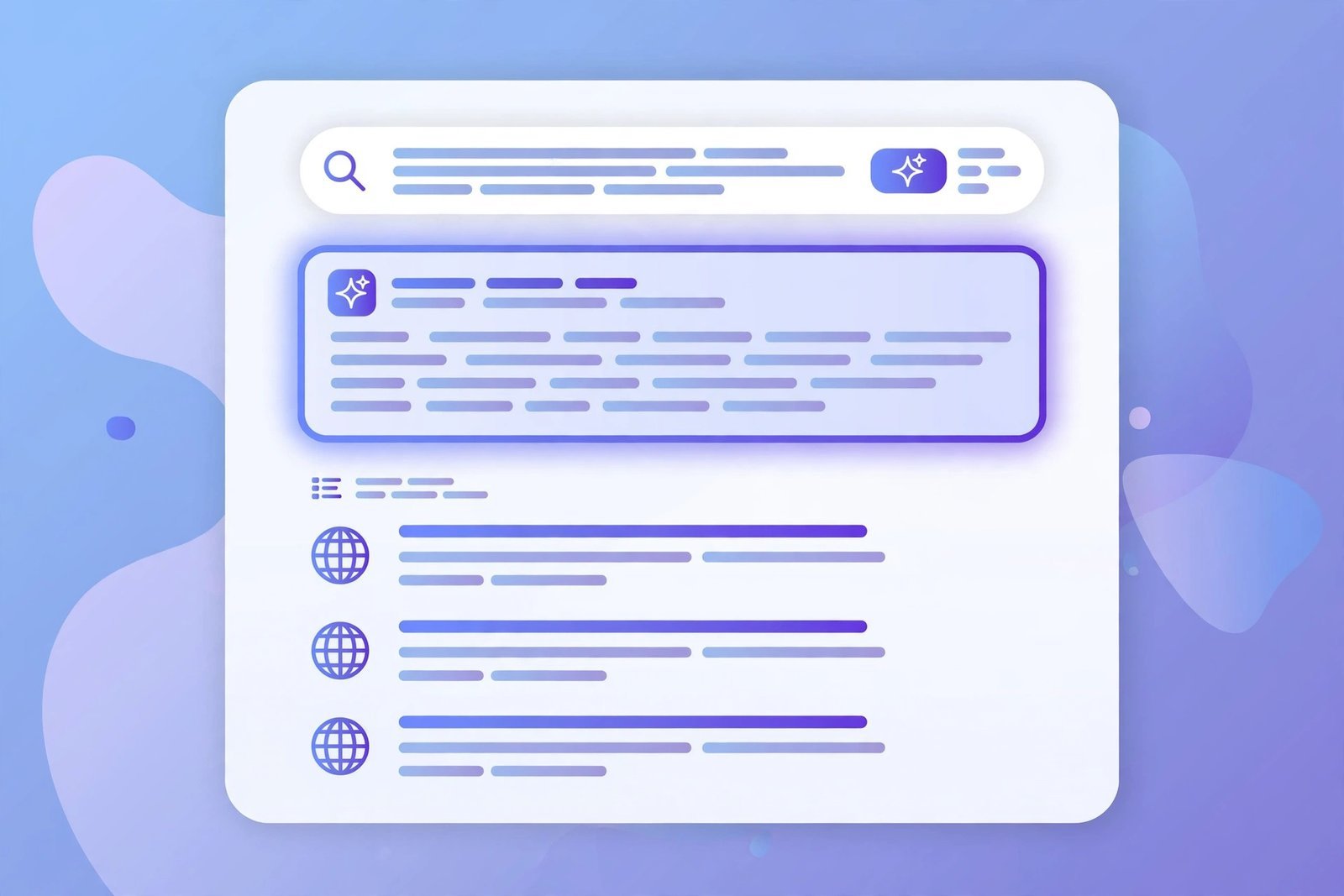
Google launched AI Overviews after testing the concept under the name Search Generative Experience. They now appear most often on informational queries, the kind that start with how, what, why, or which. When a user asks a question, Google’s AI looks for pages that answer it directly, pulls the best passages, and stitches them into a summary with clickable citations.
Here is the key insight for your strategy. AI Overviews do not replace organic results. They sit on top of them. The pages Google cites are usually pages that already rank well in traditional results, often on page one. That means solid, traditional SEO is the foundation. Everything else in this guide is about making your already ranking content easy for the AI to extract, quote, and trust.
If you are still working on the basics of ranking, our step by step SEO guide for new websites walks through the fundamentals first. Once those are in place, the tactics below will help you go further.
Why Do AI Overviews Matter for Your Traffic in 2026?
AI Overviews matter because they sit above every organic listing, and users increasingly read the AI summary instead of scrolling down. Observation across the SEO industry suggests that when an overview appears, click through rates for the traditional results below it tend to drop, since many searchers get their answer without clicking at all.
That sounds scary, but there is a real upside. The overview includes links to its sources, and those citations are the new position zero. A citation puts your page in front of every searcher who sees the overview, including people who never would have scrolled to your organic listing. Sites that adapt their content for AI extraction are already winning traffic from queries where they rank lower in traditional results, because Google cited them anyway.
The bottom line is simple. Optimizing for AI Overviews is no longer a side project. It is part of ranking well in 2026, period.
How Does Google Decide Which Pages to Cite?
Google has not published a full formula, but research and real world observation point to a consistent pattern. Understanding this pattern is the whole game, because every tactic below maps back to it.
First, the page usually ranks well already. Pages cited in AI Overviews are overwhelmingly pages that rank on page one for the query, often in the top five positions. The organic ranking signal is the first filter. Strong technical SEO, quality content, and genuine authority still matter enormously. AI Overviews amplify good SEO. They do not replace it.
Second, the content is easy to extract. Google’s AI needs to pull coherent, self contained passages from your page. Pages that state answers directly, use clear headings, keep paragraphs short, and include lists and tables are far easier to quote than pages that bury the answer in long, winding paragraphs.
Third, the page looks trustworthy. Google connects AI Overviews to its quality framework of Experience, Expertise, Authoritativeness, and Trustworthiness, known as EEAT. Cited pages tend to have clear authorship, visible publication dates, and factual claims backed by named sources.
So the formula is: rank well, answer clearly, and prove you are trustworthy. Now let us turn that into action.
How to Rank in Google AI Overviews: 7 Practical Steps
Here is the exact process to follow, in order. Each step builds on the last.
- Make sure you rank on page one first. Before anything clever, check where your target page ranks for its main query. If it is not on page one, your first job is traditional SEO: better content, better internal links, faster pages, and real backlinks. No amount of formatting rescues a page that Google never shows. For a refresher on content tactics that still work, see our guide on using AI tools to improve search rankings.
- Put a direct answer at the top of every section. Write a 40 to 60 word answer immediately under each main heading, before any background. Phrase it so it stands alone if quoted. This mirrors the exact format AI engines extract, and it doubles as great writing for human readers.
- Phrase headings as real questions. At least three of your H2 and H3 headings should be the literal questions people type into Google, like “How long does it take to rank in AI Overviews?” Answer each question in the very first sentence under the heading.
- Add schema markup. Structured data helps Google understand your content format. At minimum, add Article schema and FAQPage schema that matches the visible text on the page. If your article includes steps, HowTo schema is a strong addition. Most SEO plugins, including Rank Math and Yoast, can generate this markup with a few clicks.
- Answer the follow up questions on the same page. AI Overviews often surface related questions, similar to the People Also Ask box. Anticipate the two or three questions a reader would ask next and answer them directly on the same page. This keeps Google pulling from you instead of sending the reader elsewhere. Building related articles helps too. Our guide to creating SEO topic clusters with AI shows how to structure supporting content around a main page.
- Strengthen your trust signals. Add a real author bio with credentials to every article. Show the publication date and update it when you refresh the content. Link out to authoritative sources for factual claims. These EEAT signals tell Google your page is safe to quote.
- Match search intent precisely. Google will not cite a page that answers the wrong question, no matter how well formatted it is. Before writing, check what kind of results already rank: guides, lists, comparisons, or definitions. Then match that format. Our breakdown of search intent and its types walks through how to read intent correctly.

How Can You Track Your AI Overview Appearances?
You cannot improve what you do not measure. Google Search Console now includes a Generative AI performance report that shows which of your URLs earn impressions inside AI Overviews and AI Mode. It reports impressions only, not clicks or queries, but it is still the best feedback loop available for seeing which pages Google is actually pulling into answers.
Check this report monthly. Find the pages that already get cited and study what they have in common: their format, their heading style, their length. Then apply those patterns to the pages that are not getting cited yet. Small, regular edits to your best pages beat one giant overhaul every time.

Frequently Asked Questions
How long does it take to rank in Google AI Overviews?
There is no fixed timeline. Because citation usually follows strong organic ranking, expect the same timeframes as traditional SEO: weeks for low competition queries, several months for competitive ones. Pages that already rank on page one can start appearing in overviews within days of a format refresh, since the ranking foundation is already there.
Can a new website get cited in Google AI Overviews?
Yes, but it is harder. New sites usually rank lower, and AI Overviews favor pages with established authority and trust signals. Your fastest path is to target specific, low competition questions in your niche, build genuine topical depth with several related articles, and earn a few quality links. Niche expertise beats broad coverage when you are starting out.
Do backlinks still matter for AI Overviews?
Yes. Backlinks remain one of Google’s strongest authority signals, and the pages cited in AI Overviews are usually pages that already rank well, which requires links in competitive niches. Quality and topical relevance matter far more than volume. A few contextual links from trusted, on topic sites outweigh hundreds of low value ones.
Is traditional SEO dead because of AI Overviews?
Not at all. AI Overviews are built on top of traditional search results, and the pages they cite are selected from pages that already rank. Technical SEO, content quality, internal linking, and backlinks still form the foundation. What has changed is the format layer on top: your content now also needs to be easy for AI systems to extract, quote, and trust.
Conclusion
Ranking in Google AI Overviews in 2026 comes down to a simple formula that rewards good writing. Rank well with solid SEO fundamentals, answer questions directly in quotable passages, structure your content so AI systems can extract it easily, and prove your trustworthiness with real authorship and fresh dates. Start with one page, apply the seven steps, watch the Generative AI report in Search Console, and scale what works. The sites winning AI citations are not doing anything mysterious. They are just the clearest, most helpful voices on the topic. Yours can be next.