
Mobile application development has changed dramatically as businesses seek faster ways to build high-quality apps for multiple platforms. Developers no longer need to rely exclusively on separate programming languages for Android and iOS projects. Understanding can JavaScript be used for app development helps developers choose technologies that balance performance, development speed, and long-term maintenance. At Its Tech Club, we believe informed technology decisions help developers build scalable applications while reducing unnecessary complexity.
JavaScript has evolved from a simple scripting language for websites into a powerful solution for modern application development. Today, developers can create mobile, desktop, and web applications using JavaScript alongside mature development frameworks. This flexibility has made JavaScript one of the most widely adopted programming languages worldwide.
Choosing the right development approach depends on project goals, team expertise, and performance expectations. While native development remains important for certain applications, JavaScript offers practical alternatives for many business and consumer projects. Understanding its capabilities helps developers select the most suitable solution with greater confidence.
1. The Evolution of Mobile Application Creation
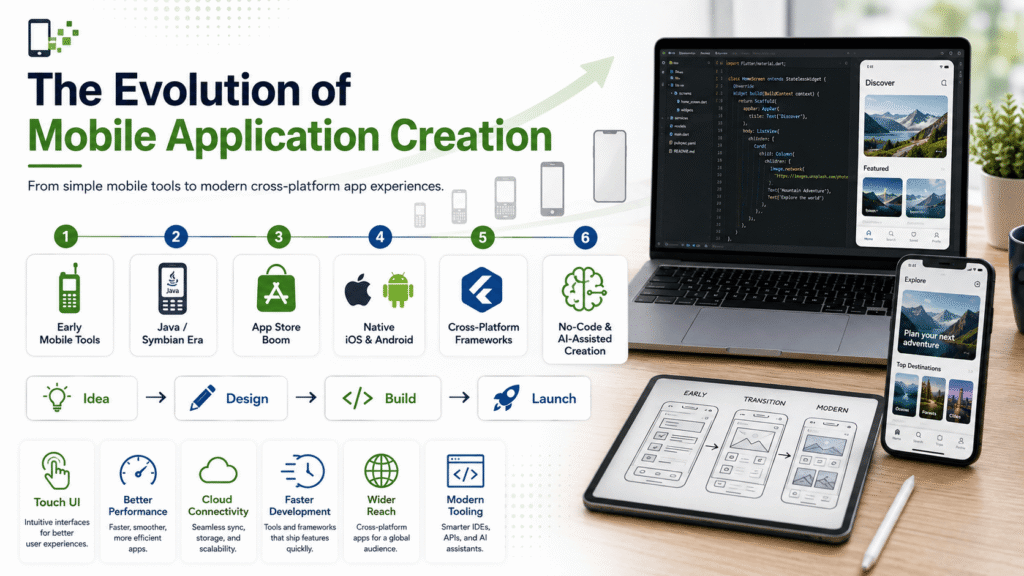
Mobile development originally required separate programming languages and development environments for each operating system. Android developers primarily used Java before Kotlin became Google’s preferred language, while iOS developers relied on Objective-C and later Swift. Maintaining multiple codebases increased development costs and extended project timelines.
Growing demand for faster software delivery encouraged the development of cross-platform frameworks capable of sharing code across devices. These technologies allowed developers to reuse much of their application logic instead of writing separate implementations. Businesses benefited from shorter development cycles while reducing long-term maintenance efforts.
Modern development now focuses on productivity, flexibility, and consistent user experiences across multiple platforms. Developers can choose from native tools, cross-platform frameworks, or hybrid approaches depending on project requirements. This evolution provides greater freedom when selecting technologies that best support business objectives.
You may also like:
2. Understanding the Core Question: Can JavaScript Be Used for App Development?

The answer to can JavaScript be used for app development is yes, and modern frameworks have made it increasingly practical. JavaScript can power mobile applications, desktop software, progressive web applications, and server-side services using established development ecosystems. Its versatility allows developers to create complete software solutions with one primary programming language.
Many developers worry that JavaScript applications cannot match the speed of native software in demanding situations. While certain graphics-intensive applications still benefit from native development, modern JavaScript frameworks deliver excellent performance for many business, productivity, and consumer applications. Continuous improvements have significantly narrowed historical performance differences.
Another common concern involves accessing device hardware such as cameras, GPS, sensors, and notifications. Popular JavaScript frameworks provide reliable APIs and plugins that simplify communication with native device capabilities. This allows developers to build feature-rich applications without abandoning familiar JavaScript development workflows.
You may also like:
3. Top Frameworks That Make It Possible
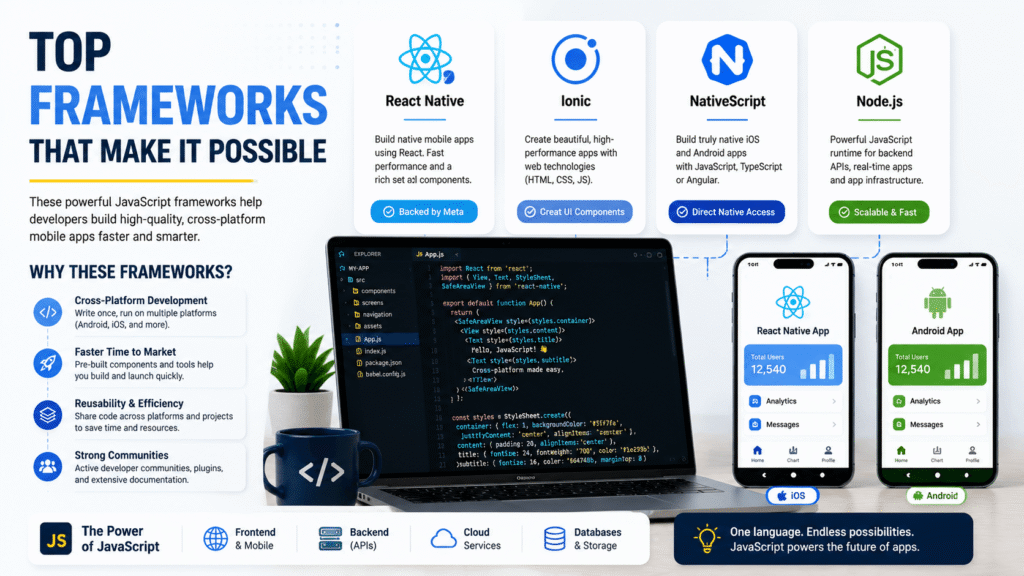
Several mature frameworks have expanded JavaScript beyond traditional web development into complete mobile application development. React Native enables developers to build native mobile applications using JavaScript while sharing significant amounts of code across Android and iOS. Other frameworks such as Ionic and NativeScript also support different development approaches based on project requirements.
Selecting the right framework depends upon project complexity, performance expectations, existing technical skills, and long-term maintenance goals. Some frameworks prioritize native performance, while others emphasize rapid development and broad platform compatibility. Understanding these differences helps developers avoid unnecessary technical limitations later.
Strong community support remains an essential consideration when choosing any JavaScript development framework. Active communities regularly publish updates, documentation, educational resources, and third-party libraries that simplify development. Selecting well-supported technologies reduces long-term risks while improving productivity throughout the application lifecycle.
You may also like:
4. Native Versus Cross Platform Performance
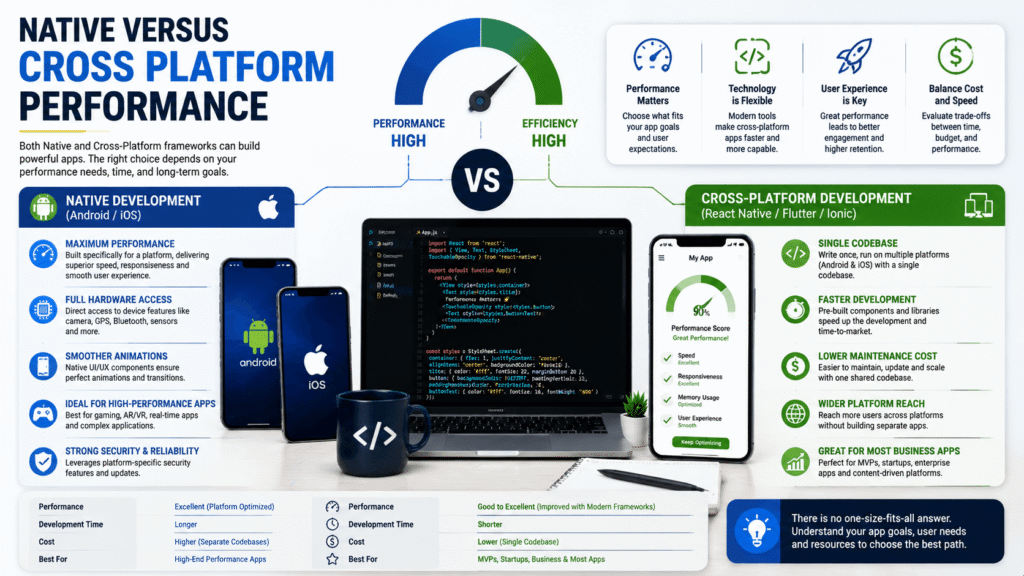
Choosing between native and cross-platform development requires balancing performance, development speed, and long-term maintenance. Native applications usually provide the highest level of optimization because they communicate directly with the operating system. This approach benefits applications requiring advanced graphics, intensive processing, or real-time performance.
Cross-platform JavaScript frameworks have improved significantly and now deliver smooth experiences for many application categories. Business applications, e-commerce platforms, productivity tools, and social networking apps often perform exceptionally well using modern JavaScript technologies. Developers can also optimize animations and resource management to reduce lag on supported devices.
Battery consumption depends more on application design than the programming language alone. Efficient coding practices, optimized background processes, and careful resource management contribute to better battery performance across different devices. Developers should evaluate application requirements before assuming native development is always necessary.
You may also like:
5. Real World Examples of Successful Applications

Many well-known companies have successfully used JavaScript technologies within their application development strategies. Popular platforms such as Facebook, Instagram, Shopify, Discord, and Microsoft have incorporated React Native into parts of their mobile applications. These examples demonstrate that JavaScript frameworks can support products used by millions of people worldwide.
Large organizations often choose JavaScript because it improves development efficiency while supporting faster feature releases. Sharing code across platforms reduces duplicate work and simplifies ongoing maintenance without sacrificing user experience for many business applications. This practical advantage helps development teams respond more quickly to customer feedback.
Successful case studies also provide confidence for startups seeking investment or stakeholder approval. Investors often value technologies with proven adoption, strong community support, and sustainable long-term development. Established enterprise use demonstrates that JavaScript remains a reliable choice for many commercial applications.
You may also like:
6. Future Trends and Predictions for 2026

The future of JavaScript application development continues to look promising as frameworks become faster and more capable. Development tools increasingly focus on improving performance, simplifying native integration, and reducing application startup times. These improvements strengthen JavaScript’s position within modern mobile development.
Artificial intelligence is also becoming a standard feature across many mobile applications and development workflows. JavaScript developers can integrate cloud-based AI services, machine learning APIs, and intelligent automation into applications without changing their primary programming language. This flexibility allows teams to adopt modern technologies while preserving existing development investments.
Understanding can JavaScript be used for app development becomes even more relevant as businesses demand faster delivery and broader platform compatibility. Ongoing framework improvements, stronger tooling, and expanding AI capabilities suggest JavaScript will remain an important technology for application development well beyond 2026.
You May also like:
Conclusion
The answer to can JavaScript be used for app development is a confident yes for many modern software projects. Today’s frameworks enable developers to build reliable, scalable, and feature-rich applications while reducing development time through shared codebases. Although native development still offers advantages for specialized applications, JavaScript provides an excellent balance of flexibility, productivity, and performance.
Choosing the right technology ultimately depends on project goals, technical requirements, and available development resources. Evaluating framework maturity, community support, performance expectations, and long-term maintenance helps developers make informed decisions. At Its Tech Club, we encourage developers to strengthen their JavaScript skills because they continue to open new opportunities across web, mobile, desktop, and AI-powered application development.

