
Choosing an artificial intelligence course is not as simple as picking a random online program because the field requires structured learning and consistent practice. Many beginners assume that any beginner friendly course will be enough to start a career in AI, but this assumption often leads to confusion and dropout. The reality is that artificial intelligence involves programming, mathematics, and logical thinking, which cannot be mastered without proper preparation.
Another important point is that the AI field is growing rapidly, which means course quality and relevance matter more than ever. A poorly chosen course can waste months of effort and still leave you without practical skills. That is why learners must understand what they are getting into before enrolling in any artificial intelligence course.
Platforms like Its Tech Club focus on guiding learners toward smarter decisions so they avoid common mistakes. The goal is not just to learn AI but to build real skills that can be applied in jobs and projects. This makes the selection process even more important than the learning itself in the beginning stage.
What You Should Honestly Know Before Starting an AI Course
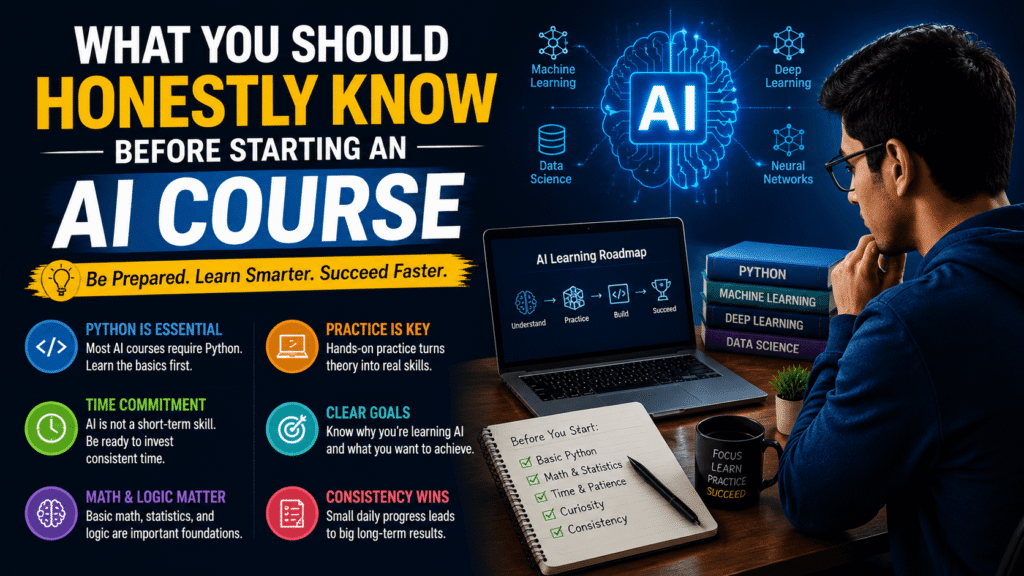
Before starting an artificial intelligence course, most beginners underestimate the level of technical understanding required. They often assume AI is purely theoretical or visual, but in reality it involves coding, logic building, and data analysis. Without this understanding, many learners struggle within the first few lessons.
Python is usually the foundation of most AI programs, and having no prior experience with it creates immediate difficulty. Many students drop out because they are unable to follow coding exercises or understand basic syntax. This gap in preparation becomes the biggest barrier to progress in early stages.
Time commitment is another factor that is often ignored by learners. Artificial intelligence requires consistent practice over weeks or months, not just casual viewing of lectures. Without discipline and regular coding practice, even the best artificial intelligence course will not produce meaningful results.
You may also like:
Breaking Down the Types of AI Courses Worth Your Time
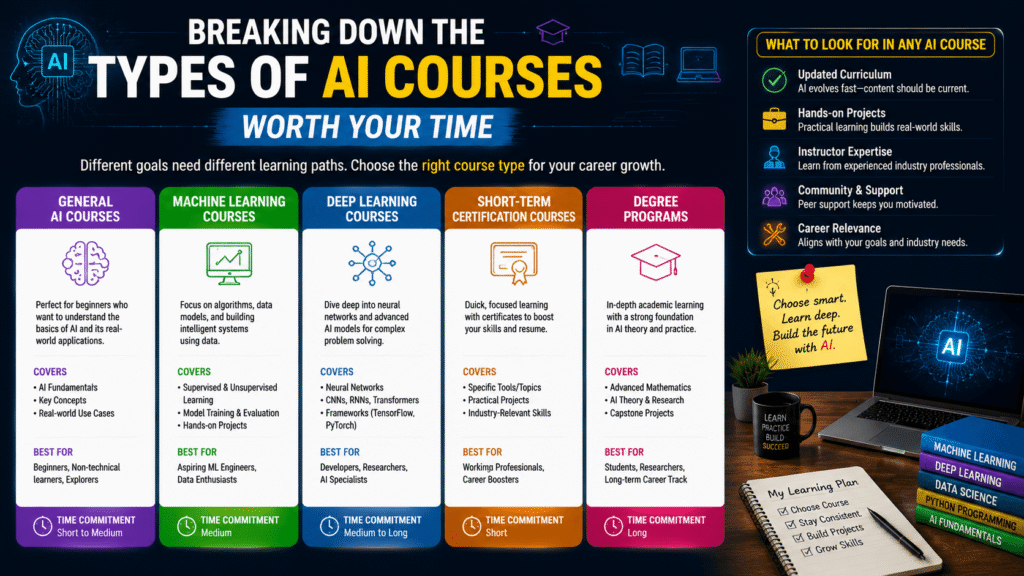
Artificial intelligence courses come in different formats, and each serves a different purpose depending on the learner’s goals. General AI courses introduce basic concepts, but they often lack deep technical training. Machine learning focused courses, on the other hand, provide more hands on coding and real model building experience.
Short certification programs are popular because they are quick and affordable, but their depth varies significantly. Some provide strong foundations, while others only offer surface level knowledge without real project exposure. Degree programs are more structured and academically strong but require much more time and commitment.
Choosing the right artificial intelligence course should never be based only on price or popularity. Learners must analyze the curriculum carefully to ensure it includes practical projects and updated industry tools. Without this evaluation, it becomes easy to select a course that looks good but offers limited real world value.
You may also like:
How to Evaluate If a Course Is Actually Worth It
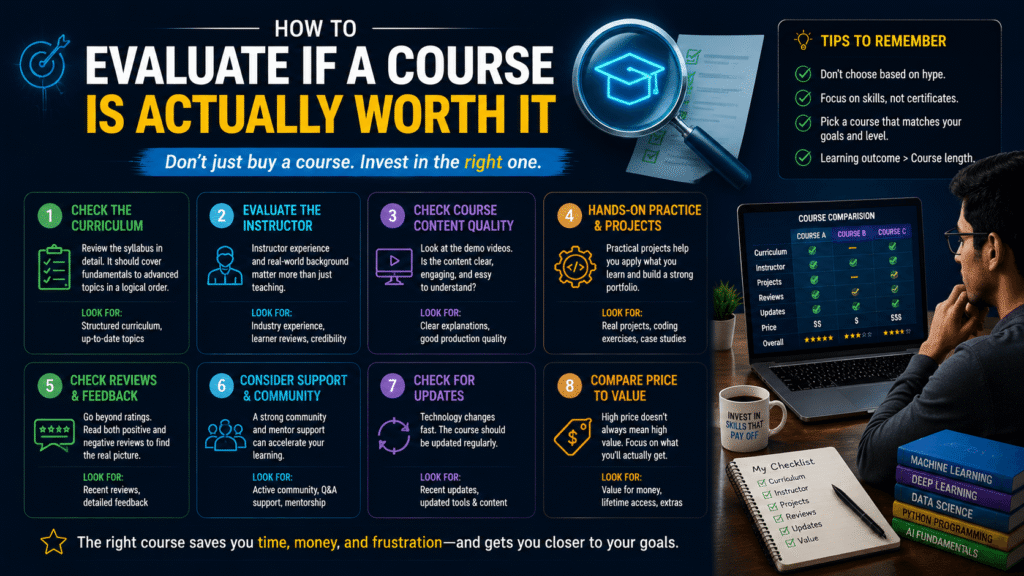
Evaluating an artificial intelligence course requires more than just reading reviews or checking ratings. Many platforms highlight success stories, but these do not always reflect the overall quality of the course. A better approach is to focus on instructor experience and course structure.
An instructor with real industry experience brings practical knowledge that goes beyond theory. This helps learners understand how AI is applied in real business problems. Additionally, updated content is extremely important because AI tools and frameworks change quickly over time.
A valuable artificial intelligence course should also include hands on exercises and real projects. These activities help learners apply concepts instead of just memorizing them. Without practical work, it becomes very difficult to develop job ready skills in artificial intelligence.
You may also like:
Top Platforms Offering Artificial Intelligence Courses Right Now
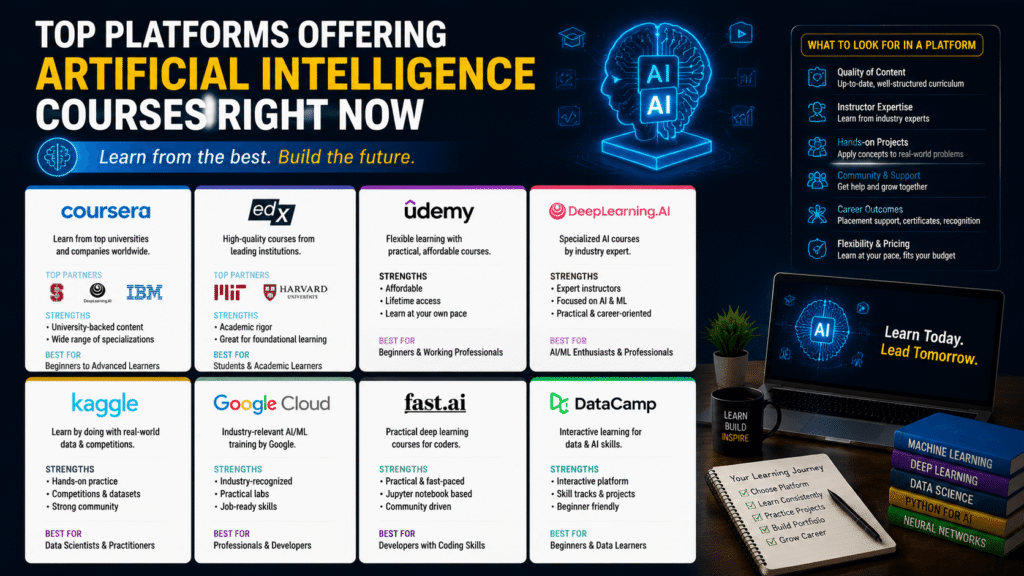
There are many platforms offering an artificial intelligence course, and each platform has different strengths. Coursera and edX are known for structured academic style learning, often backed by universities and research institutions. These platforms are ideal for learners who prefer a more formal learning environment.
Udemy provides a large variety of courses at different price points, but quality depends heavily on the instructor. Some courses are excellent and project based, while others are more theoretical. This makes careful selection very important for learners using Udemy.
Google and other tech companies also offer certification programs focused on practical industry skills. These courses are often designed to teach tools and workflows used in real companies. Choosing between platforms depends on whether the learner wants theory, practice, or a balanced mix of both.
You may also like:
The Biggest Mistakes Learners Make Midway Through AI Courses
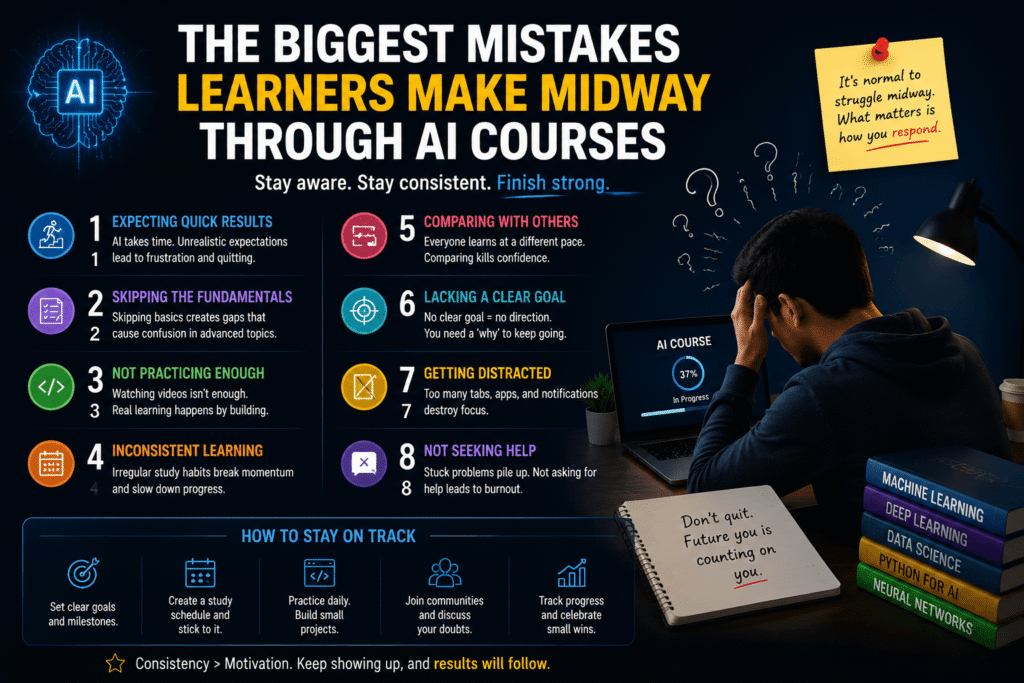
One of the most common mistakes learners make in an artificial intelligence course is switching between multiple courses at the same time. This prevents deep understanding and leads to incomplete knowledge of core concepts. Consistency in one structured path is far more effective.
Another major issue is passive learning, where students only watch videos without practicing code. This approach creates a false sense of understanding but does not build real skills. AI learning requires active coding, experimentation, and problem solving.
Many learners also fail to build small projects alongside their learning journey. Without practical application, concepts remain theoretical and difficult to remember. Regular practice and project building are essential for long term retention and skill development.
You may also like:
Turning Your AI Course Into Real Career Opportunities
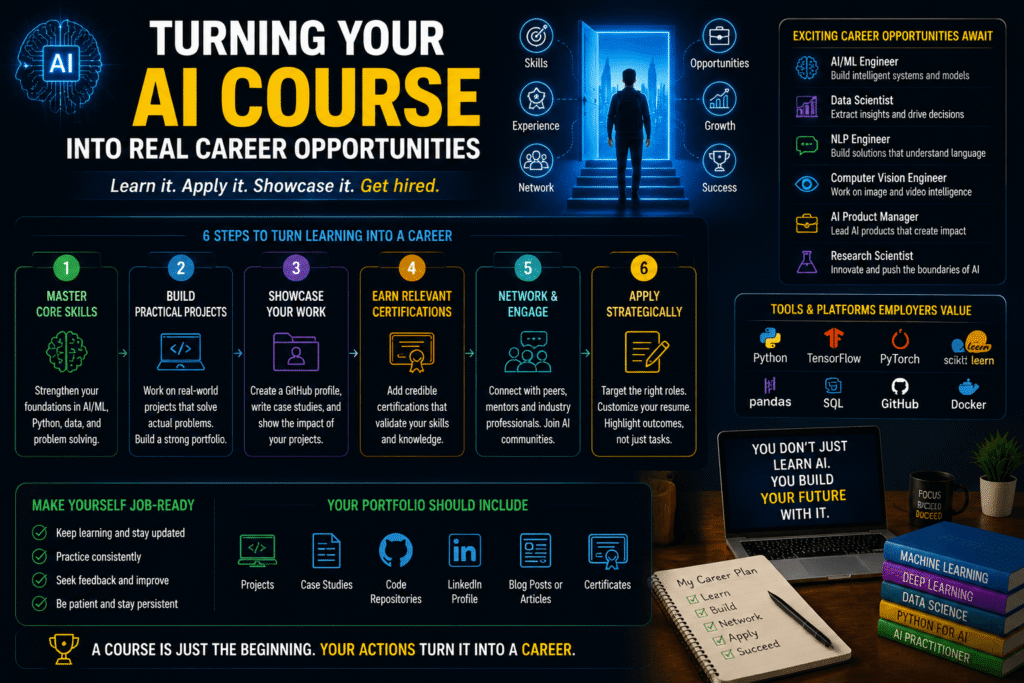
Completing an artificial intelligence course does not automatically lead to a job or career success. Many learners finish courses but fail to build a strong portfolio of practical work. Employers are more interested in projects than certificates alone.
Choosing a clear specialization such as machine learning, data science, or natural language processing helps learners focus their career path. This makes it easier to build relevant projects and target specific job roles. Without specialization, skills often remain too broad and less valuable in the job market.
Platforms like Its Tech Club emphasize the importance of building real projects and showcasing them on platforms like GitHub and LinkedIn. This helps learners demonstrate actual ability instead of just theoretical knowledge. Continuous learning and practice are essential because artificial intelligence is constantly evolving.
You may also like:
Conclusion
Choosing the right artificial intelligence course requires careful planning, research, and realistic expectations. Many learners fail not because the subject is impossible, but because they choose the wrong course or lack discipline in learning. Understanding prerequisites, evaluating course quality, and focusing on practical skills are essential steps for success.
A well selected artificial intelligence course can open strong career opportunities in a rapidly growing industry. However, success depends on consistent effort, project building, and continuous learning. Without these factors, even the best course will not deliver meaningful results.
With guidance from platforms like Its Tech Club, learners can make better decisions and avoid common mistakes that slow down progress. The goal is not just to complete a course but to build real, usable skills that lead to long term career growth.