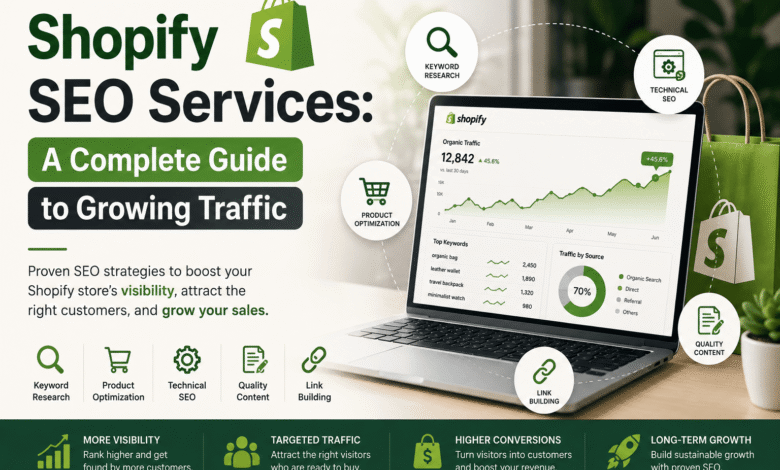
Launching a Shopify store gives businesses a convenient way to sell products online. However, simply publishing products does not guarantee consistent organic traffic. Customers still need to discover your store through relevant search results and useful content.
This is where Shopify SEO services can become valuable for growing an online business. Search engine optimization helps improve how search engines understand and evaluate different pages. Better optimization can also help potential customers discover products when they actively search online.
At Its Tech Club, we understand that effective SEO involves more than simply adding keywords. Product pages, collection pages, technical settings, content, and links all influence search visibility. A successful approach therefore requires a clear strategy and consistent optimization.
SEO also takes time because search visibility develops through ongoing website improvements. Businesses should focus on attracting relevant visitors rather than chasing traffic numbers alone. Qualified visitors are more likely to explore products and eventually become customers.
What Are Shopify SEO Services?
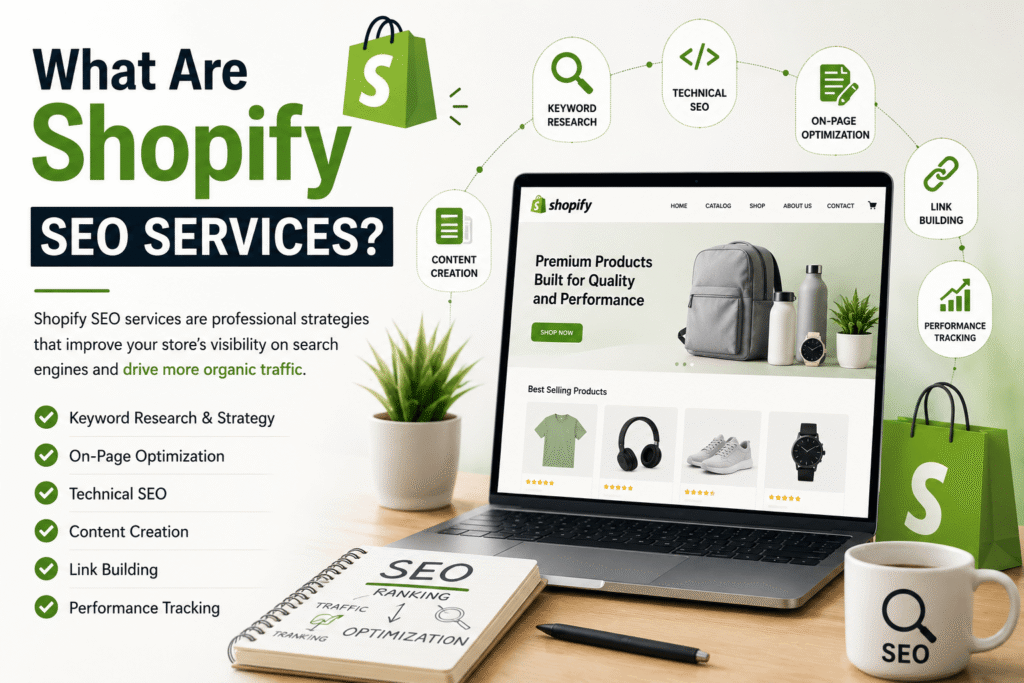
Shopify SEO services are professional optimization activities designed specifically for Shopify websites. These services can address technical problems, keyword targeting, content quality, website structure, and external authority. The exact work depends on the store’s size, products, competition, and existing search performance.
A typical SEO campaign begins by examining the website’s current search visibility and technical condition. Specialists can identify problems affecting indexing, page performance, navigation, and content organization. They can then create an optimization strategy based on the store’s business goals.
Keyword research usually forms another important part of the process because search behavior varies significantly between products. Businesses need to understand what potential customers actually type into search engines. Those terms can then guide product pages, collection pages, articles, and other useful content.
Good Shopify SEO should also consider the customer’s experience throughout the website. Visitors should easily understand products, navigate categories, and find important information. Search optimization works best when technical improvements support both search engines and real users.
Start With Effective Shopify Keyword Research
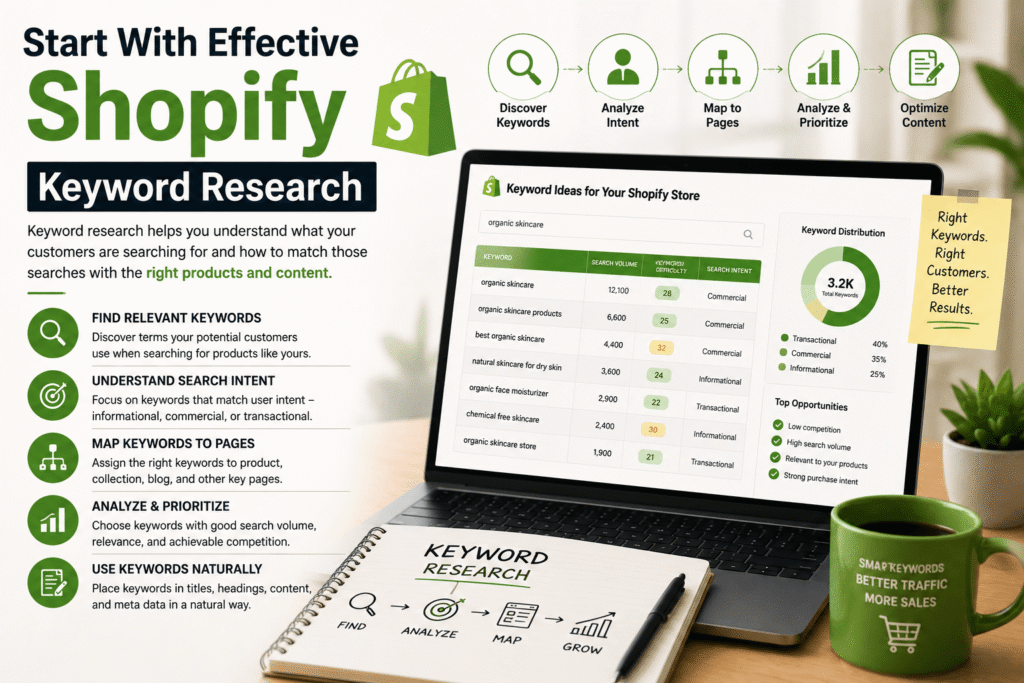
Keyword research helps store owners understand the language potential customers use during online searches. Without research, businesses may optimize pages around phrases that receive little relevant attention. Effective research instead connects customer needs with specific products and website pages.
Start by identifying broad terms describing your products and their main benefits. Then explore more specific phrases that indicate stronger purchasing interest. Longer search phrases can sometimes provide valuable opportunities because they describe particular customer needs.
Search intent should also influence keyword selection throughout your Shopify store. Someone searching for general information may need an educational article first. Someone searching for a specific product may be much closer to making an actual purchase.
Avoid placing the same keyword repeatedly throughout every page on your website. Search engines can understand related terminology and contextual relationships between words. Natural writing usually creates better content for customers while supporting broader topical relevance.
Organize your keywords according to specific website pages and their intended purposes. Product pages should target relevant product searches rather than unrelated informational queries. Collection pages can target broader category searches that connect multiple related products.
Optimize Product and Collection Pages
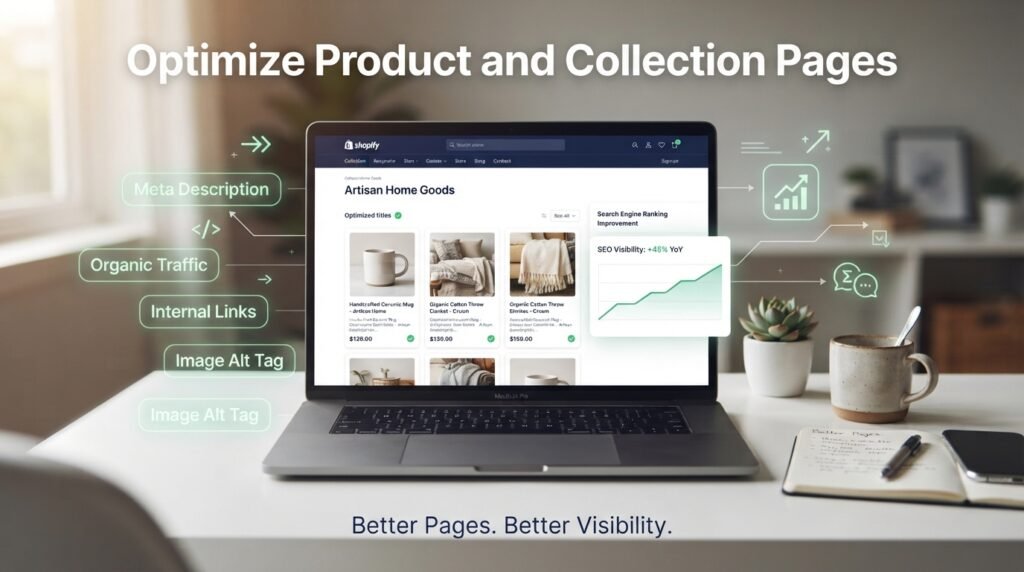
Product pages are among the most important pages for an eCommerce website. They should clearly explain what the product offers and why customers should consider purchasing. Useful descriptions can answer questions that customers commonly have before making decisions.
Page titles should accurately describe the product while incorporating relevant search terminology naturally. Meta descriptions should encourage clicks by summarizing the page’s useful information clearly. Headings can further organize content and make important information easier to understand.
Product images also deserve careful optimization because they contribute to both usability and page performance. Use descriptive file names and appropriate alternative text for meaningful product images. Compressing large image files can also help reduce unnecessary page loading delays.
Collection pages should provide useful context rather than displaying products without explanation. Introduce the category clearly and help visitors understand what they can find there. Internal links can connect collections with related products, guides, and other valuable pages.
A logical website structure also makes navigation easier for customers and search engines. Important products should not require visitors to click through excessive levels. Keep navigation simple while creating clear relationships between categories and individual products.
Strengthen Shopify Technical SEO
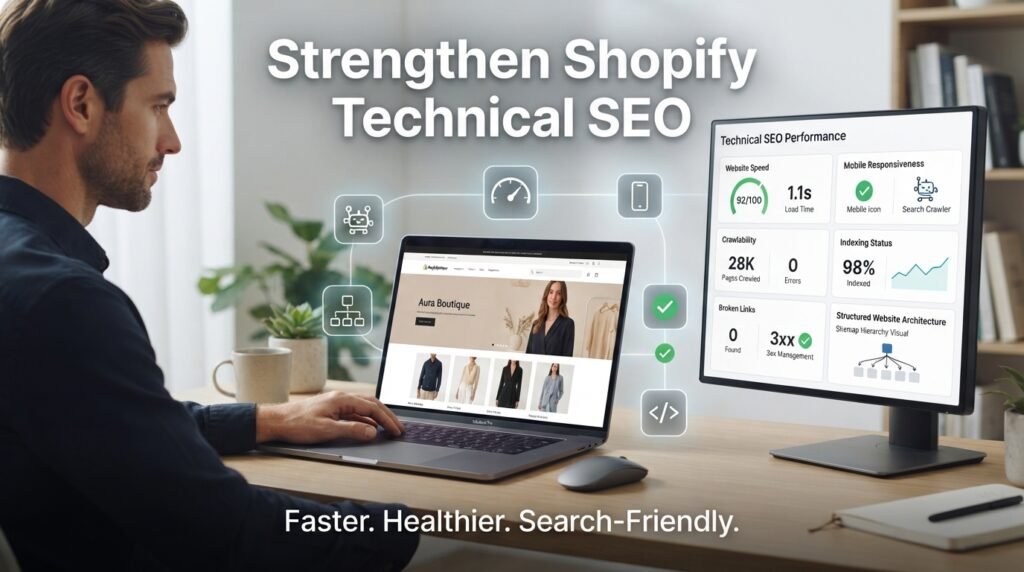
Technical SEO focuses on the website elements that help search engines access, understand, and evaluate pages. Shopify handles several technical functions automatically, but store owners still need regular checks. Problems can develop through apps, theme changes, redirects, or poorly managed content.
Mobile usability should receive particular attention because many customers browse online stores using smartphones. Pages should remain easy to navigate across different screen sizes and devices. Buttons, menus, product information, and checkout elements should remain accessible and understandable.
Website performance also matters because slow pages can create frustrating shopping experiences. Large images, unnecessary applications, excessive scripts, and inefficient themes can affect loading performance. Regular performance checks can help identify areas that require improvement.
Store owners should also monitor broken links, duplicate pages, redirects, and indexing problems. These issues can make websites harder for search engines to crawl effectively. A technical SEO audit can help uncover problems that are difficult to notice during normal browsing.
Shopify’s built-in structure can simplify certain technical tasks, but customization still requires careful management. Theme modifications should be reviewed after major updates or design changes. Technical SEO should therefore remain an ongoing part of maintaining a healthy store.
Create Content That Attracts Potential Customers

Content marketing can help Shopify stores reach customers before they are ready to purchase. Helpful articles can answer questions, explain product benefits, and introduce solutions to common problems. This creates additional opportunities to appear for relevant informational searches.
Consider creating buying guides, comparison articles, tutorials, product care guides, and frequently asked questions. Each piece should provide genuinely useful information rather than simply repeating keywords. Helpful content can also build confidence before visitors reach product pages.
Internal linking connects informative content with relevant products and collections. For example, an educational article can naturally direct readers toward products related to that topic. These connections can improve navigation while helping search engines understand relationships across your website.
Content should also reflect the actual interests and questions of your target customers. Research customer questions through search results, support conversations, reviews, and product feedback. These sources can reveal valuable topics that deserve detailed explanations.
Consistency matters more than publishing large quantities of low-quality articles. A smaller collection of useful resources can provide greater value than numerous repetitive posts. Every article should have a clear purpose and contribute something meaningful to your overall SEO strategy.
Build Authority and Measure SEO Performance
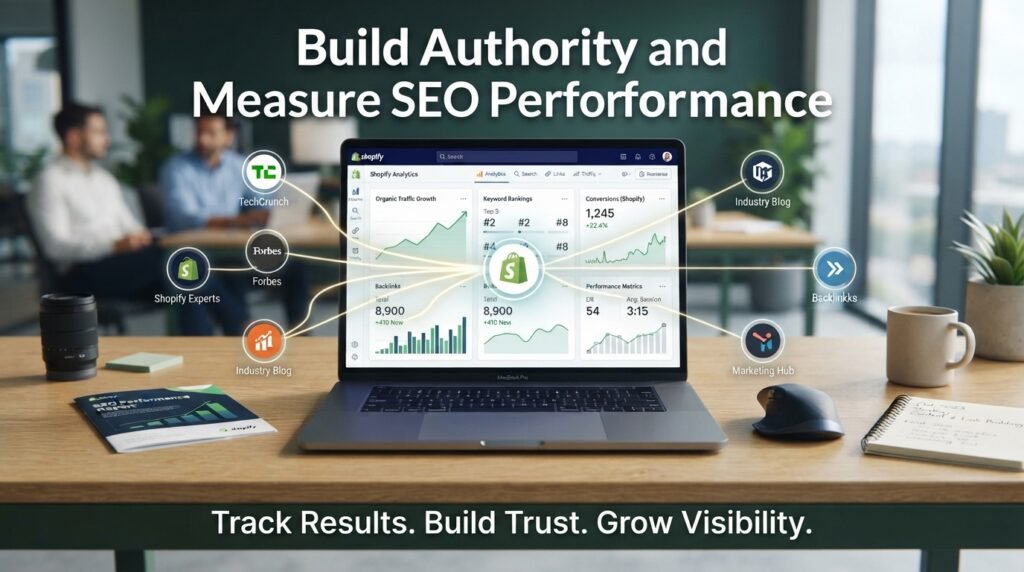
External links from relevant and trustworthy websites can contribute to a site’s overall authority. However, businesses should prioritize earning useful links instead of purchasing large quantities of questionable backlinks. Quality, relevance, and natural acquisition should remain central to any link-building strategy.
Useful resources can attract links when they provide original information or genuinely helpful guidance. Businesses can also explore digital public relations, industry relationships, expert contributions, and relevant partnerships. Avoid strategies that attempt to manipulate search rankings through artificial linking schemes.
SEO performance should be measured using meaningful business and search metrics. Organic traffic can show whether more people are discovering your website through search engines. Rankings can provide additional context about visibility for important keywords.
Conversions provide another important measurement because traffic alone does not guarantee business growth. Track purchases, leads, revenue, and other relevant actions alongside organic traffic. This broader view helps determine whether SEO is attracting visitors who actually matter.
Remember that SEO results rarely appear instantly after optimization begins. Competition, website history, content quality, technical conditions, and search demand can influence progress. Regular monitoring allows businesses to identify successful strategies and improve areas that remain underperforming.
Conclusion
Shopify SEO services can help businesses improve organic visibility through technical optimization, keyword research, content, and website improvements. However, SEO should be viewed as an ongoing process rather than one quick website adjustment.
At Its Tech Club, we believe sustainable search growth starts with understanding customers and improving their overall website experience. Start by researching relevant searches and connecting those terms with useful products, collections, and content.
Building authority through relevant links can strengthen your broader search presence over time. Meanwhile, regular performance measurement helps identify strategies that contribute to meaningful business results. This approach allows SEO decisions to become more focused and evidence-based.
Most importantly, avoid expecting instant rankings or guaranteed results from any SEO campaign. Sustainable organic growth usually requires patience, quality content, testing, and continuous improvement. With the right strategy, Shopify SEO can become an important part of building lasting online visibility.