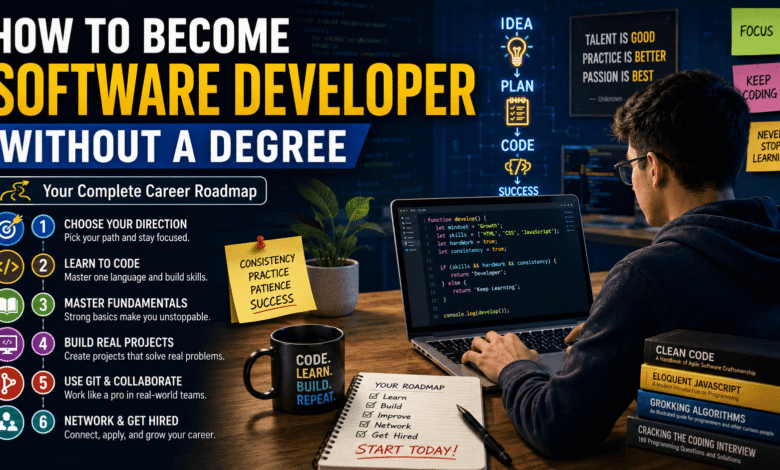
Starting a software development career no longer requires a traditional computer science degree because countless learning resources are now available online. Many successful developers have built rewarding careers through self-study, practical projects, and continuous skill improvement. Understanding how to become software developer begins with creating a realistic learning plan instead of chasing every new programming trend. At Its Tech Club, we believe consistent practice, curiosity, and determination matter more than following a perfect educational path.
The technology industry values problem-solving ability, technical knowledge, and practical experience above many traditional qualifications. Employers increasingly evaluate portfolios, coding skills, and project experience alongside formal education. This shift creates opportunities for motivated learners willing to invest time in developing valuable technical abilities.
Learning software development requires patience because mastering programming takes consistent effort over many months. Focusing on strong fundamentals and realistic goals helps beginners avoid frustration during the early stages. Building knowledge step by step creates lasting confidence while preparing learners for professional software engineering careers.
Understand Your Core Motivation Before Starting

Before learning any programming language, it is important to understand why you want to become a software developer. Some people enjoy solving technical problems, while others want career flexibility, creative opportunities, or higher earning potential. A clear purpose provides motivation when learning becomes challenging.
Many beginners feel overwhelmed because they see hundreds of programming languages, frameworks, and development tools online. Attempting to learn everything at once often creates confusion instead of meaningful progress. Establishing clear career goals helps narrow your focus and create a practical learning roadmap.
Knowing how to become software developer also means accepting that learning is a long-term process rather than a quick achievement. Progress happens through consistent daily practice instead of occasional intensive study sessions. Maintaining realistic expectations encourages persistence while reducing the risk of giving up too early.
You may also like:
Choose Your First Programming Language Carefully
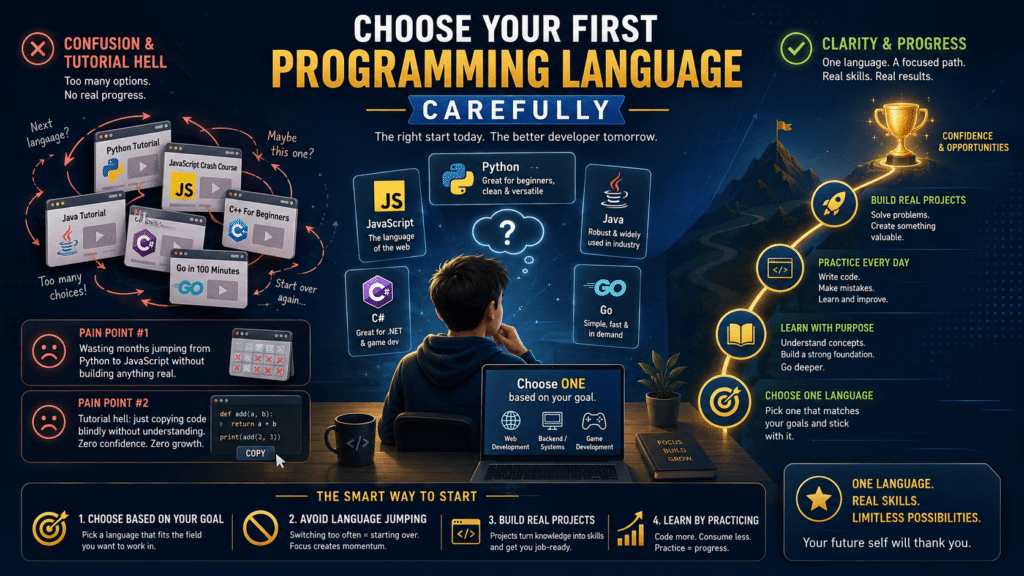
Selecting your first programming language influences how comfortably you begin your software development journey. Languages such as Python and JavaScript remain popular choices because they have beginner-friendly syntax and extensive learning resources. Both languages also support many different career paths within software development.
Many new developers waste valuable time switching between languages before mastering basic programming concepts. Constantly changing technologies often prevents learners from completing meaningful projects or developing real confidence. Staying committed to one language during the early stages builds stronger problem-solving skills.
Tutorials provide valuable guidance, but simply copying code without understanding its purpose limits long-term growth. Beginners should experiment by modifying programs, fixing errors, and creating simple applications independently. Practical coding experience develops confidence far more effectively than passive video watching alone.
You may also like:
Master Fundamentals Over Trendy Frameworks

Many developers become distracted by popular frameworks before understanding essential programming principles. Strong knowledge of variables, functions, loops, data structures, algorithms, and object-oriented programming provides the foundation for every successful software career. These concepts remain valuable regardless of changing technologies.
Technical interviews frequently evaluate fundamental programming knowledge rather than familiarity with specific frameworks alone. Employers expect candidates to explain problem-solving approaches, write clean code, and understand core computer science concepts. Strong fundamentals improve performance during interviews while supporting long-term professional growth.
Understanding how to become software developer requires building confidence through independent problem solving instead of memorizing tutorials. Creating programs from an empty code editor strengthens logical thinking and debugging abilities over time. Developers with strong fundamentals adapt more easily as new programming technologies continue to evolve.
You may also like:
Build a Portfolio of Projects That Actually Stand Out
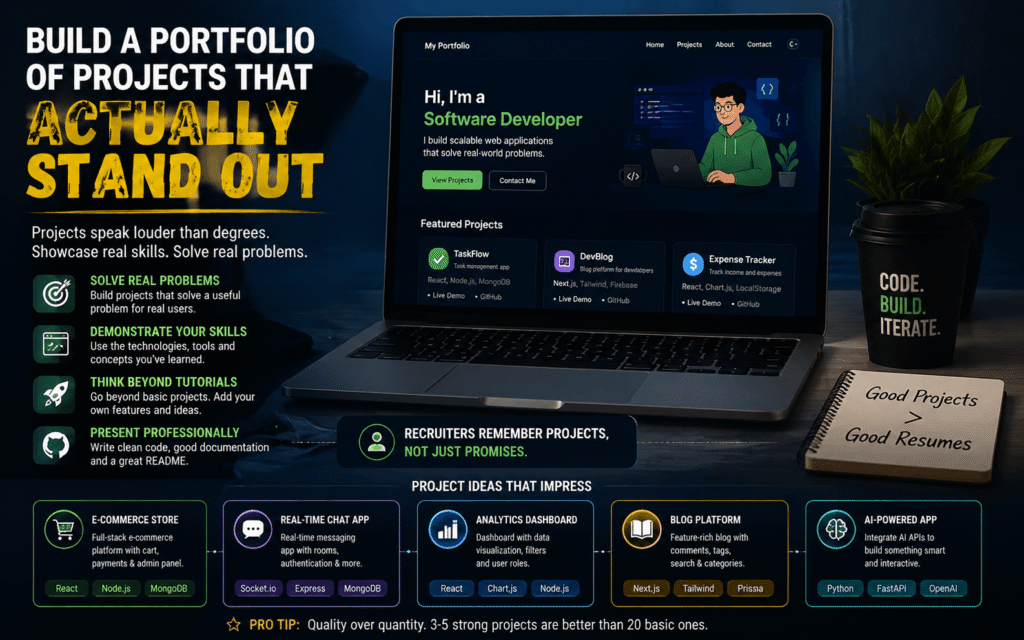
A strong portfolio demonstrates your practical skills far better than simply listing completed online courses or certifications. Recruiters want to see applications that solve real problems and showcase thoughtful design, clean code, and technical decision-making. Meaningful projects help employers understand how you approach software development challenges.
Many beginners create identical calculator applications or simple to-do lists because they closely follow tutorials. While these projects build confidence, they rarely distinguish candidates during competitive hiring processes. Building original applications with unique features, responsive interfaces, and real-world functionality creates a more impressive portfolio.
Each project should include clear documentation, installation instructions, screenshots, and explanations of the technologies used. Publishing code on GitHub while deploying working applications allows recruiters to evaluate both your coding style and finished results. A well-organized portfolio demonstrates professionalism alongside technical ability.
You may also like:
Learn Version Control and Collaborative Workflows

Version control is an essential skill because professional software development almost always involves collaborative teamwork. Git allows developers to track changes, restore previous versions, and manage code efficiently throughout a project’s lifecycle. Learning these workflows early prevents unnecessary mistakes as projects become more complex.
Poor file management can easily result in lost code, duplicated work, or confusion when multiple versions exist locally. Using Git repositories provides a reliable history of every change while supporting safer experimentation during development. Regular commits also make troubleshooting easier when unexpected issues appear.
Collaborative workflows include creating branches, reviewing pull requests, resolving merge conflicts, and communicating effectively with teammates. These practices improve both technical skills and professional collaboration within development teams. Employers value candidates who understand modern software engineering workflows beyond writing code alone.
You may also like:
Start Networking and Applying for Roles Early
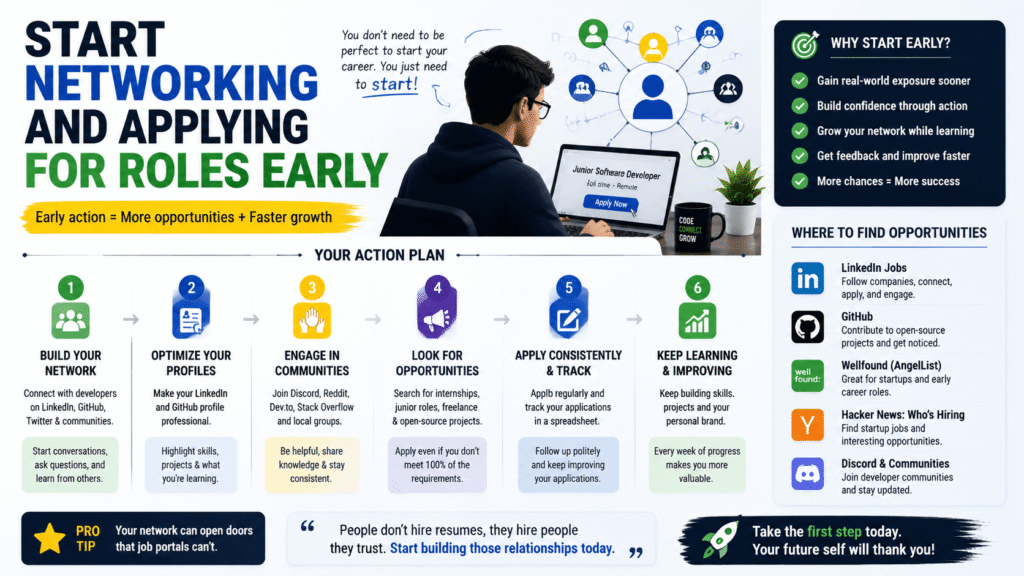
Many aspiring developers wait until they feel completely prepared before submitting their first job applications. In reality, applying early provides valuable interview experience while revealing the skills employers currently expect. Every interview becomes an opportunity to identify strengths and improve weaker areas.
Professional networking also plays an important role in building a successful software development career. Participating in developer communities, attending technology events, contributing to open source projects, and connecting with professionals on networking platforms can create valuable opportunities. Strong professional relationships often lead to referrals that standard job applications cannot provide.
Understanding how to become software developer involves continuous learning even after securing your first position. Technology changes rapidly, making lifelong education an essential part of every developer’s career. Staying curious, improving technical skills, and embracing constructive feedback support long-term professional success.
You May also like:
Conclusion
Learning how to become software developer without a degree is entirely possible through consistent practice, structured learning, and real project experience. Success depends on mastering programming fundamentals, building meaningful applications, learning collaborative workflows, and actively pursuing professional opportunities. Every small achievement contributes to stronger technical skills and greater career confidence.
The journey requires patience because software development is a profession built upon continuous learning and practical problem solving. Developers who remain adaptable, curious, and committed to improving their abilities are well prepared for long-term success in the technology industry. At Its Tech Club, we encourage aspiring developers to focus on steady progress, create valuable projects, and begin building their careers with confidence rather than waiting for the perfect moment.