
Introduction
Traditional software development approaches like Waterfall are struggling in modern, fast-changing environments.
- Fixed-plan models break when client requirements shift mid-project
- Teams waste sprints re-doing work because change wasn’t anticipated
- Stakeholders lose trust when delivered product doesn’t match evolved needs
In today’s software landscape, change is not an exception—it is the norm. Yet many teams still rely on rigid planning methods that assume requirements will remain stable. This mismatch is one of the biggest reasons projects fail or overrun.
What is Adaptive Software Development? (Core Definition)
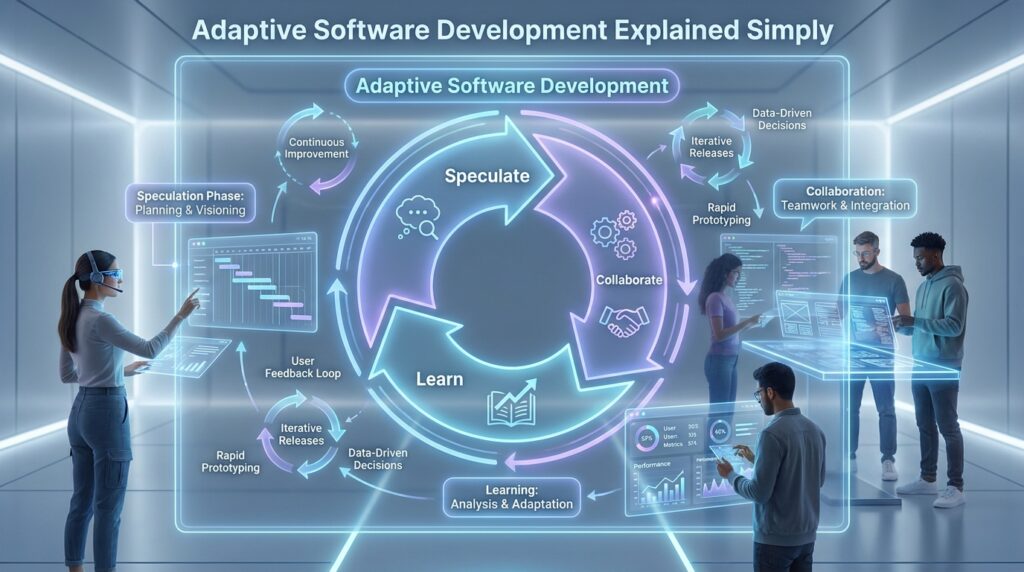
Adaptive Software Development (ASD) is an iterative, flexible approach to building software that embraces change instead of resisting it.
However, many people confuse ASD with general Agile practices, which creates misunderstandings.
- Developers don’t know where ASD fits in the SDLC
- No clear definition of its three core phases: Speculate, Collaborate, Learn
- Often mistaken as just another Agile framework rather than a mindset
ASD is not just a process—it is a continuous learning-driven development philosophy.
The Three Phases of ASD Explained Simply
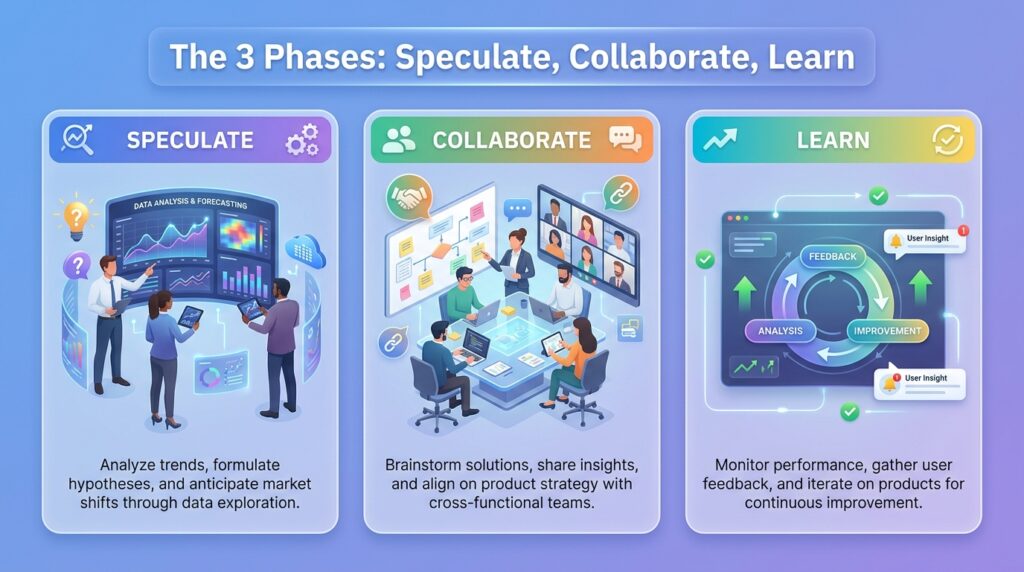
ASD operates through three repeating phases: Speculate, Collaborate, and Learn.
Speculate
- Often misunderstood as guessing
- In reality, it is informed planning based on available knowledge
Collaborate
- Frequently reduced to just meetings
- Actually structured knowledge-sharing across teams and stakeholders
Learn
- Commonly skipped by teams
- Leads to repeated mistakes and lack of improvement across cycles
These phases are not linear—they form a continuous loop that evolves with the project.
ASD vs Agile vs Scrum: What’s Actually Different
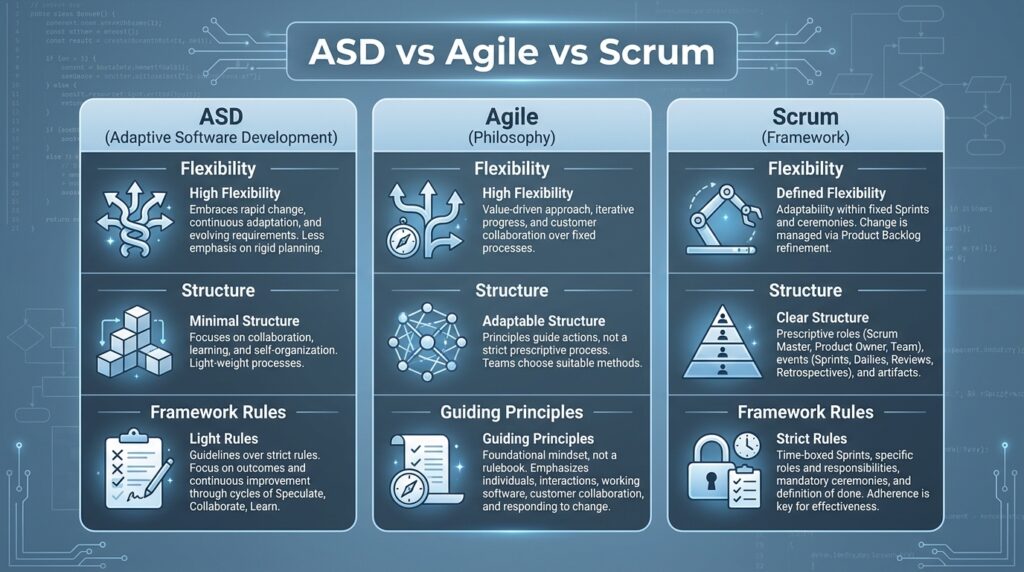
Many developers confuse ASD with Agile and Scrum, leading to incorrect framework selection.
- ASD is a broader adaptive philosophy
- Agile is an umbrella term for iterative development approaches
- Scrum is a structured Agile framework with defined roles and ceremonies
Key Issues Teams Face:
- Mixing ASD and Scrum concepts incorrectly
- Lack of clarity when choosing methodologies
- Difficulty explaining ASD to stakeholders due to unclear comparisons
Understanding the differences helps teams choose the right approach for their project needs.
When Should Your Team Use Adaptive Software Development
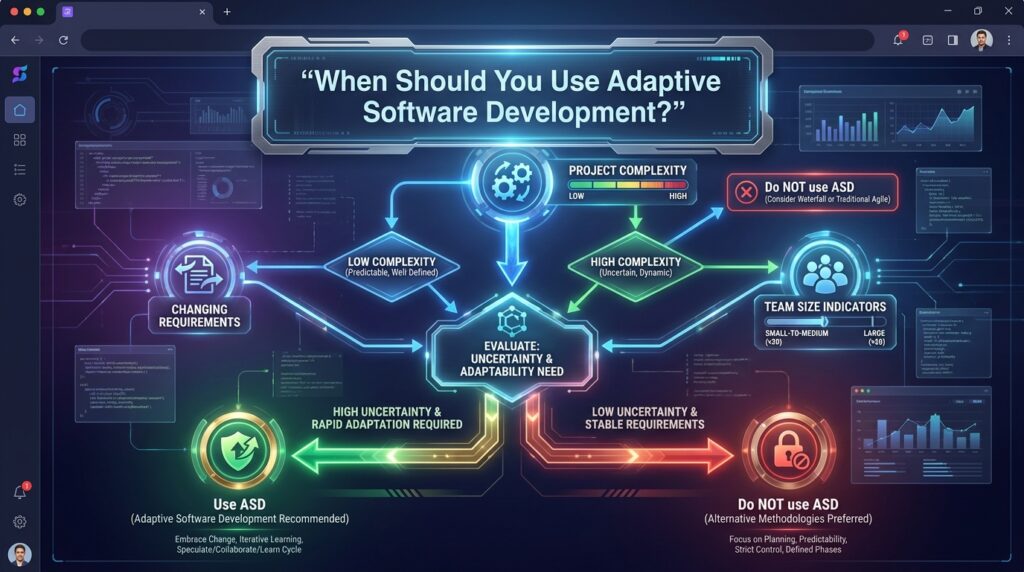
ASD is powerful—but not suitable for every situation.
- Teams adopt ASD for wrong project types and face more chaos
- No clear checklist exists to evaluate ASD readiness
- Small teams are unsure if ASD scales for their size
ASD works best when:
- Requirements are expected to evolve frequently
- Innovation and experimentation are important
- Feedback loops are fast and continuous
Using ASD without understanding project complexity can lead to confusion instead of clarity.
Real-World Benefits of Adaptive Software Development

The advantages of ASD are often explained theoretically, but real-world outcomes matter more.
- Faster response to changing requirements
- Improved product-market alignment
- Reduced rework through continuous learning
- Better stakeholder satisfaction over time
Business Perspective:
- Teams struggle to measure ROI of switching to ASD
- Managers need business-focused benefits, not just technical improvements
When implemented correctly, ASD improves both delivery speed and product relevance.
Common Challenges in Implementing ASD (And How to Fix Them)
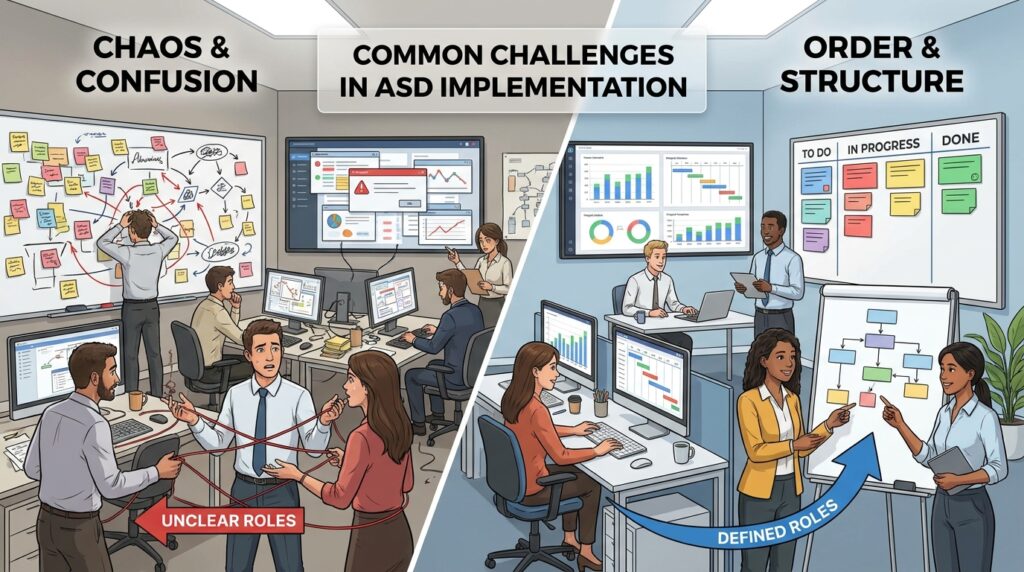
Despite its benefits, ASD comes with implementation challenges.
Resistance to Change
- Teams used to waterfall models struggle to adapt
Weak Learning Culture
-
- Lack of documentation reduces effectiveness of the “Learn” phase
Role Confusion
- Unclear responsibilities during collaboration create accountability gaps
How to Improve:
- Train teams on iterative thinking
- Encourage continuous documentation and feedback loops
- Clearly define collaboration roles from the start
Successful ASD adoption requires both cultural and process changes.
Conclusion