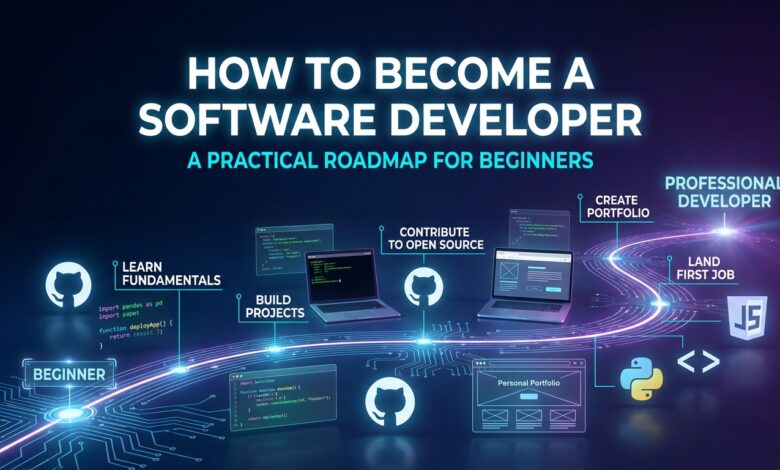
Becoming a software developer is one of the most in-demand career paths today, but most beginners struggle because they don’t have a clear roadmap. This guide breaks everything down in a simple, practical way so you can actually move from beginner to job-ready developer step by step.
Understanding What Software Developers Actually Do

Most beginners start their journey with a completely unrealistic idea of what software developers actually do. They often imagine building apps instantly or writing complex code all day without understanding the real workflow.
In reality, software development is about solving problems through code, maintaining systems, and collaborating with teams. Developers don’t just “write code”—they plan, debug, test, and improve applications continuously.
Another major confusion is the difference between roles:
- Frontend developers work on what users see (websites, UI, design)
- Backend developers handle servers, databases, and logic behind apps
- Full-stack developers do both frontend and backend work
Most beginners don’t know which role fits them, which leads to confusion and slow progress. Understanding this early helps you choose a clear direction.
Choosing the Right Programming Language to Start With

One of the biggest reasons beginners fail is confusion caused by too many programming languages. Instead of focusing on one language, they keep switching between Python, JavaScript, Java, and others.
This leads to slow progress and frustration.
The truth is simple: you don’t need to learn everything at once. You only need one language to start building your foundation.
Beginners often ask which language is best, but the answer depends on your goal:
- Web development → JavaScript
- Backend systems → Python or Java
- Mobile apps → Kotlin or Swift
The key is consistency. Pick one language and stick with it until you can build real projects without tutorials.
Self-Taught vs Degree vs Bootcamp: What Works
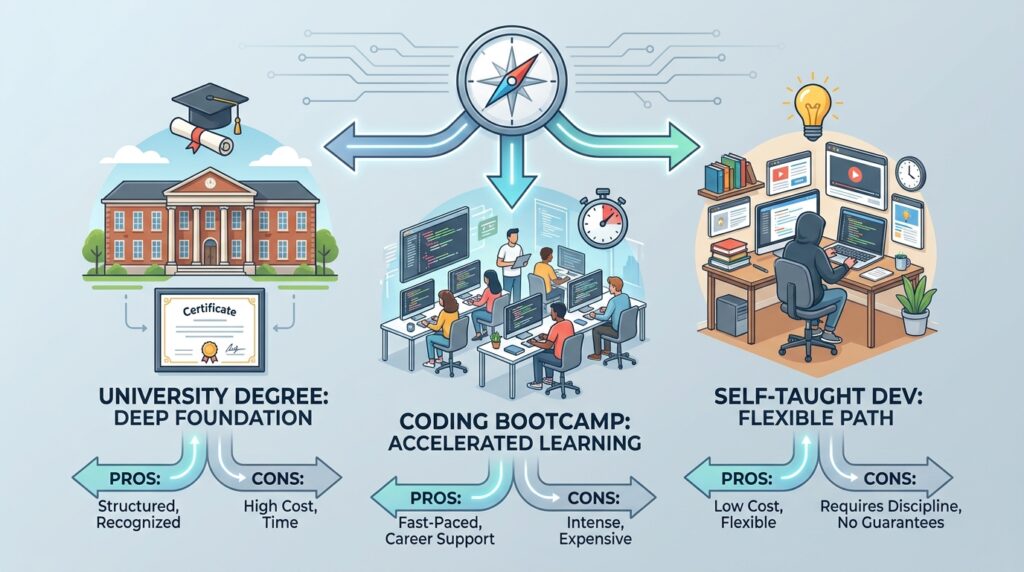
Beginners often get stuck at the starting point because they don’t know which learning path is best.
- A degree program gives strong fundamentals but takes time and is expensive
- A bootcamp is fast and practical but can feel overwhelming and risky
- A self-taught path is flexible but requires discipline and consistency
There is no “perfect” option for everyone.
What actually matters is not the path, but whether you are building real skills and projects. Employers care more about what you can do than where you learned it.
A good benchmark is simple:
If you can build and explain projects confidently, your path is working.
Building Skills That Employers Actually Look For

Most beginners get stuck in tutorial loops. They watch videos, follow along, and feel productive—but when it comes to building something alone, they struggle.
This happens because they focus too much on theory and not enough on practice.
Employers don’t care how many tutorials you watched. They care about:
- Problem-solving ability
- Real project experience
- Clean and readable code
- Debugging skills
Another overlooked factor is soft skills:
- Communication
- Teamwork
- Ability to explain your work
If you ignore these, you may know coding but still struggle to get hired.
Creating a Portfolio That Gets Noticed
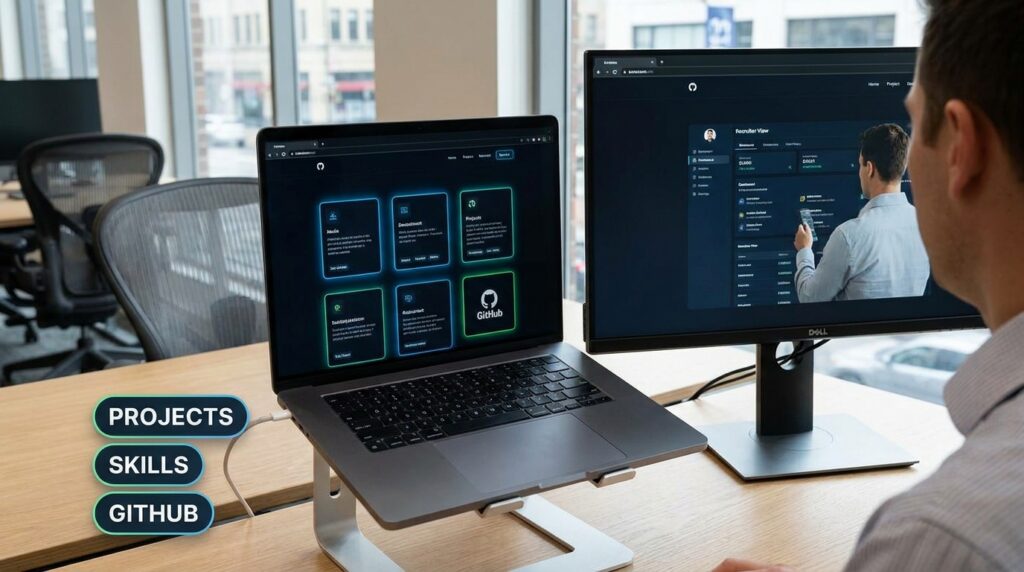
One of the biggest mistakes beginners make is applying for jobs without a portfolio.
A portfolio is proof of your skills. Without it, you are just another applicant with no visible experience.
Another common issue is using only copy-paste tutorial projects. These don’t impress recruiters because they show no originality or problem-solving.
A strong portfolio should include:
- Real-world projects (not just clones)
- Clear project descriptions
- Clean UI and functionality
- GitHub repositories with proper commits
Think of your portfolio as your personal brand. It should show what you can actually build, not what you copied.
Landing Your First Job as a Software Developer

Getting your first job is often the hardest part of becoming a software developer. Most entry-level roles still expect some level of experience, which feels unfair for beginners.
However, the real issue is usually preparation.
Many beginners:
- Apply without GitHub or portfolio
- Have no LinkedIn presence
- Start interview preparation too late
To improve your chances, you need to treat job hunting like a skill:
- Build a strong GitHub profile
- Create a professional LinkedIn account
- Practice coding interview questions
- Apply consistently, not randomly
Once you start presenting yourself like a developer—not just a learner—your chances of getting hired increase significantly.
Conclusion