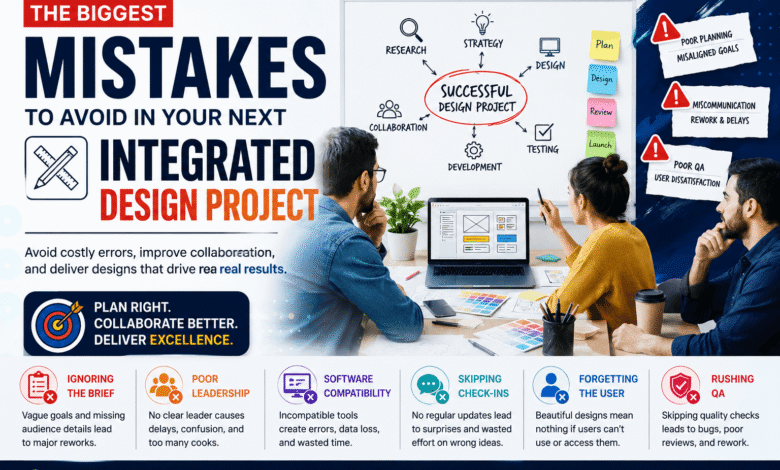
An integrated design project brings together multiple teams, disciplines, and objectives into one coordinated process. Designers, developers, marketers, project managers, and stakeholders often work together to create a final product that meets both business and user requirements.
While this collaborative approach offers many benefits, it also introduces new challenges. Even experienced teams can make costly mistakes that affect timelines, budgets, and project outcomes. Small communication gaps often grow into major issues when several departments depend on each other for progress.
The success of an integrated design project depends on more than creative talent. Strong planning, effective communication, and clear decision making are equally important. Understanding the most common mistakes can help teams avoid unnecessary setbacks and deliver better results from the start.
Ignoring the Importance of a Unified Brief
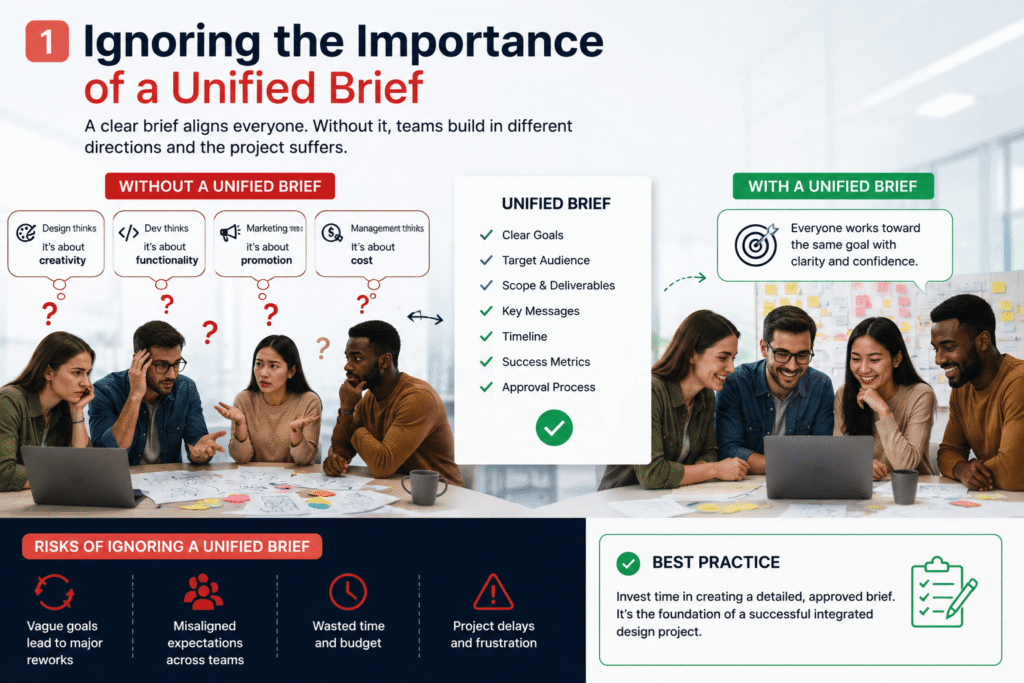
One of the most common reasons projects fail is the absence of a unified project brief. Teams often begin work with different interpretations of the project’s goals, leading to confusion and inconsistent outcomes.
A strong brief provides clear direction for everyone involved. It outlines objectives, target audiences, project requirements, timelines, and success metrics. Without this foundation, departments may move in different directions while believing they are working toward the same goal.
Vague goals create significant problems during execution. Designers may focus on visual appeal while marketers prioritize lead generation. Developers may optimize performance while stakeholders expect additional features that were never documented.
Target audience information is equally important. When teams lack detailed audience insights, they make assumptions that can negatively impact user engagement. Design decisions based on assumptions rarely produce optimal results.
Another mistake involves starting work before receiving formal approval. Teams sometimes begin creating concepts to save time. However, early work often requires extensive revisions when stakeholders eventually provide feedback.
A unified brief aligns expectations before production begins. This reduces misunderstandings and creates a stronger foundation for a successful integrated design project.
Failing to Establish Clear Leadership
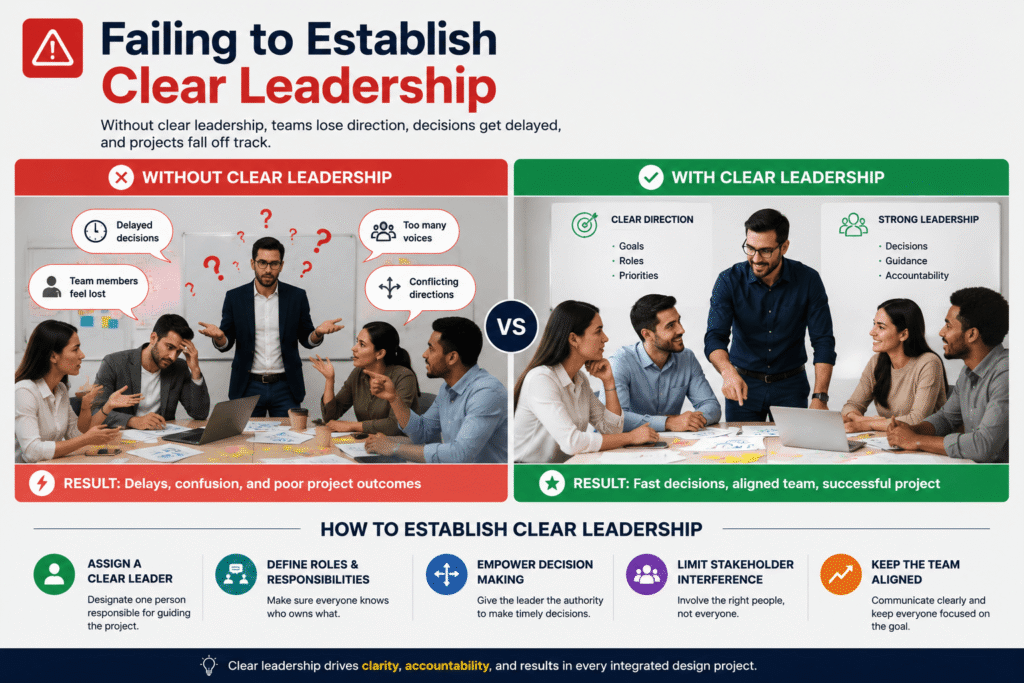
Integrated projects require leadership structures that support efficient decision making. Without clear leadership, teams often experience delays, confusion, and conflicting priorities.
Many projects suffer because nobody has final authority. Team members may wait for approvals from multiple stakeholders, creating bottlenecks throughout the workflow. Decisions that should take hours often consume days or weeks.
Unclear leadership also affects team confidence. People become uncertain about priorities and responsibilities when guidance is inconsistent. This uncertainty can slow productivity and reduce overall project quality.
Another common problem occurs when too many stakeholders attempt to control the project simultaneously. Each stakeholder may have valid concerns, but excessive involvement often creates conflicting directions.
Design teams frequently receive contradictory feedback from different decision makers. One stakeholder requests simplicity while another requests additional features. Developers receive changing requirements that affect schedules and budgets.
Establishing a clear leadership structure helps prevent these challenges. A designated project lead should coordinate communication, resolve conflicts, and maintain alignment with project objectives.
Strong leadership creates accountability and keeps the entire integrated design project moving forward efficiently.
Underestimating Software Compatibility Issues
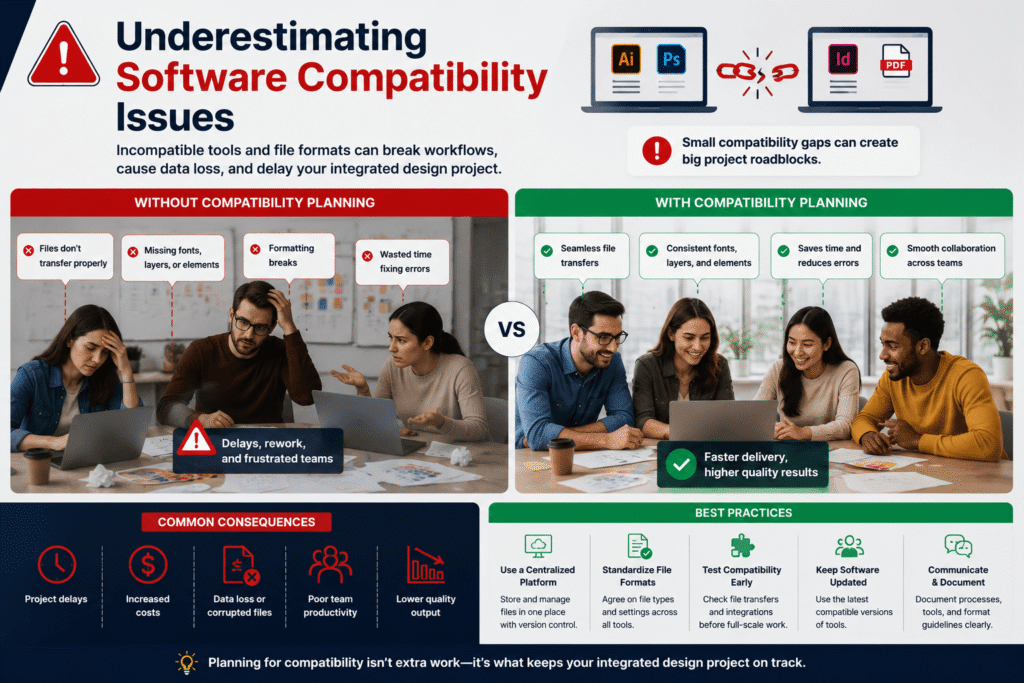
Technology plays a central role in modern design projects. Teams rely on multiple software platforms to create, review, and deliver work. Unfortunately, software compatibility problems remain a significant source of project delays.
Different departments often use different tools. Designers may work in one platform while developers use another. Marketing teams may manage content through separate systems that do not integrate seamlessly.
File transfer issues frequently emerge during collaboration. Assets may lose formatting, layers, fonts, or other critical elements when moved between applications. These problems create additional work and increase the likelihood of errors.
Version control challenges can also disrupt workflows. Team members may accidentally work from outdated files, resulting in duplicated effort and conflicting revisions. As projects become more complex, these risks increase significantly.
Many organizations resist adopting centralized collaboration platforms. Teams continue using familiar tools even when those tools create workflow inefficiencies. While change can feel uncomfortable, outdated processes often cost more in the long run.
A centralized system helps maintain consistency across departments. Shared platforms improve communication, reduce file management issues, and ensure everyone accesses the latest project information.
Addressing software compatibility early prevents unnecessary delays and supports smoother collaboration throughout the integrated design project.
Skipping Regular Stakeholder Check Ins
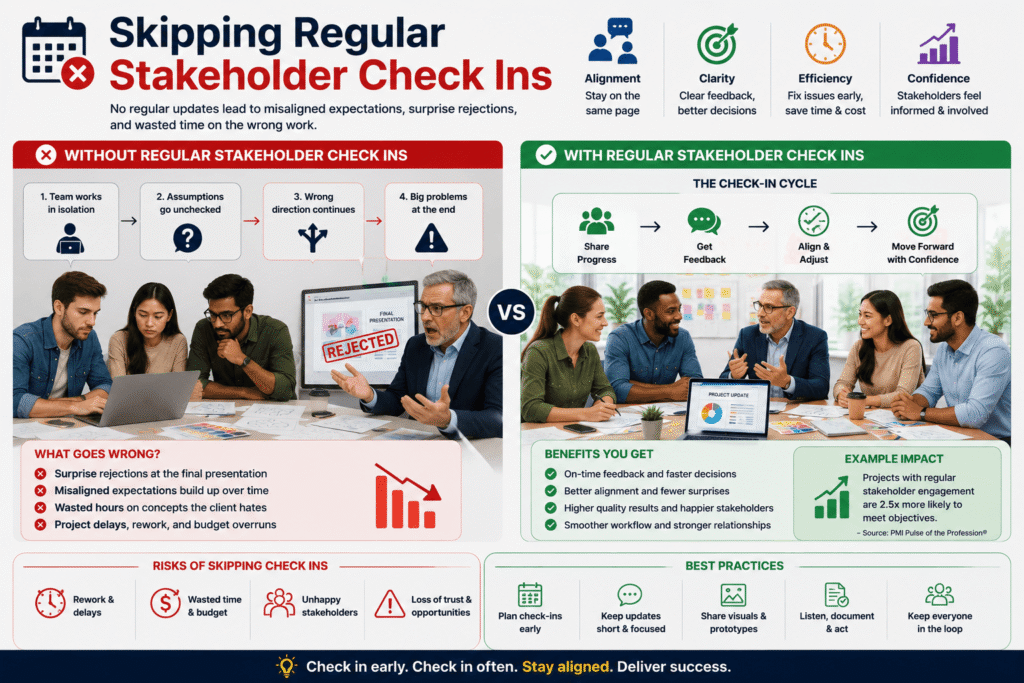
Regular communication is essential for project success. Yet many teams reduce stakeholder involvement until major milestones or final presentations. This approach creates significant risks.
Without ongoing feedback, assumptions begin to replace confirmed expectations. Teams invest substantial time developing concepts that may not align with stakeholder preferences. The longer this misalignment continues, the greater the potential impact becomes.
Final presentations often reveal these problems dramatically. Stakeholders may reject designs that teams believed were approved conceptually. Extensive revisions then become necessary, increasing costs and extending timelines.
Misaligned expectations tend to build gradually. Small concerns that could have been resolved quickly become major obstacles when left unaddressed. Frequent communication helps identify issues before they escalate.
Stakeholder check ins do not need to be lengthy meetings. Short reviews focused on key deliverables can provide valuable direction. These sessions allow teams to confirm assumptions and adjust priorities when necessary.
Regular communication also builds trust between project teams and stakeholders. Transparent progress updates create confidence and reduce surprises during critical project phases.
Consistent stakeholder engagement helps ensure that the integrated design project remains aligned with business goals from beginning to end.
Forgetting the End User Experience
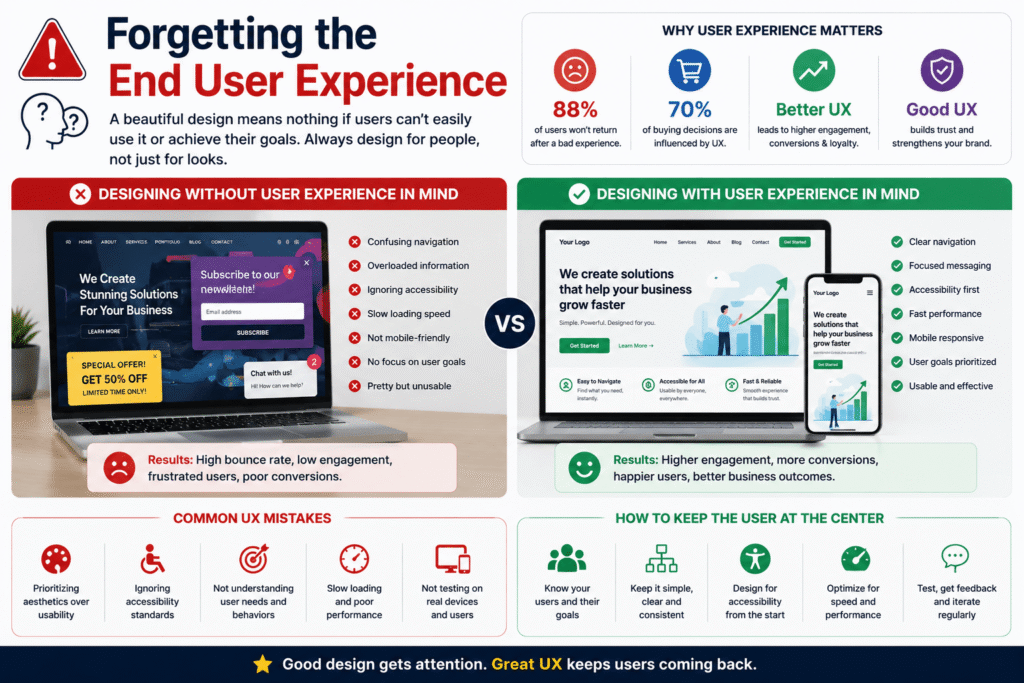
Many projects focus heavily on visual appeal while overlooking user experience. Attractive designs may receive positive internal feedback but still fail to deliver meaningful business results.
Users ultimately determine project success. If a website, application, or product creates frustration, people are unlikely to engage regardless of its appearance. Functionality and usability must remain central considerations throughout the design process.
Accessibility is one area frequently neglected. Organizations sometimes overlook accessibility standards while pursuing creative concepts. This decision can exclude users and create compliance risks.
Navigation challenges represent another common issue. Teams may prioritize innovative layouts that appear impressive during presentations but confuse actual users. Simplicity often produces better outcomes than unnecessary complexity.
Performance also influences user satisfaction. Large visual elements and complex interactions can reduce loading speeds. Even beautiful designs lose effectiveness when users abandon pages before content appears.
Businesses sometimes prioritize aesthetics over conversions. Design decisions should support user goals while advancing business objectives. Effective user experiences balance visual quality with practical functionality.
At Its Tech Club, we regularly observe that successful projects focus on user needs from the earliest planning stages. Teams that prioritize usability consistently achieve stronger outcomes than those focused exclusively on appearance.
A user centered approach strengthens every integrated design project and improves long term performance.
Rushing the Final Quality Assurance Phase
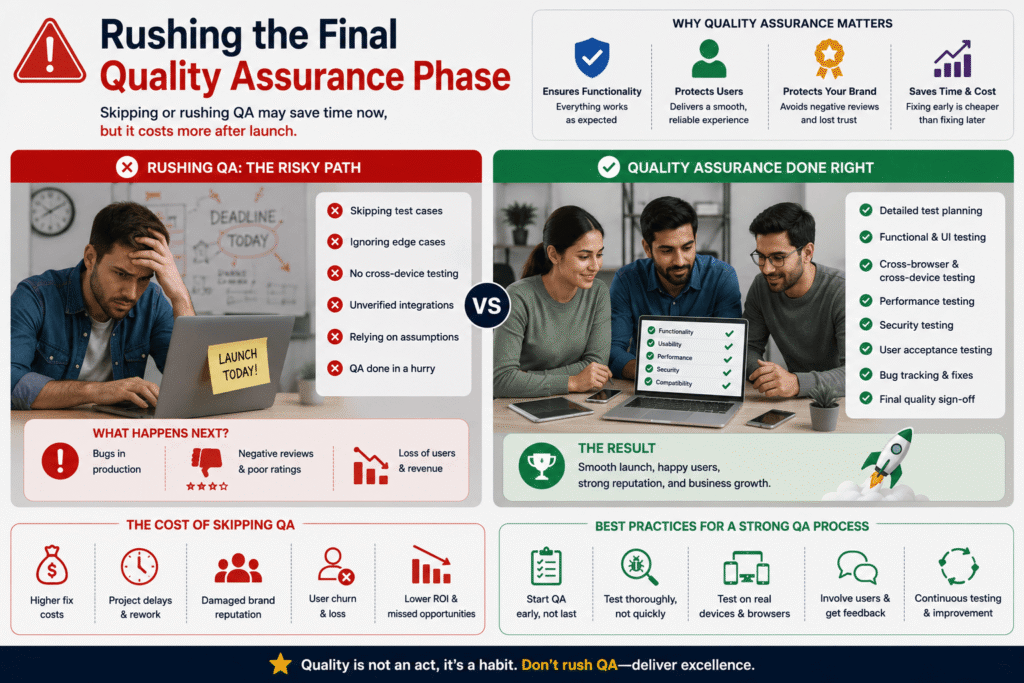
Quality assurance often receives less attention than earlier project stages. Teams facing deadlines may reduce testing efforts to accelerate delivery. Unfortunately, this decision frequently creates larger problems later.
Even well executed projects can contain hidden issues. Broken links, layout inconsistencies, functionality errors, and content mistakes may remain undetected without comprehensive testing.
Launching with obvious defects can damage brand credibility. Users quickly notice problems that affect usability or performance. Negative first impressions are often difficult to reverse.
Software related projects face additional risks. Bugs discovered after launch frequently require emergency fixes that consume resources and disrupt operations. Preventing issues before release is typically far more efficient than correcting them afterward.
Testing should involve multiple perspectives. Designers, developers, marketers, and stakeholders may identify different issues during review. Comprehensive testing increases the likelihood of detecting problems before users encounter them.
Quality assurance should also include performance evaluations, accessibility checks, device testing, and content reviews. Each component contributes to the overall user experience.
Organizations that rush this phase often spend weeks resolving preventable issues. Investing additional time before launch usually produces better long term results.
Conclusion
Every integrated design project involves numerous moving parts, making mistakes almost inevitable without proper planning and coordination. Challenges such as unclear briefs, weak leadership, software compatibility issues, poor stakeholder communication, neglected user experience, and rushed testing can significantly affect project outcomes.
The good news is that these mistakes are largely preventable. Teams that establish clear objectives, maintain open communication, prioritize user needs, and follow structured review processes consistently achieve stronger results. Successful projects are not defined solely by creative ideas. They are built through collaboration, discipline, and continuous alignment among everyone involved.
At Its Tech Club, we believe that understanding common project pitfalls is one of the most effective ways to improve future performance. By avoiding these mistakes and adopting proven best practices, organizations can deliver more efficient, user focused, and successful integrated design project outcomes that create lasting value for both businesses and customers.