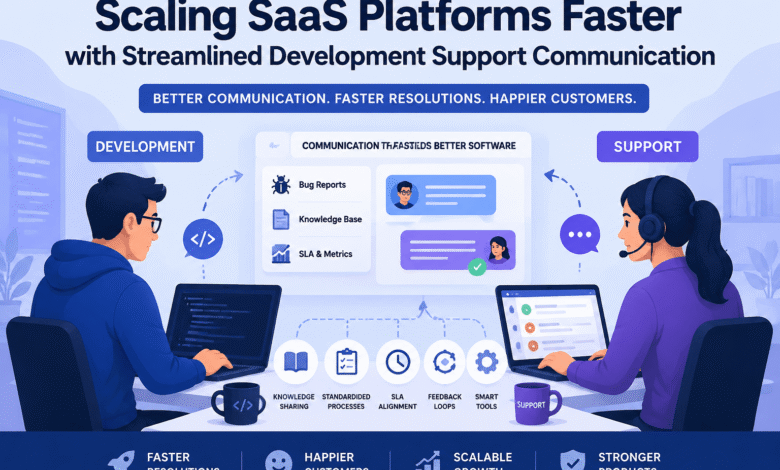
Scaling a SaaS platform efficiently relies heavily on how well development and support teams communicate. Development support communication is not just a process; it determines how quickly issues are resolved, features are rolled out, and customers remain satisfied. Many companies underestimate the importance of structured communication, which often results in wasted time, duplicated work, and frustrated teams. Engineers receiving tickets without clear reproduction steps struggle to identify the source of errors, while support teams lack visibility into sprint progress, causing critical updates to be missed. These gaps make verbal conversations insufficient for complex problem-solving, and important details are often lost or misinterpreted.
By prioritizing structured communication, SaaS companies can streamline workflows and reduce unnecessary context switching between teams, which significantly improves overall productivity. Consistent communication practices ensure that both support and engineering understand their roles, responsibilities, and expectations. When teams are aligned, incidents are resolved faster, customer satisfaction improves, and the product roadmap becomes more actionable. Implementing clear processes for development support communication is essential for sustaining rapid growth without overwhelming internal teams or compromising service quality.
Defining the Handoff Process Between Engineering and Support
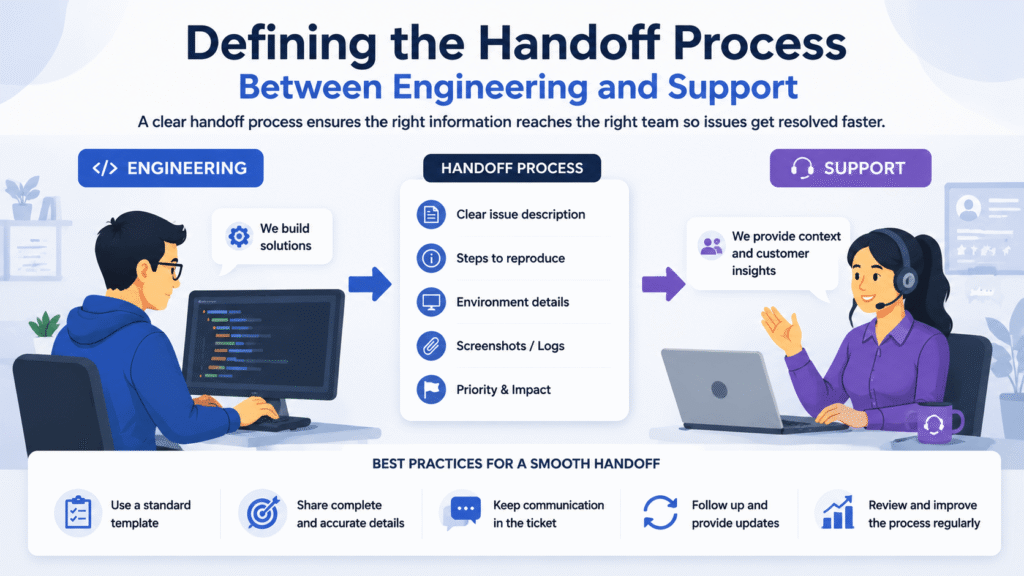
Creating a clear handoff process reduces miscommunication between support and engineering teams. Engineers often receive tickets with incomplete steps to reproduce the error, making it difficult to act quickly or prioritize issues correctly. Support teams, in contrast, may lack visibility into the current sprint status, which means they might escalate issues that are already being addressed. Relying solely on verbal updates is ineffective because essential details can get lost, misinterpreted, or forgotten. Establishing a defined handoff process ensures both teams share accurate information, improving resolution times and reducing repeated work.
A standardized handoff also allows engineers to understand the context of each issue, minimizing time spent investigating problems unnecessarily. Support agents can provide complete details such as error messages, user environment, and previous troubleshooting steps. This process improves accountability and efficiency by setting expectations for what information must be included in every ticket. Companies that invest in formalized handoffs benefit from faster issue resolution and more reliable development support communication, which is a crucial factor in scaling SaaS platforms successfully.
Creating a Centralized Knowledge Base for Routine Queries
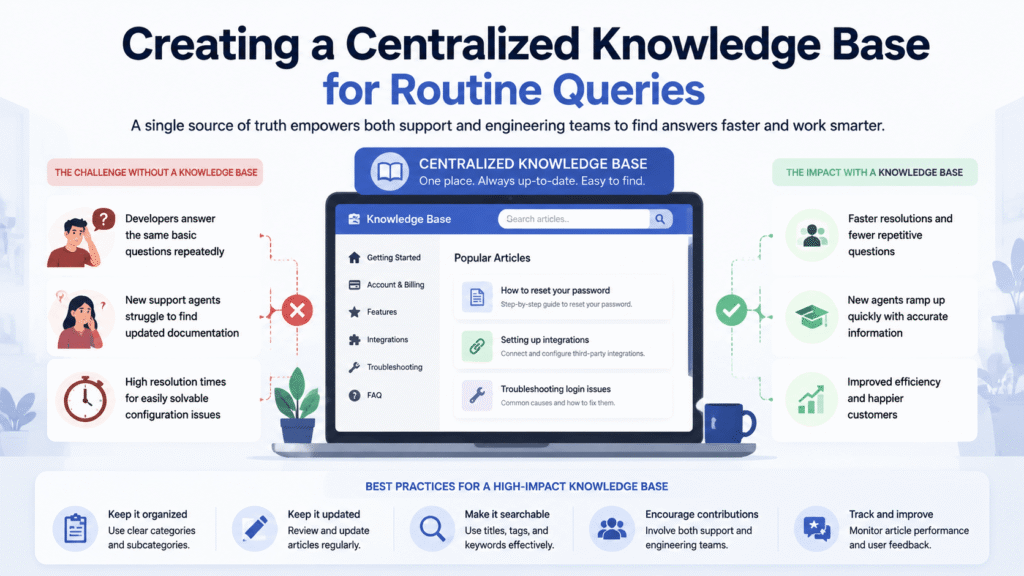
A centralized knowledge base is essential for preventing repetitive questions from slowing down development work. Developers often find themselves answering the same basic technical queries multiple times a day, which takes away valuable time from building new features or addressing critical bugs. New support agents frequently struggle to find updated documentation for features, which leads to inconsistent responses and longer resolution times. A well-maintained knowledge repository ensures that team members have access to step-by-step instructions for recurring issues, empowering support agents to resolve problems independently without repeatedly disturbing the engineering team.
Centralized knowledge also improves onboarding for new support staff. Agents can quickly access the most recent product updates and feature documentation, reducing mistakes and improving customer experience. High-resolution times for easily solvable configuration issues frustrate both internal teams and clients. Its Tech Club emphasizes structured documentation as a foundation for efficient communication and reduced operational bottlenecks. By investing in a knowledge base, SaaS companies enhance support efficiency while giving developers uninterrupted focus time for higher-value tasks.
Standardizing Your Internal Bug Reporting Templates
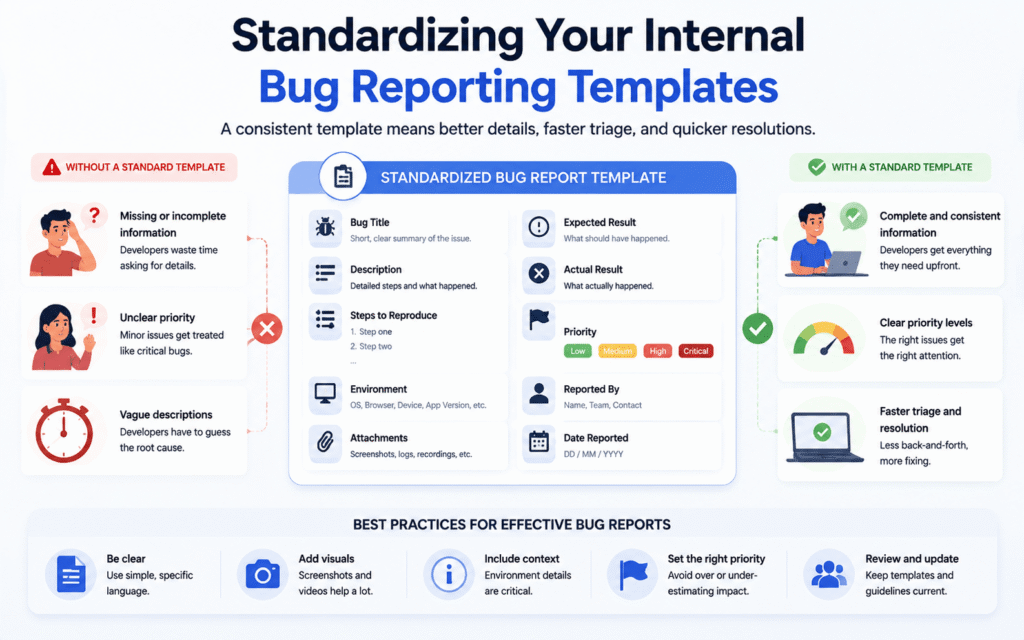
Consistent bug reporting is a key aspect of effective development support communication. Developers often receive incomplete bug tickets missing important environmental details, such as browser versions or operating systems, which delays issue replication. Unclear priority levels may cause minor visual glitches to be treated as urgent, creating unnecessary stress. Vague descriptions force developers to guess the root cause, resulting in repeated back-and-forth communication and longer resolution times. Standardized bug reporting templates ensure tickets include exact steps to reproduce the problem, relevant screenshots, environment information, and clearly defined severity levels.
Implementing these templates improves workflow efficiency for both support and engineering teams. When developers receive complete tickets, they can focus directly on solving the problem without additional clarification requests. Support agents benefit from clear guidance on what information to gather, leading to faster resolution and improved customer satisfaction. A standardized reporting process strengthens the overall communication loop between teams and reduces misunderstandings, ultimately accelerating the SaaS platform’s growth and stability.
Setting Realistic Service Level Agreements for Internal Teams
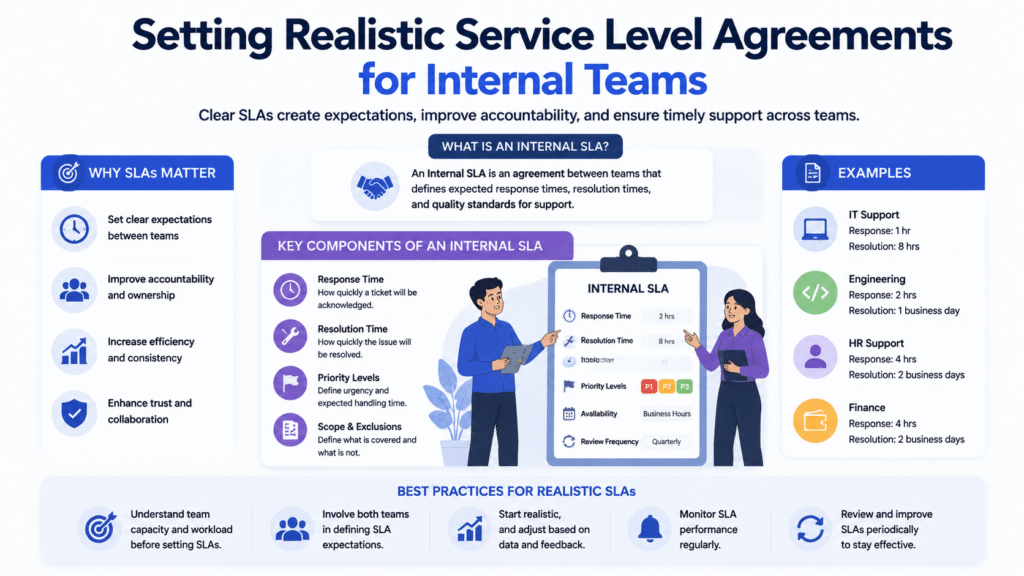
Realistic internal service level agreements prevent friction between support and engineering teams. Customer success teams sometimes promise fix times that are impossible for engineers to meet, causing constant context switching and frustration. Misaligned expectations about urgency can generate stress and resentment, lowering morale and productivity. Clearly defined internal SLAs establish achievable response times, distinguish urgent from non-urgent tasks, and ensure accountability across teams. These agreements create alignment between support and engineering, reducing miscommunication and preventing unnecessary disruptions to high-priority work.
Internal SLAs also help customer-facing teams communicate more effectively with clients. When support agents understand realistic engineering timelines, they can provide accurate expectations, reducing client frustration and complaints. Teams gain clarity on priorities and responsibilities, which improves overall operational efficiency. By combining realistic SLAs with structured development support communication, SaaS companies ensure engineers are not constantly distracted, leading to faster resolutions and higher-quality feature development.
Implementing Feedback Loops for Product Improvement
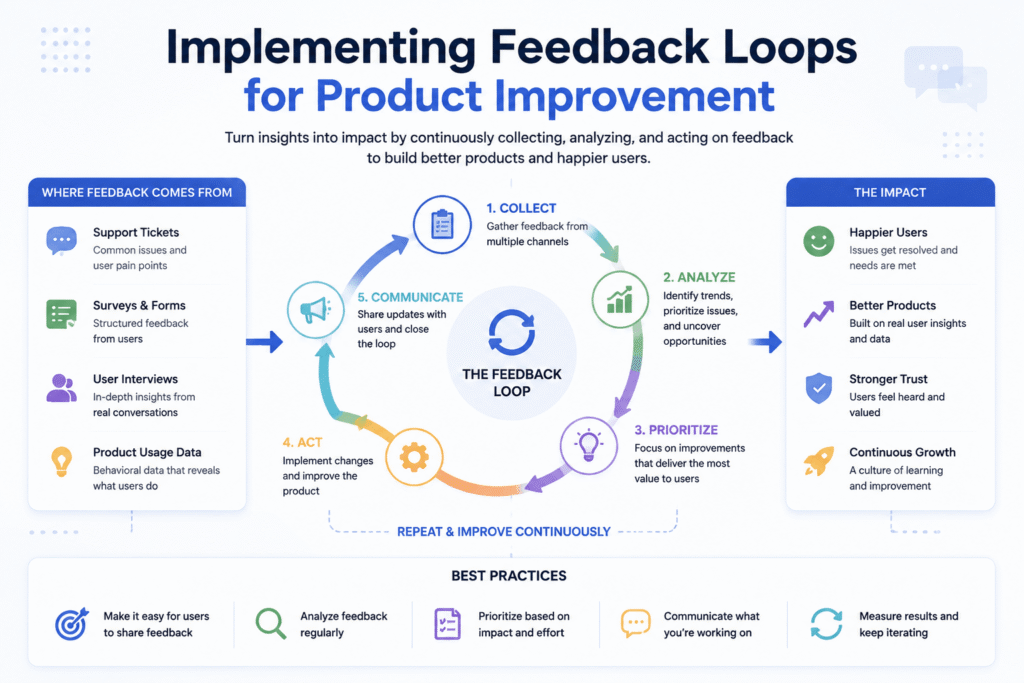
Feedback loops ensure recurring user complaints reach the product roadmap and drive meaningful enhancements. Without structured feedback, usability issues often go unaddressed, and support teams feel ignored when suggesting improvements. SaaS companies risk wasting resources building features users do not actually want, which can lead to decreased adoption and revenue loss. Implementing mechanisms such as regular review meetings, automated survey collection, and centralized dashboards allows teams to analyze patterns, prioritize improvements, and respond to user needs efficiently.
Continuous feedback loops strengthen communication between support and product teams. Insights from customer interactions can inform development priorities, while support agents feel heard and empowered to influence product direction. By integrating feedback loops with development support communication, SaaS platforms reduce wasted effort, improve user experience, and enhance customer satisfaction. The systematic collection of input ensures resources are focused on features that truly add value and improve retention.
Choosing the Right Tools to Sync Workflows
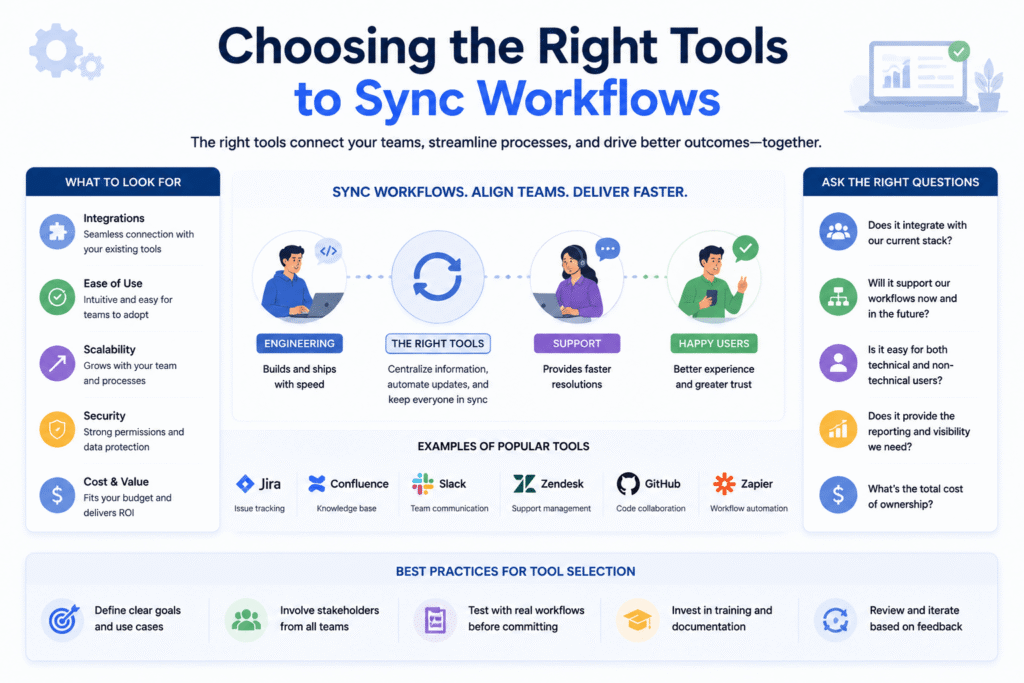
Choosing the right tools ensures seamless communication across teams. Without proper integration, information can get lost between ticketing software and developer tools, causing duplicated work or missed updates. Manual data entry increases the likelihood of human error, while notification overload may prompt developers to mute essential channels. Selecting integrated project management, ticketing, and communication tools creates a single source of truth for both support and engineering teams. Automation for status updates, tagging, and notifications helps reduce noise and ensures important information is visible without overwhelming team members.
Integrated tools also improve accountability and trackable workflows. Teams can easily monitor progress, reduce repetitive tasks, and avoid miscommunication. Using the right technology stack strengthens development support communication, making issue resolution faster and more reliable. With proper tools, SaaS platforms can maintain consistent collaboration, minimize operational errors, and scale efficiently while keeping both internal teams and customers satisfied.
Conclusion
Scaling SaaS platforms efficiently requires strong development support communication. Clear handoff processes, centralized knowledge, standardized bug templates, realistic internal SLAs, feedback loops, and the right tools are all essential. Prioritizing structured communication reduces redundant work, prevents miscommunication, and increases team efficiency. Platforms like Its Tech Club offer insights on optimizing internal communication for faster problem resolution and higher customer satisfaction.
Focusing on these strategies allows support and engineering teams to work harmoniously, reducing frustration and context switching. Developers spend more time on high-value tasks, support agents resolve queries faster, and product teams receive actionable feedback. Structured development support communication ultimately drives faster scaling, better product quality, and improved user experience. Teams aligned around clear processes deliver measurable results while sustaining growth and maintaining operational excellence.