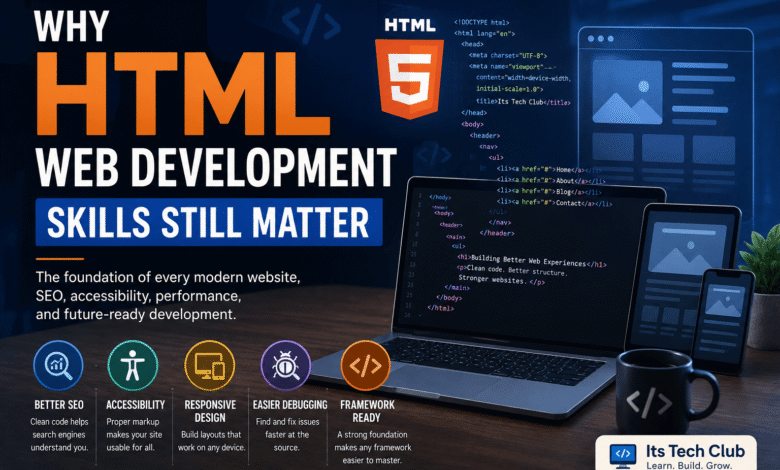
Many aspiring developers believe modern frameworks have replaced the need for HTML fundamentals. This assumption often creates unnecessary challenges during their learning journey. While technologies continue evolving, the foundation of every website remains unchanged.
HTML web development still plays a critical role in creating fast, accessible, and well structured websites. Every browser, search engine, and assistive technology depends on properly written markup. Developers who ignore these fundamentals often struggle when projects become more complex.
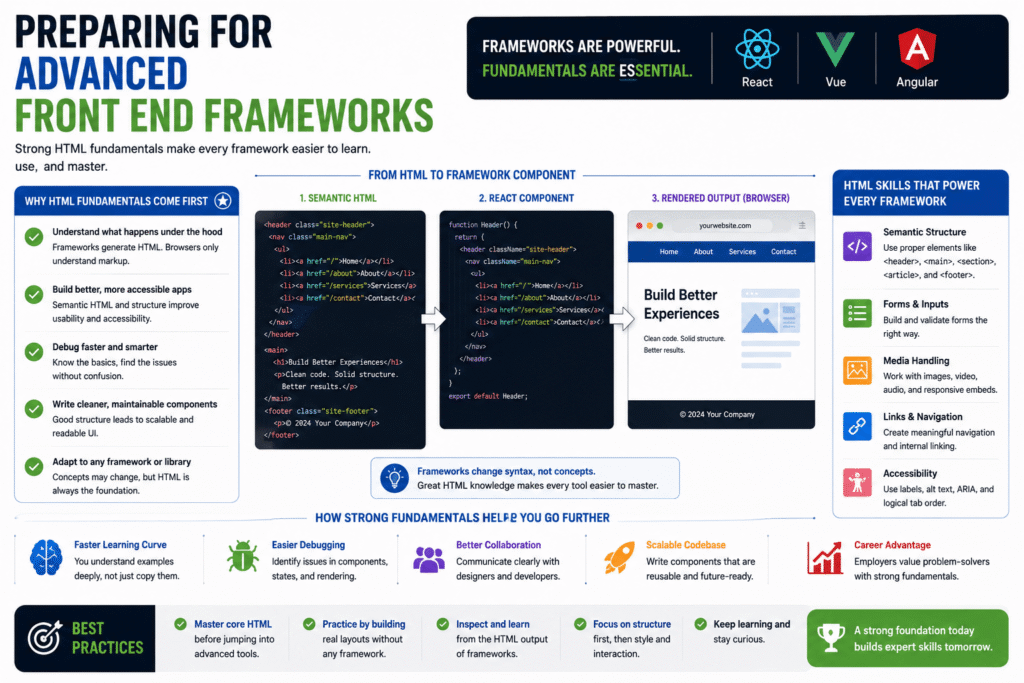
Frameworks like React, Vue, and Angular have transformed front end development. However, these tools still generate HTML that browsers can understand. Without a solid foundation, developers may find themselves fixing the same issues repeatedly.
Strong HTML skills also improve collaboration between designers, developers, and SEO specialists. Understanding the structure of a website makes every stage of development more efficient. It also reduces errors that can negatively impact performance and user experience.
Learning these core skills is not about avoiding modern technologies. Instead, it is about building a foundation that supports every advanced tool you use later. At Its Tech Club, we believe mastering the basics remains one of the smartest investments for long term growth.
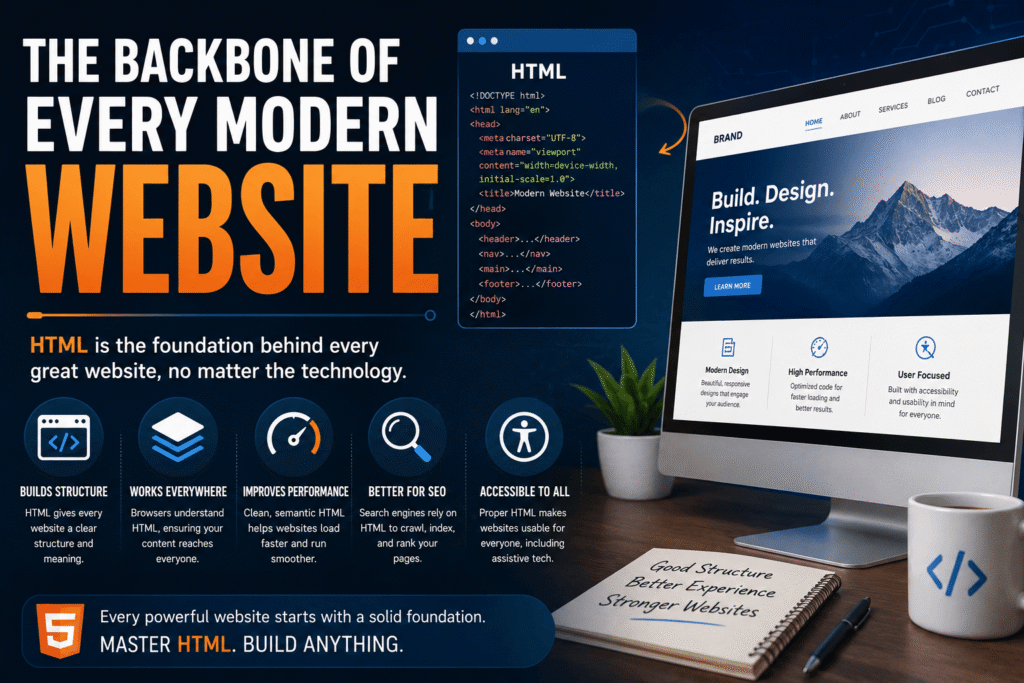
The Backbone of Every Modern Website
Many junior developers rush toward advanced frameworks before understanding the fundamentals. They often memorize commands without learning how websites actually work. This approach eventually creates confusion and frustration.
Every website, regardless of its complexity, relies on HTML behind the scenes. Browsers cannot interpret React components, JavaScript libraries, or styling frameworks directly. They ultimately render structured HTML elements to display content.
Think about a modern ecommerce platform. Product pages, navigation menus, images, and buttons all depend on a clear document structure. Even highly interactive applications begin with simple markup.
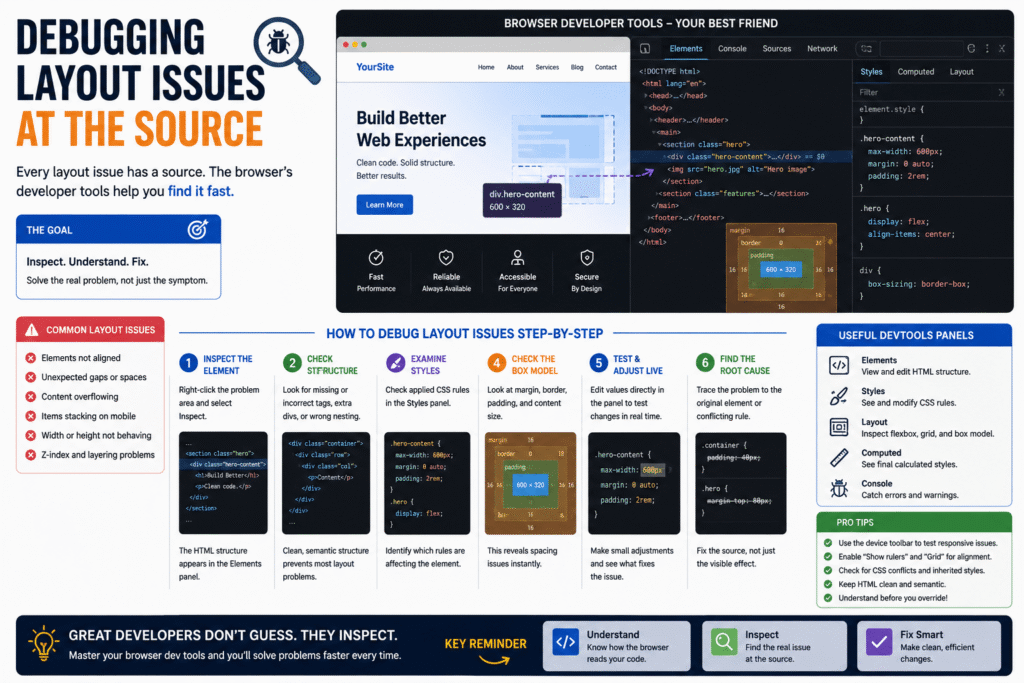
Developers who understand HTML web development can identify problems much faster. They know how different elements interact and how browsers process information. This knowledge becomes extremely valuable when troubleshooting complicated projects.
Skipping the fundamentals may save time initially, but problems emerge later. Developers often struggle when layouts break or components fail unexpectedly. These issues usually originate from poor structural decisions.
Learning HTML also builds confidence. Instead of relying entirely on tutorials, developers understand why something works. This understanding creates stronger problem solving abilities over time.
Another advantage is adaptability. Technologies change every few years, but HTML remains a constant. Developers who master the foundation can adapt to new tools much faster.
Strong core skills also improve communication within development teams. Everyone can discuss structure and semantics using a shared language. This reduces misunderstandings and improves project efficiency.
You may also like:
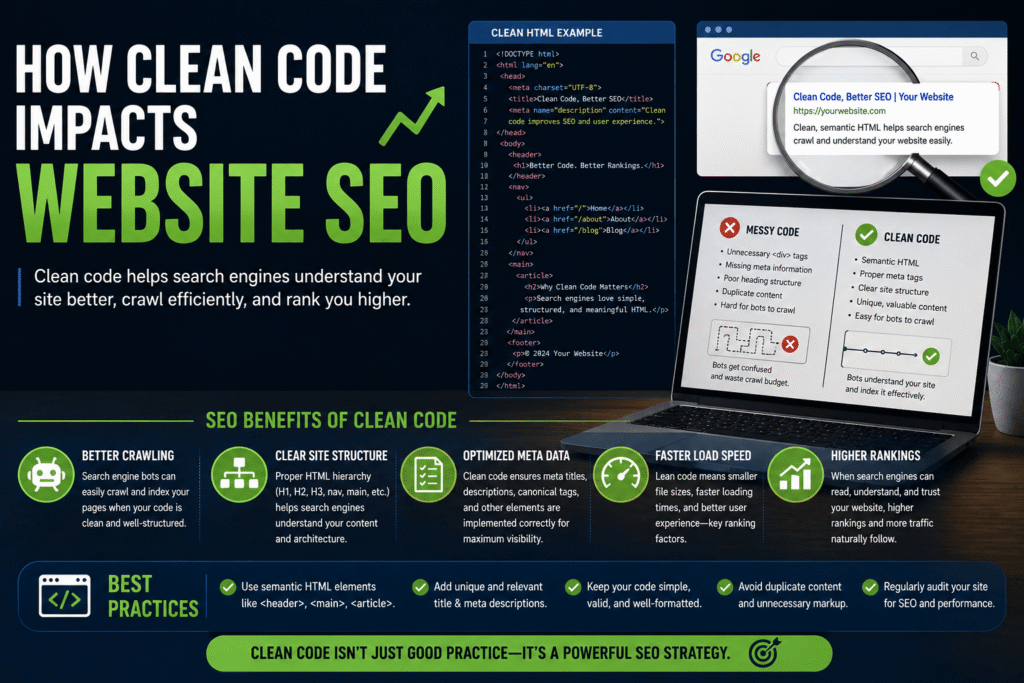
How Clean Code Impacts Website SEO
Search engine optimization involves much more than adding keywords to a webpage. Search engines analyze how websites are built and structured. Poor coding practices can limit visibility regardless of content quality.
Clean HTML web development helps search engines understand website architecture. Bots rely on headings, navigation elements, and metadata to interpret content. Proper structure improves indexing and overall discoverability.
Many developers underestimate the importance of semantic HTML. Using appropriate tags provides clear signals to search engine crawlers. Elements like headers, sections, articles, and footers help organize information effectively.
Messy code can also increase page complexity. Excessive nesting and unnecessary elements make websites harder to process. Search engines allocate a crawl budget to every website, and inefficient structures waste valuable resources.
Meta titles and descriptions also depend on proper implementation. These elements help search engines display accurate information in search results. Missing or duplicated metadata can weaken performance.
Site speed also benefits from clean coding practices. Lightweight structures generally load faster than bloated alternatives. Faster websites create better user experiences and improve search visibility.
Internal linking becomes easier when the foundation is organized properly. Visitors and search engines can navigate the website more efficiently. This improves engagement and reduces user frustration.
Developers should think about SEO from the beginning rather than adding it later. Building a search friendly structure early prevents expensive corrections in the future.
Understanding HTML web development gives developers a stronger advantage in digital marketing environments. Technical decisions directly influence how websites perform online.
You may also like:
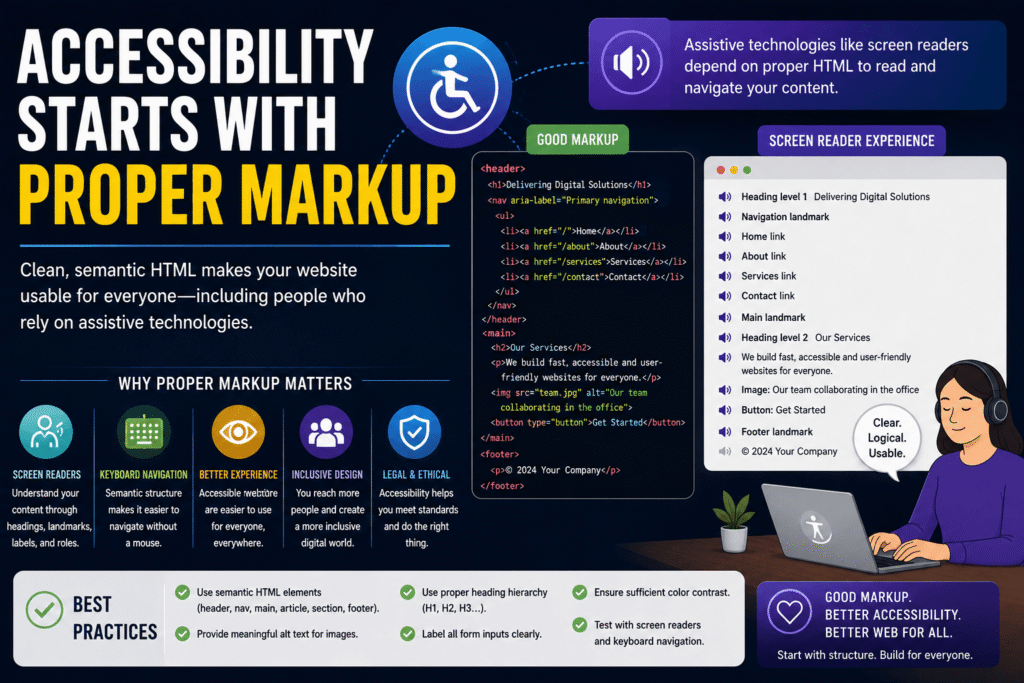
Accessibility Starts with Proper Markup
Accessibility is no longer an optional feature for modern websites. Millions of people rely on assistive technologies every day. Poor coding decisions can unintentionally exclude these users.
Screen readers interpret content based on proper HTML structure. Incorrect or missing tags make navigation difficult and confusing. This creates barriers that many users cannot overcome.
Simple changes can dramatically improve accessibility. Using proper heading hierarchies helps users understand page organization. A logical flow allows screen readers to present information accurately.
Buttons and links should always have clear labels. Generic phrases create unnecessary confusion during navigation. Descriptive text provides context and improves usability.
Images also require meaningful alternative text. Screen readers cannot interpret visuals without these descriptions. Well written alternative text ensures everyone receives the same information.
Forms are another area where accessibility often fails. Every field should have a clear label and purpose. Users should understand exactly what information is required.
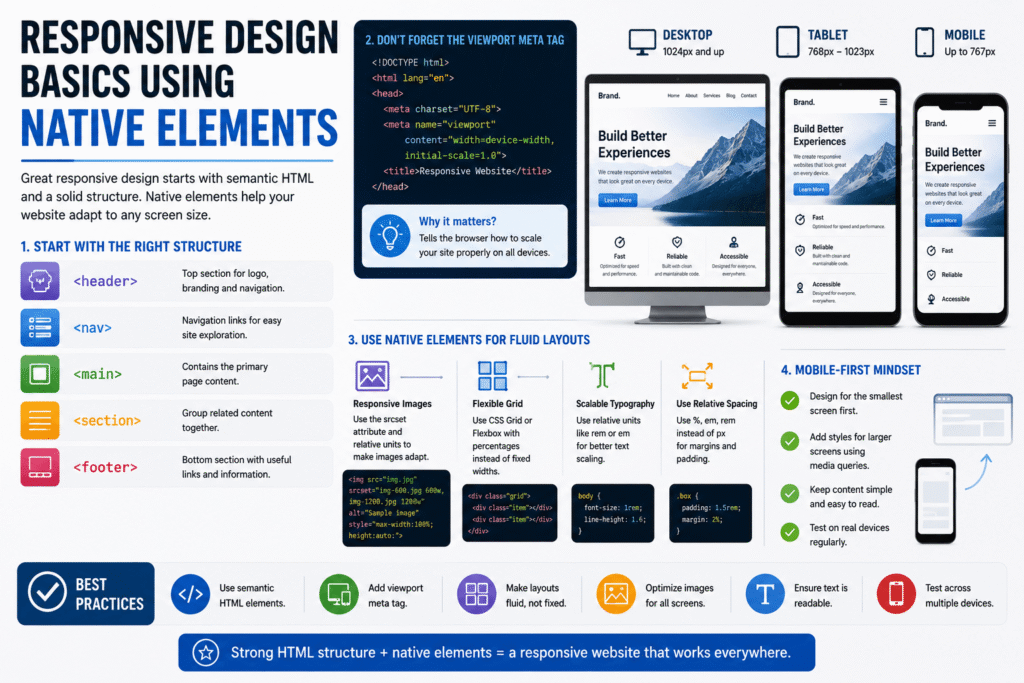
Semantic HTML elements simplify accessibility implementation. Navigation tags, main sections, and articles provide additional context automatically. These small improvements create a better experience for everyone.
Accessibility also benefits users without disabilities. Clear structures improve navigation and reduce confusion. Better usability often increases engagement across all audiences.
Developers should treat accessibility as a standard practice rather than an extra feature. Building inclusive websites creates more positive digital experiences for everyone.
Strong HTML web development skills make accessibility much easier to achieve. Developers can create websites that function properly across different devices and technologies.
You may also like: