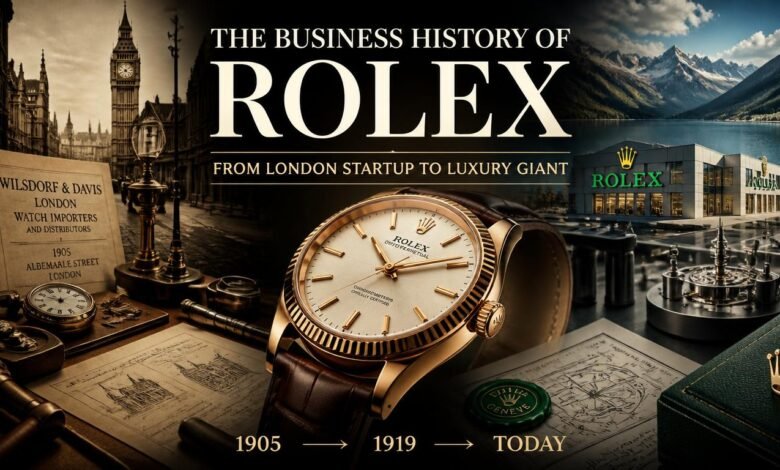
Rolex is one of the most recognizable luxury brands in the world, but its journey began with a small watch business in London. The company didn’t become famous simply because it made expensive watches. Its success came from a combination of engineering, branding, marketing, smart positioning, and long-term business decisions.
From Hans Wilsdorf’s early vision to the Oyster case, the Perpetual movement, the quartz crisis, and today’s tightly controlled luxury market, Rolex offers one of the most interesting business stories in modern watchmaking.
1. The Beginning of Wilsdorf and Davis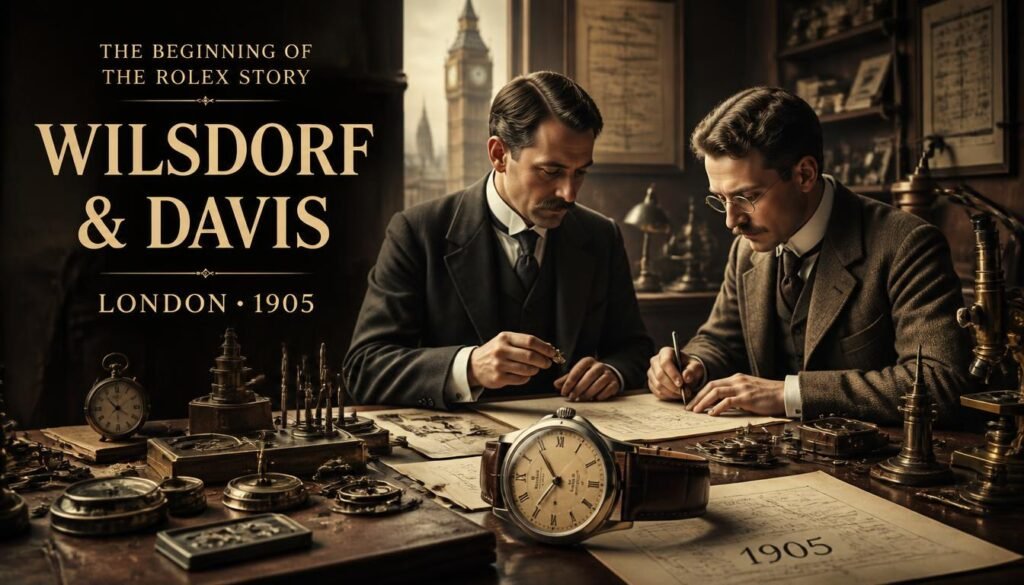
The Rolex story began in London in 1905 with Wilsdorf and Davis, a company founded by Hans Wilsdorf and Alfred Davis.
Wilsdorf was the visionary behind the business. He believed wristwatches could become highly accurate and reliable despite being smaller than traditional pocket watches.
At the time, wristwatches were not yet considered the ultimate symbol of luxury. Wilsdorf saw an opportunity to change that perception.
2. How the Rolex Name Was Created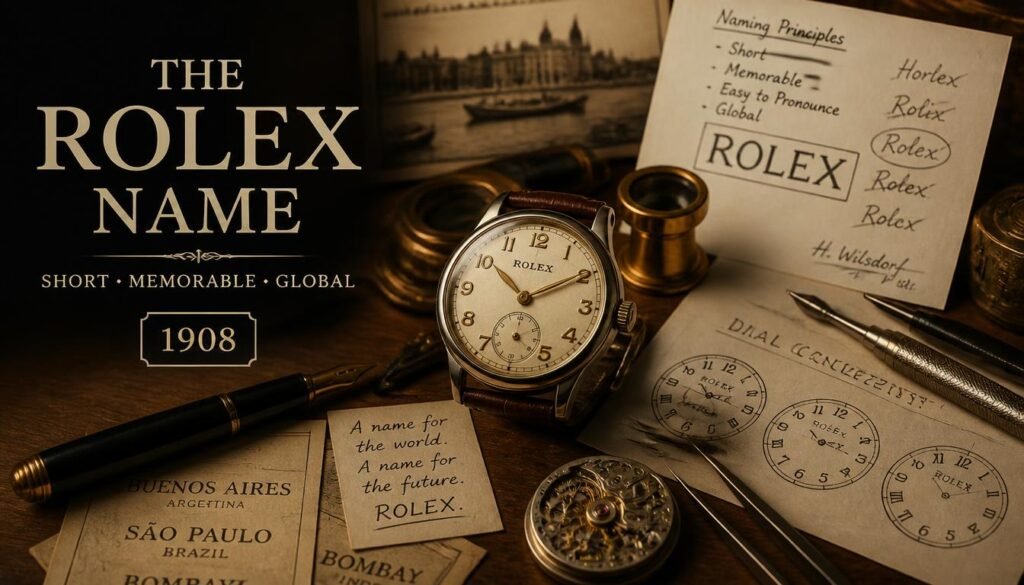
In 1908, the Rolex trademark was officially registered. The name was carefully chosen. Wilsdorf wanted something short, memorable, easy to pronounce, and suitable for watch dials in different countries. This was an early example of smart branding. Instead of relying only on the manufacturer’s identity, Wilsdorf created a name that could eventually stand on its own. That decision became extremely important as Rolex expanded internationally.
3. The Move From London to Geneva
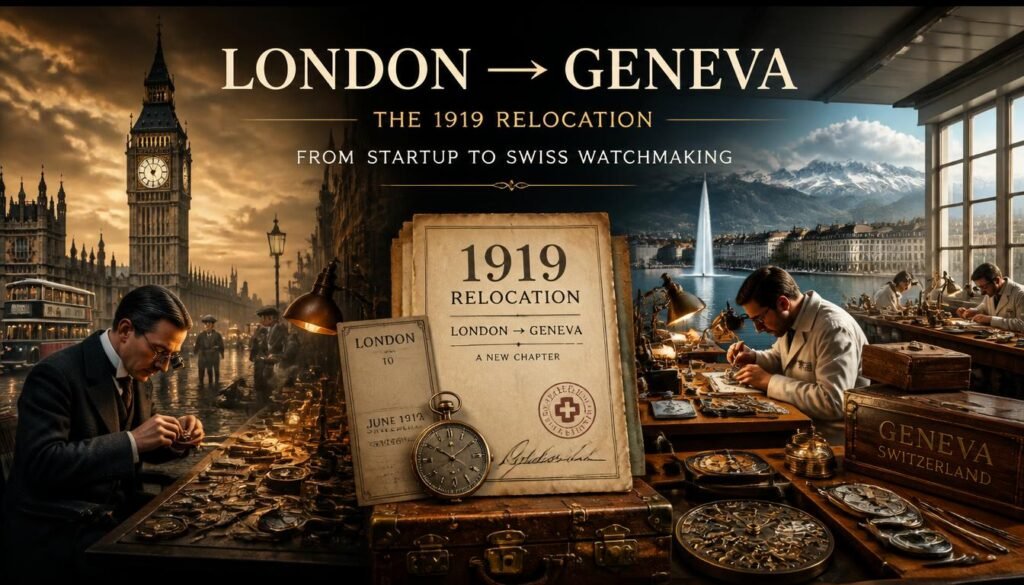
The First World War created serious financial challenges for British businesses. Rising taxes and economic pressures made continuing operations in London increasingly difficult. In 1919, the company moved its business to Geneva, Switzerland. A year later, Montres Rolex SA was registered in Geneva. The move placed Rolex in the heart of the Swiss watchmaking industry, giving the company access to skilled craftsmen, suppliers, and a growing reputation for high-quality mechanical watchmaking. This relocation became one of the most important decisions in Rolex’s business history.
4. Building a Reputation for Precision
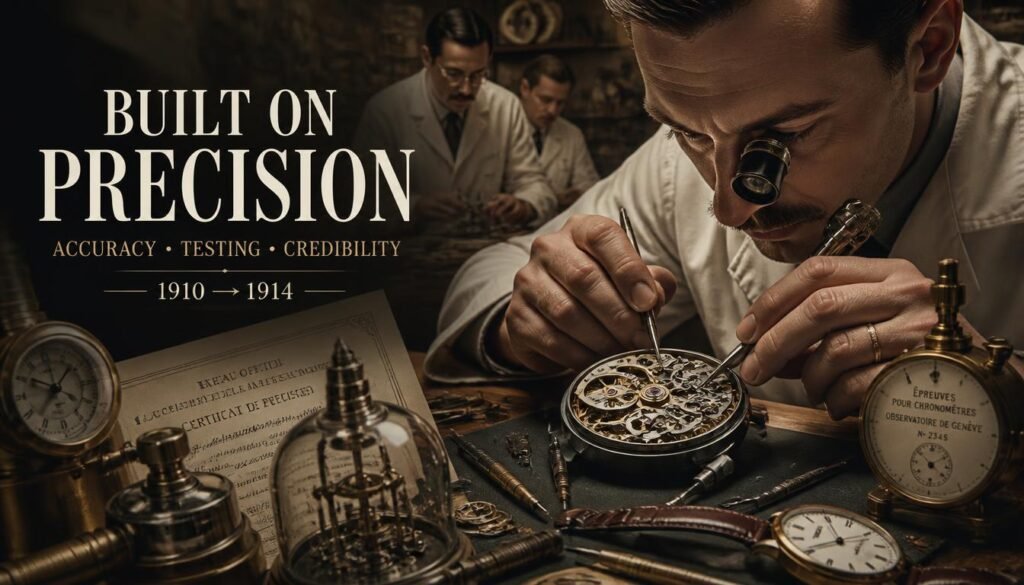
Wilsdorf understood that Rolex needed more than attractive designs. It needed credibility. In 1910, a Rolex wristwatch received a Swiss Certificate of Chronometric Precision, an important achievement for a wristwatch. In 1914, another Rolex movement received a Class “A” precision certificate from Britain’s Kew Observatory. These milestones helped challenge the idea that wristwatches were less accurate or dependable than pocket watches. Precision became part of the Rolex identity.
5. The Oyster Case Changes Everything
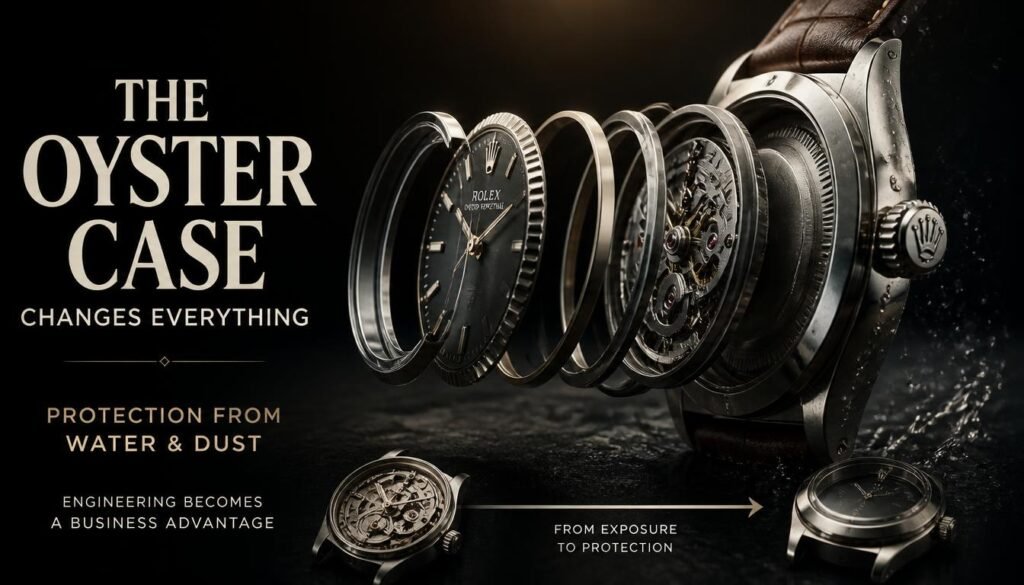
One of Rolex’s biggest breakthroughs arrived in 1926 with the patented Oyster case. The design created a highly resistant seal that helped protect the movement from water and dust. Instead of treating water resistance as a minor technical feature, Rolex made it a central part of the product’s identity. This was more than engineering. It was a business opportunity. A watch that could survive difficult conditions could be marketed as a serious instrument rather than simply an accessory
6. Mercedes Gleitze and Marketing Through Achievement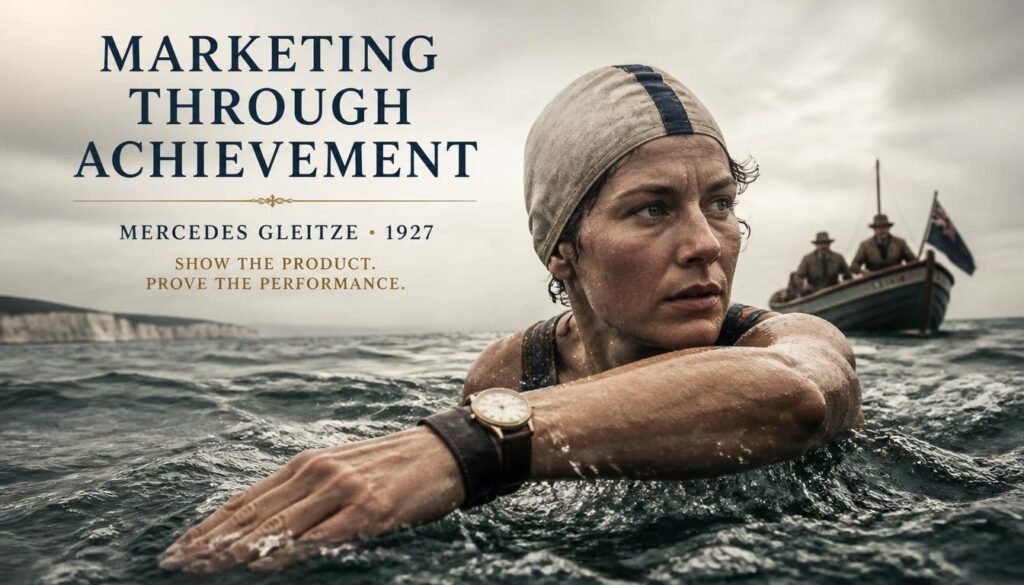
In 1927, swimmer Mercedes Gleitze attempted to cross the English Channel while wearing a Rolex Oyster. Although she did not complete the swim, the watch survived the demanding conditions. Rolex used the event as a powerful public-relations opportunity. This introduced a marketing approach that would become central to the brand: demonstrate the watch’s performance through real people doing extraordinary things. Rather than simply telling customers that Rolex watches were durable, the company showed them.
7. The Perpetual Rotor Revolution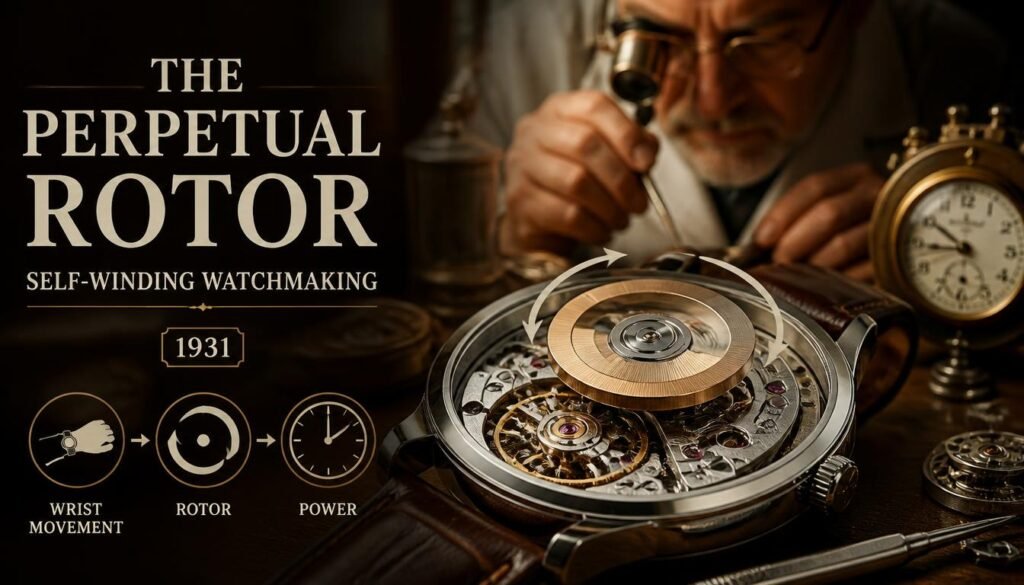
Rolex introduced another major innovation in 1931 with its patented Perpetual rotor. The self-winding mechanism used the movement of the wearer’s wrist to wind the watch. This made automatic winding far more practical and helped establish the foundation of the modern automatic mechanical watch. Once again, Rolex connected technical innovation with everyday convenience. The Oyster case protected the movement, while the Perpetual mechanism helped keep it running. Together, they became fundamental parts of the Rolex identity.
8. From Watches to Professional Tools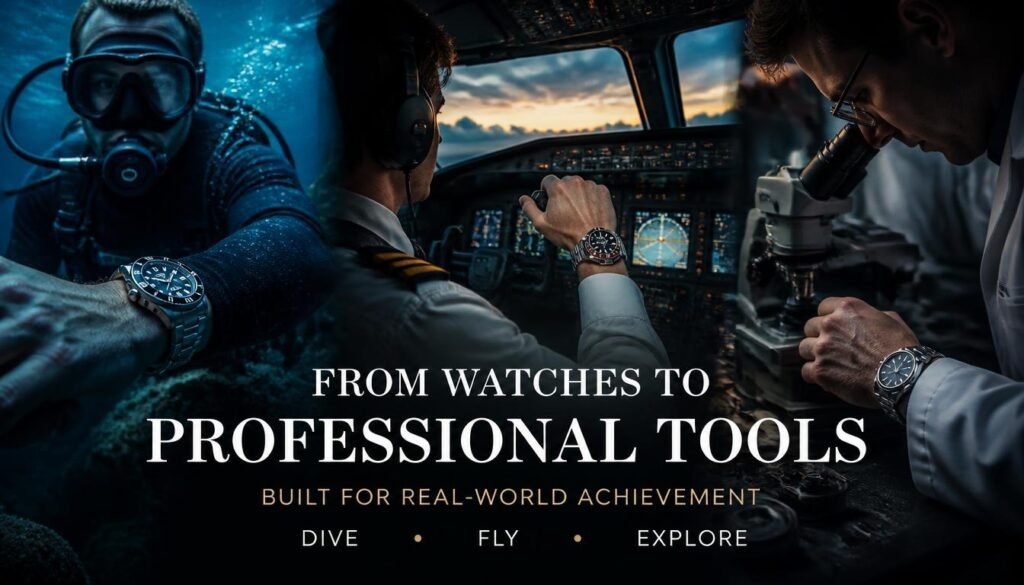
Rolex gradually expanded into what became known as tool watches. These watches were designed for specific professional environments. The Submariner became strongly associated with diving. The GMT-Master was developed for pilots and international travelers. The Milgauss was designed for professionals working around strong magnetic fields. This strategy gave Rolex something competitors couldn’t easily copy: a connection between watches and real-world achievement. The products had practical purposes, but their professional histories eventually became part of their luxury appeal.
9. Rolex’s Testimonees and the Power of Stories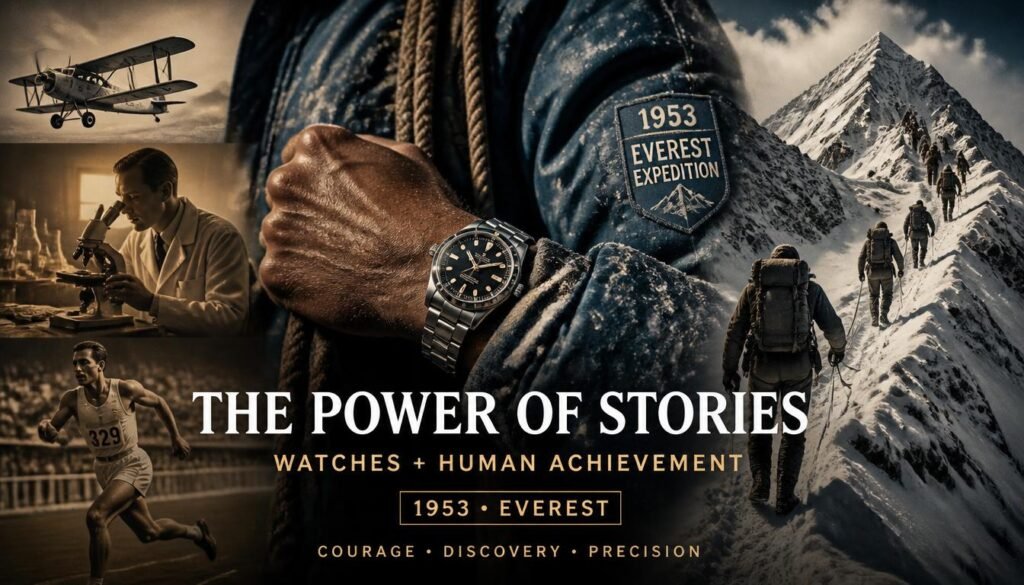
Rolex became highly skilled at associating its watches with people who achieved remarkable things. Explorers, athletes, scientists, pilots, and other prominent figures became part of the company’s marketing story. The 1953 Everest expedition was especially important. Watches associated with the expedition helped strengthen Rolex’s relationship with exploration and achievement, while the Explorer name became closely linked with that world. This approach transformed marketing. Rolex wasn’t simply selling technical specifications. It was selling stories about courage, discovery, precision, and human achievement.
10. Surviving the Quartz Crisis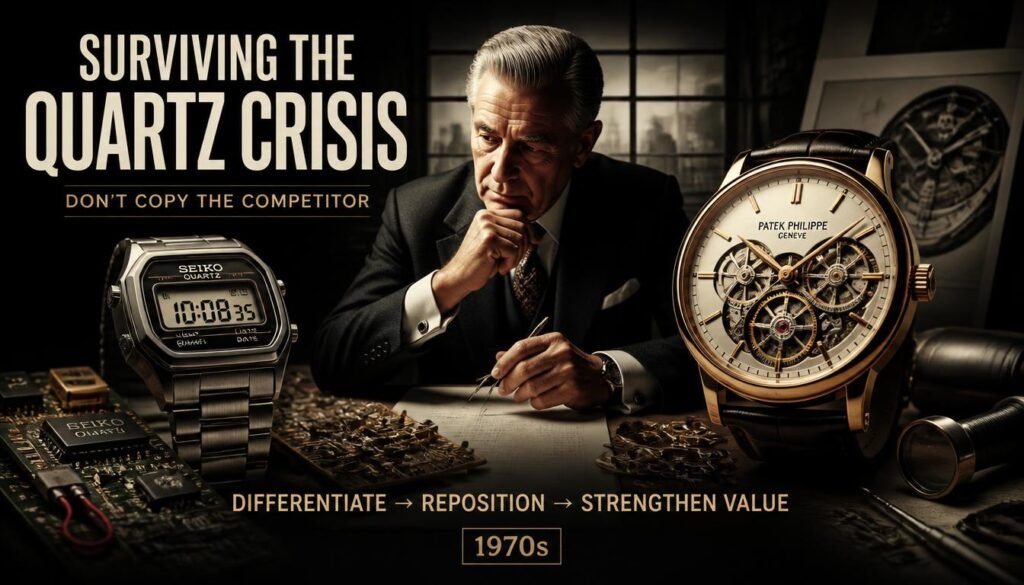
The 1970s brought one of the biggest challenges traditional watchmaking had ever faced. Quartz watches offered exceptional accuracy and could be produced at prices that mechanical watchmakers struggled to match. Japanese manufacturers became major forces in the global watch market. Rolex took a different approach. Rather than trying to become the cheapest or most technologically similar quartz competitor, it continued to emphasize mechanical craftsmanship, heritage, quality, and long-term value. This helped reposition the mechanical watch. What could have been viewed as outdated technology became a luxury object. The quartz crisis therefore became an important lesson in positioning: sometimes the best response to a new competitor is not to copy it, but to strengthen what makes your product different.
11. Private Ownership, Vertical Integration and Scarcity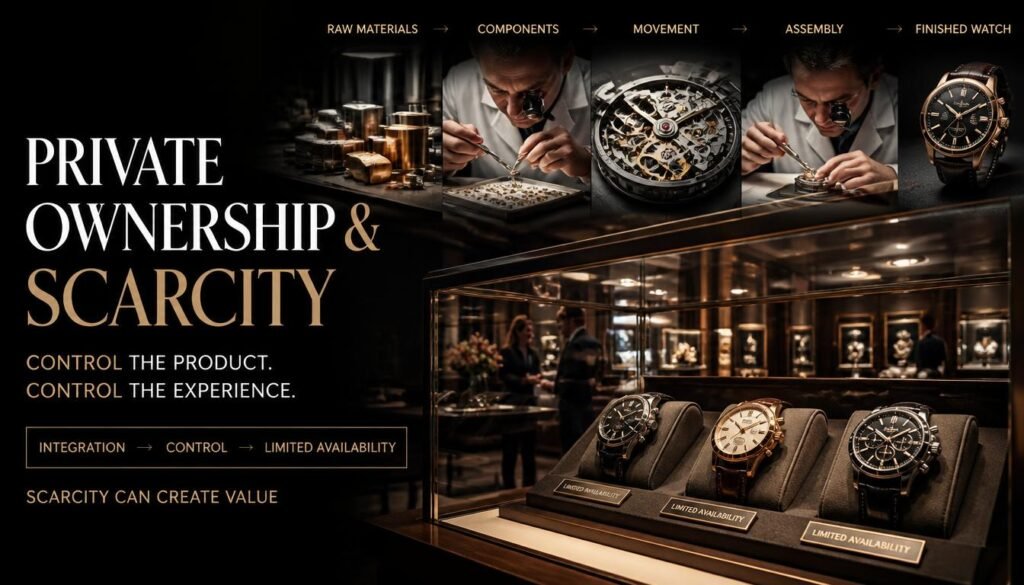
Rolex has an unusual ownership structure. In 1944, Hans Wilsdorf established the Hans Wilsdorf Foundation, which ultimately became the owner of Rolex. The company remains privately controlled rather than publicly traded. This structure supports a long-term approach to business and means Rolex doesn’t face the same shareholder pressures as a publicly listed company. Rolex has also developed extensive vertical integration, increasing control over important components and manufacturing processes. At the retail level, controlled production and distribution contribute to limited availability. This scarcity, combined with enormous demand, strengthens the perception of exclusivity. In luxury markets, availability itself can become part of the product’s value.
Why the Rolex Business Model Still Works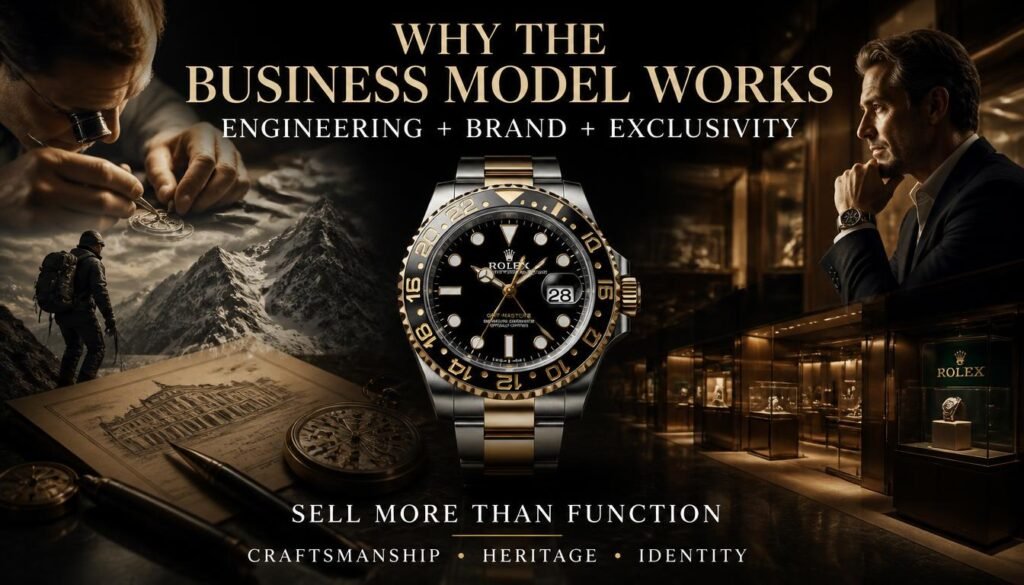
Rolex’s success isn’t based on one invention or one marketing campaign. It comes from decades of consistency. The company built its reputation around precision, durability, craftsmanship, professional performance, and exclusivity. Each generation of products reinforces those same ideas. Rolex also understood that luxury customers aren’t simply buying functionality. A smartphone can tell time more accurately than a mechanical Rolex. Yet that isn’t really the competition. Customers buy the craftsmanship, heritage, identity, design, reputation, and emotional meaning attached to the watch. That is why Rolex has managed to remain powerful even as technology has transformed the basic function of timekeeping.
Conclusion
The business history of Rolex shows how a company can turn technical innovation into lasting brand value. Hans Wilsdorf and Alfred Davis began with Wilsdorf and Davis in London in 1905. The Rolex trademark followed in 1908, while the move to Geneva in 1919 placed the company inside Switzerland’s world-famous watchmaking industry. The Oyster case, Perpetual rotor, precision certifications, professional tool watches, and real-world testimonees helped Rolex build credibility. Its response to the quartz crisis showed that strong positioning can be more powerful than simply following competitors. Today, the Hans Wilsdorf Foundation’s ownership structure, vertical integration, controlled distribution, and carefully maintained exclusivity support a business model that has remained remarkably resilient. Perhaps the greatest Rolex business lesson is simple: don‘t just sell a product. Build a story around it, prove its value, protect its identity, and give customers a reason to want it. That is how Rolex turned a wristwatch into a global symbol of achievement and luxury.