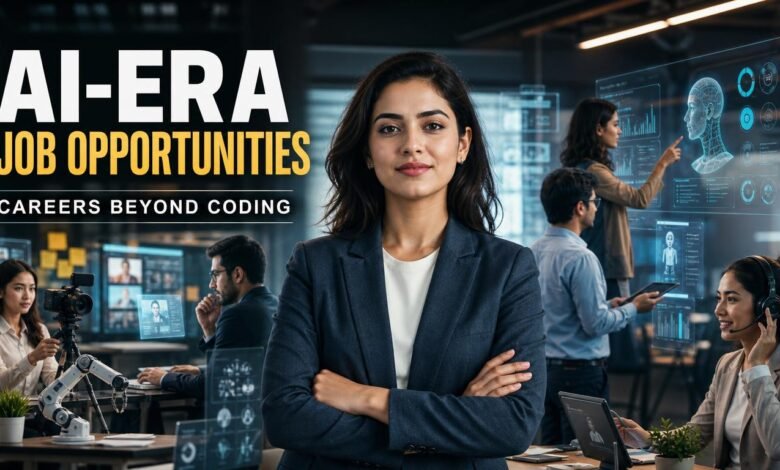
Artificial intelligence is no longer a futuristic idea limited to research labs or technology companies. It has quietly become part of everyday work, changing how businesses create content, analyze information, serve customers, design products, and make decisions. As AI tools become more capable, many people naturally wonder whether their careers are at risk or whether there are still good job opportunities in the AI era.
The good news is that the AI revolution is not simply about replacing workers. It is also creating new roles that did not exist a few years ago and changing the skills companies value. While programming and advanced technical knowledge can open doors, they are far from the only paths into the AI economy. People with communication, creativity, business, research, management, and problem-solving skills can also build rewarding careers around AI.
For professionals and students planning their next move, the real question is no longer whether AI will affect work. It is how you can become valuable in a workplace where humans and intelligent systems work side by side. Understanding the emerging opportunities can help you choose a career that benefits from AI instead of competing directly against it.
1. AI Is Creating More Than Just Tech Jobs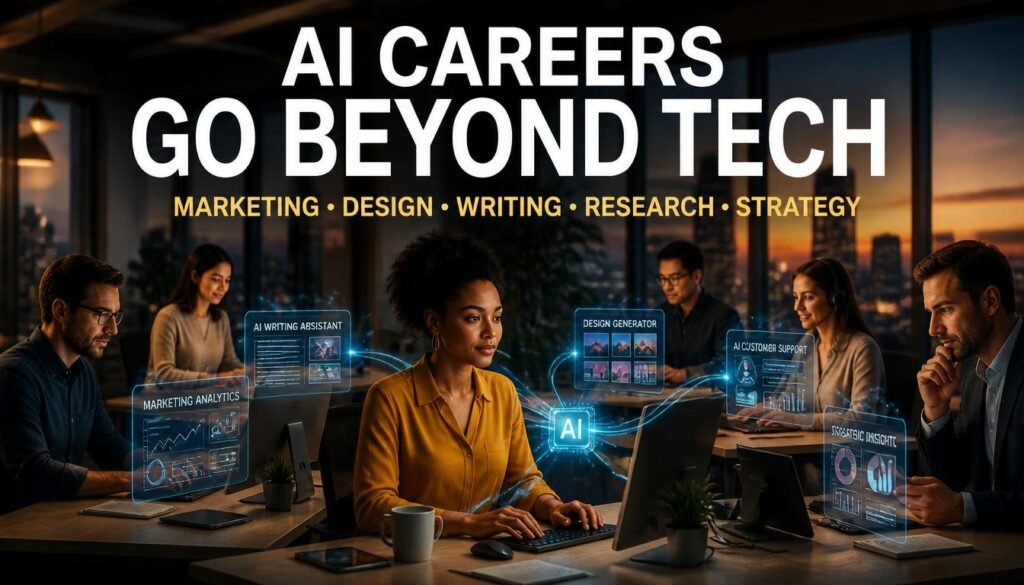
When people hear “AI careers,” they often imagine software engineers, machine learning specialists, or data scientists sitting behind complicated computer screens. These roles are certainly important, but the modern AI job market is much broader. Companies need people who understand customers, business goals, communication, research, design, operations, and strategy while also knowing how to use AI effectively.
This shift is opening doors for professionals who may have never considered themselves “tech people.” A marketer can use AI to analyze campaigns and generate ideas. A writer can use AI for research and editing. A designer can speed up creative production with generative tools. A customer-service professional can work alongside AI systems to handle more complex customer problems. In many cases, the winning skill is not building AI from scratch but knowing how to apply it intelligently.
This creates an important advantage for people who already have expertise in another field. Instead of abandoning your existing career and starting from zero, you can combine your current knowledge with AI literacy. A lawyer who understands AI tools, for example, may become more valuable than someone who understands AI but knows little about legal work. The future belongs increasingly to people who can connect technology with real-world expertise.
2. The Rise of No-Code AI Jobs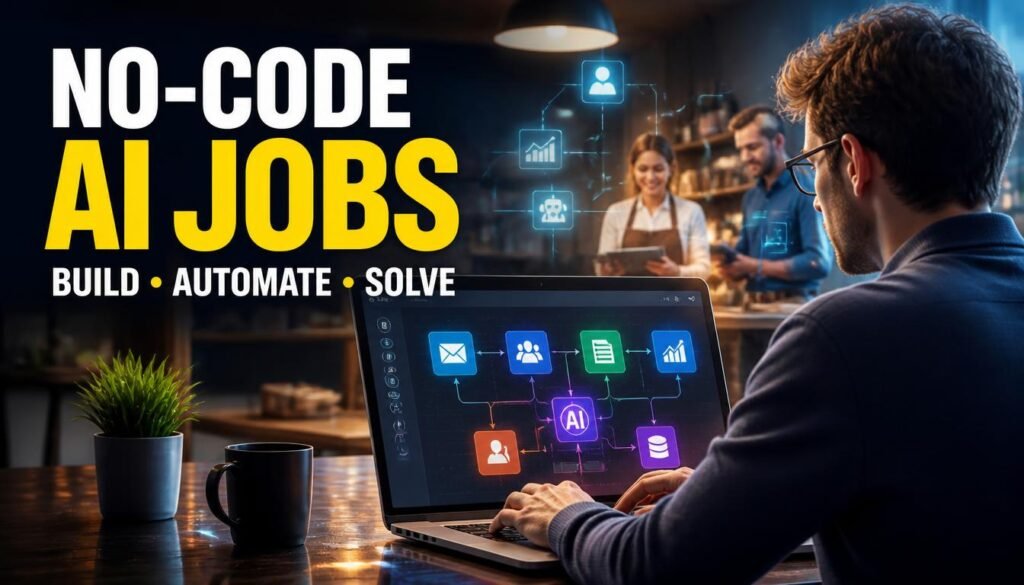
One of the biggest changes brought by modern AI is that sophisticated technology is becoming easier for ordinary users to operate. No-code and low-code platforms allow people to automate processes, build workflows, create applications, and manage AI-powered systems without becoming professional programmers. This is creating a new category of no-code AI jobs for people who understand business problems better than they understand programming languages.
Imagine a small business spending hours every week responding to repetitive emails, organizing customer information, or preparing reports. A no-code AI specialist can connect different tools and create an automated workflow that handles much of this work. The value comes from identifying the problem, designing the workflow, testing the system, and making sure it actually helps the business. Those are practical problem-solving skills rather than traditional coding skills.
For freelancers and career changers, this area can be particularly attractive. Learning AI automation tools, workflow design, prompt engineering, and basic business process analysis can provide a foundation for offering services to companies. Instead of selling “AI” as an abstract concept, professionals can sell clear outcomes such as faster customer support, automated reporting, better lead management, or streamlined content production.
3. Human-in-the-Loop Roles Are Becoming Essential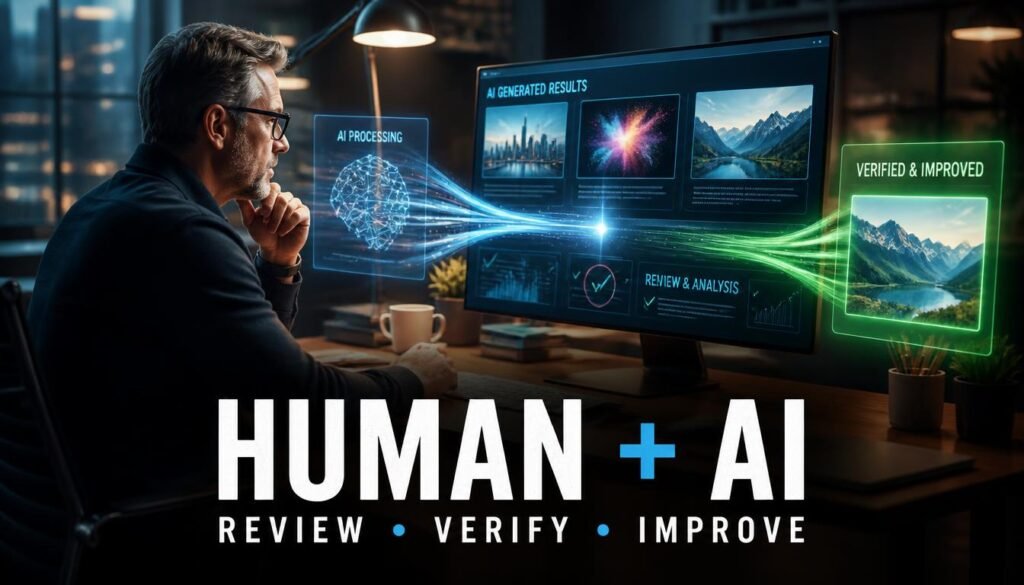
AI systems can process enormous amounts of information, but they are not perfect. They can misunderstand context, produce inaccurate information, miss subtle details, or generate results that do not fit a company’s goals. This is why human oversight remains important, particularly in areas where quality, accuracy, safety, or judgment matters.
Human-in-the-loop roles involve reviewing, correcting, improving, and supervising AI-generated work. AI trainers, evaluators, content reviewers, quality specialists, and AI operations professionals can all contribute to this process. Their job is not simply to check whether an AI system works; they help organizations understand where it succeeds, where it fails, and how its output can be improved.
This creates opportunities for people with strong attention to detail and subject-matter expertise. Someone with a background in education may help evaluate AI-generated learning materials, while a financial professional may review AI outputs used in business analysis. The combination of human judgment and machine speed can produce better results than either one working alone, making these roles increasingly relevant.
4. Content, Editing, and Prompt Engineering Careers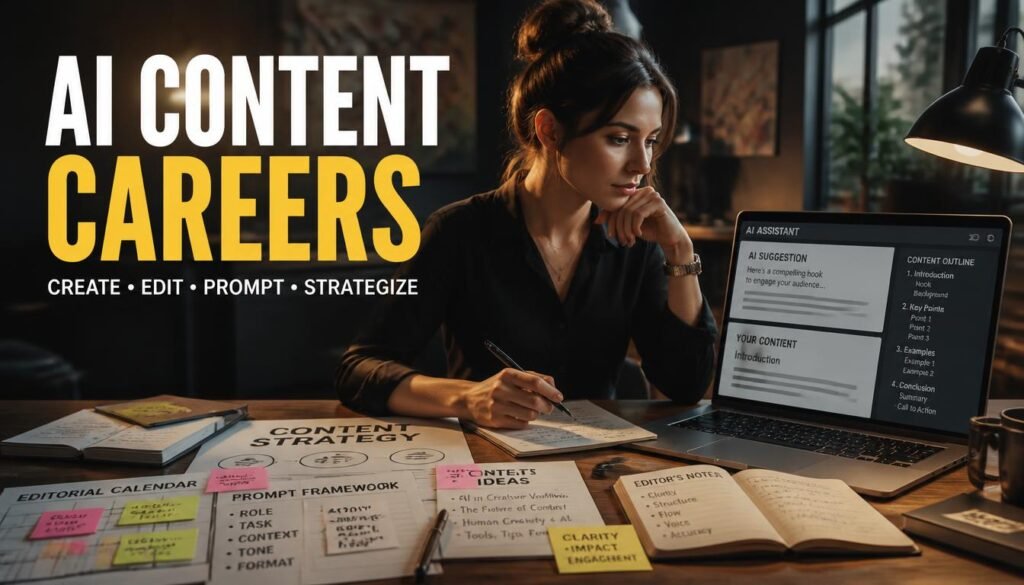
Generative AI has dramatically changed the content industry, but it has not eliminated the need for skilled communicators. If anything, the flood of AI-generated content makes quality more valuable. Businesses still need people who can understand an audience, develop a clear message, fact-check information, improve tone, and make content sound genuinely human.
Prompt engineering is another skill that has attracted attention in the AI era. Although simple prompting is becoming easier, professionals who understand how to structure instructions, provide useful context, evaluate responses, and build repeatable workflows can improve the quality of AI-assisted work. Prompting becomes particularly valuable when combined with expertise in writing, marketing, research, education, customer service, or another specialized field.
Editors and content strategists may also become more important as companies produce content at unprecedented speed. When anyone can generate hundreds of articles, advertisements, product descriptions, or social posts, the challenge becomes deciding what deserves to be published. Human professionals can provide the judgment, originality, brand understanding, and emotional intelligence that raw AI output often lacks.
5. AI Product Managers and Ethics Specialists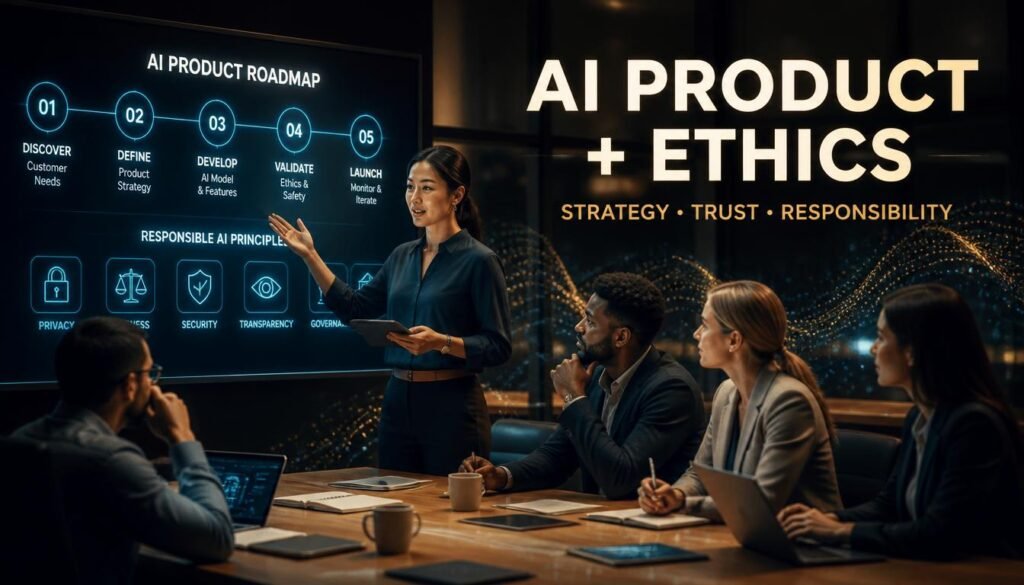
As organizations introduce AI into their products and services, someone needs to decide what should actually be built. This is where AI product managers come in. They connect technical teams with business objectives and customer needs, helping organizations determine whether an AI solution is useful, practical, and worth developing.
AI product management does not necessarily require advanced programming skills. It requires strong communication, strategic thinking, customer understanding, project management, and enough AI knowledge to communicate effectively with technical teams. A successful AI product manager needs to ask the right questions: What problem are we solving? Who benefits? What could go wrong? How should success be measured?
AI ethics and governance are also becoming important career areas. Organizations need people who can think about privacy, fairness, transparency, accountability, security, and responsible AI use. As governments and businesses pay greater attention to how AI affects people, professionals who understand both technology and responsible decision-making can become valuable contributors.
6. How to Transition Into an AI Career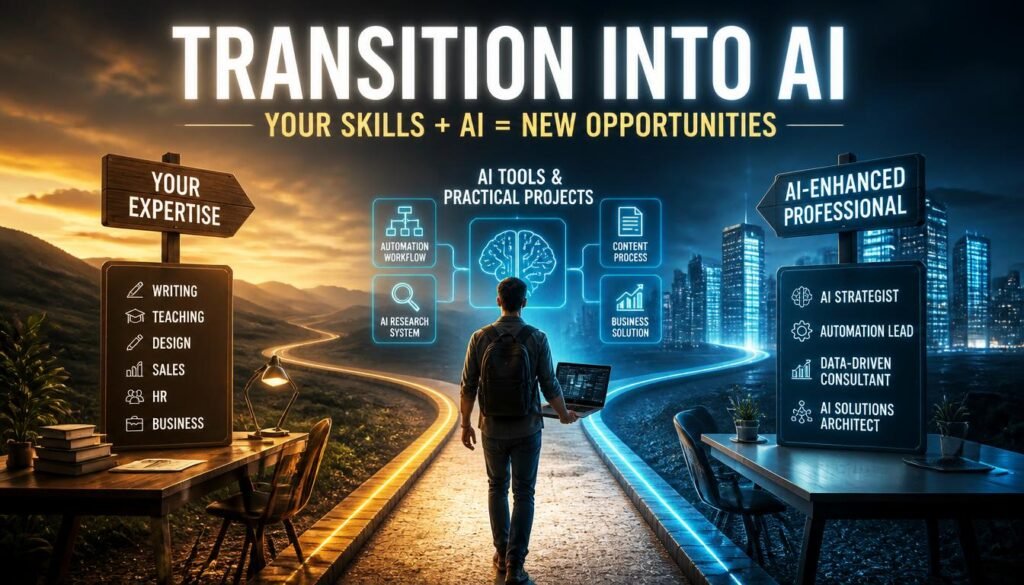
Moving into an AI-related career does not always mean earning another degree or spending years learning advanced mathematics. A more practical approach is to identify where AI intersects with the skills you already possess. Start by understanding the AI tools relevant to your profession and learn how they can improve everyday tasks.
For example, a human-resources professional can explore AI-assisted recruitment and employee analytics. A teacher can learn how to create personalized learning materials with AI. A salesperson can use AI for research, lead qualification, and communication. A graphic designer can integrate generative tools into the creative process. The objective is to become an AI-enhanced professional rather than simply labeling yourself an “AI expert.”
Building practical projects can make the transition even easier. Instead of collecting certificates without experience, create demonstrations that show what you can actually do. Build an automated workflow, improve a content process, create an AI-assisted research system, or develop a small business solution. A portfolio that demonstrates measurable problem-solving ability can often communicate your value more effectively than a list of courses.
7. Skills That Will Survive Automation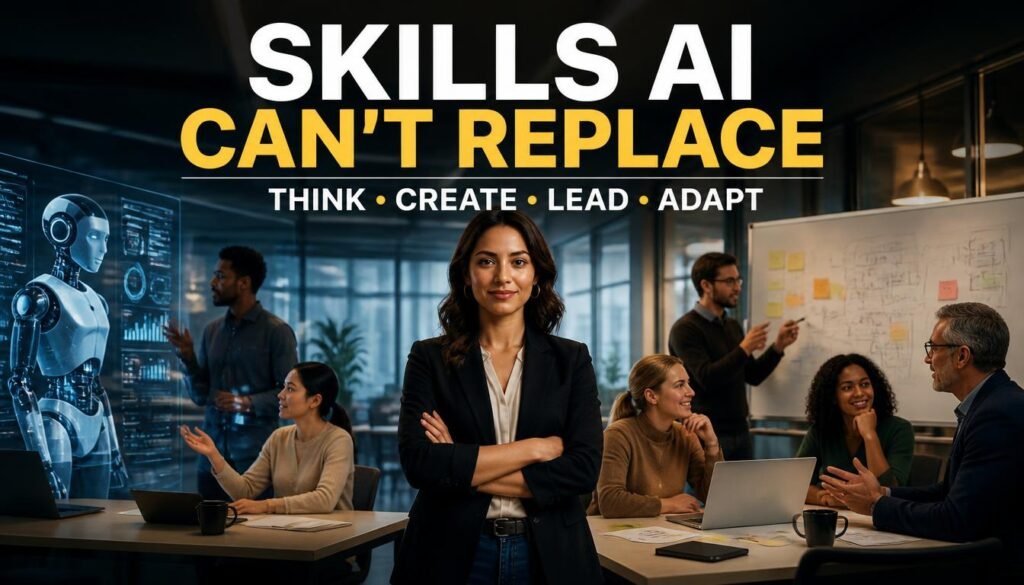
Technical skills matter, but they are only one part of becoming future-ready. Critical thinking, communication, creativity, adaptability, leadership, negotiation, and emotional intelligence are difficult to reduce to simple automated processes. These skills help professionals understand situations where there may not be one obvious answer.
Another important skill is AI literacy. You do not need to understand every technical detail behind a large language model, but you should know what AI can do, where it tends to fail, how to verify its output, and how to use it responsibly. Professionals who treat AI as a useful tool rather than a magical solution will be better prepared to make informed decisions.
Perhaps the most valuable skill is the ability to keep learning. AI tools and workflows are changing quickly, so a skill that is valuable today may become ordinary tomorrow. Instead of chasing every new tool, focus on developing a strong learning habit. Learn the principles behind AI-assisted work, experiment regularly, and become comfortable adapting when technology changes.
8. The Future Belongs to Human-AI Collaboration
The most interesting career opportunities may emerge from collaboration rather than competition between humans and machines. AI can handle repetitive tasks, summarize information, generate first drafts, identify patterns, and accelerate research. Humans can provide judgment, context, creativity, empathy, strategy, and responsibility. When these strengths are combined, productivity can increase without removing the human element.
This means the future workplace may look very different from today’s workplace. One professional with effective AI tools could potentially accomplish work that previously required several people. But increased productivity can also create demand for new services, new products, and new forms of expertise. History shows that major technological shifts often eliminate certain tasks while creating entirely new categories of work.
For individuals, the smartest response is neither panic nor complacency. Ignoring AI can leave you behind, while blindly trusting every new tool can create its own problems. The better strategy is to learn how AI works, understand your own strengths, and find ways to combine the two. That is where genuine career opportunities in the AI era are likely to grow.
Conclusion
The AI era is changing the job market, but it is not closing the door on human careers. Instead, it is creating a broader range of opportunities for people who can combine professional expertise with intelligent use of technology. From no-code AI jobs and content roles to AI product management, human-in-the-loop positions, and AI ethics, the possibilities extend far beyond traditional programming careers.
The professionals most likely to thrive will not necessarily be those who know the most about technology. They will be the people who understand how to use technology to solve meaningful problems while bringing human judgment and creativity to the process. That combination is difficult to automate because it depends on context, experience, communication, and responsibility.
So, if you are wondering where you fit into the future of work, do not ask only, “Will AI take my job?” Ask a more useful question: “How can AI make me better at what I do?” That shift in mindset can turn uncertainty into opportunity and help you build a career that grows alongside AI rather than being threatened by it.