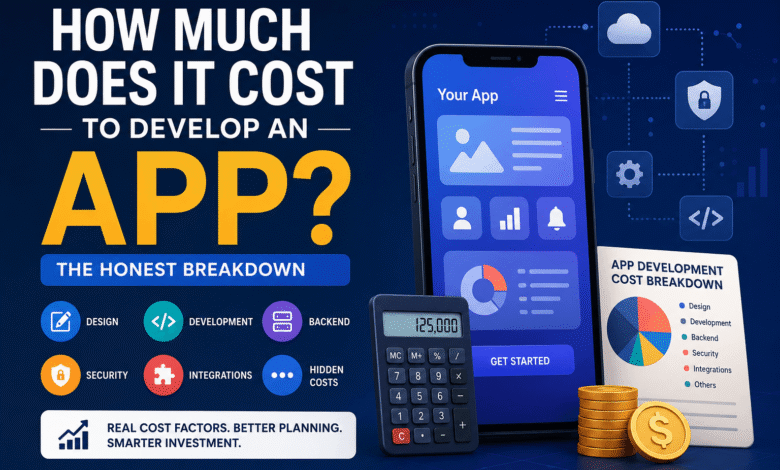
When people search for how much does it cost to develop an app, they usually expect a simple number. The reality is far more complicated. App development costs depend on dozens of moving parts including platform choice, backend complexity, design quality, integrations, security requirements, and long term maintenance planning.
Many first-time founders assume they can estimate app costs by looking at similar apps already in the market. That approach almost always leads to budget problems later. Two apps can look identical on the surface while having completely different infrastructure, scalability, and development requirements underneath.
A basic mobile app with limited functionality may cost a few thousand dollars, while a scalable commercial platform can cost tens or even hundreds of thousands. The real challenge is not just building the app. The challenge is understanding what actually increases the budget and why costs rise unexpectedly during development.
This guide breaks down the real cost factors behind mobile app development so you can avoid the mistakes that drain time, money, and momentum.
Why Your First Budget Estimate Is Almost Always Wrong
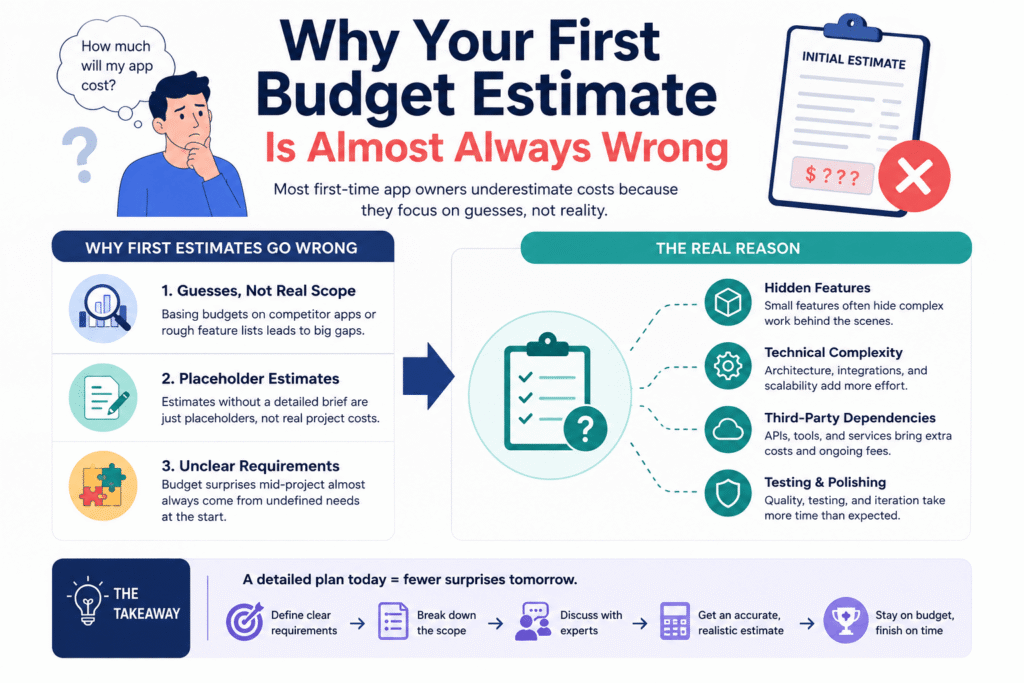
Most first-time app owners underestimate development costs because they focus only on the visible features. They think in terms of screens and buttons instead of architecture, workflows, integrations, scalability, and maintenance. That creates unrealistic expectations before the project even begins.
Many agencies and freelancers also provide rough pricing without a detailed project scope. Those numbers are often placeholder estimates designed to start conversations rather than accurate development projections. Without proper planning documentation, no estimate can truly reflect the final workload.
Another major issue comes from undefined requirements. Founders often add new ideas during development after seeing the product evolve. These changes seem small individually, but together they create massive cost increases. A simple dashboard adjustment can trigger backend changes, database restructuring, API modifications, and additional testing cycles.
This is why experienced development teams spend significant time in discovery and planning before writing code. The more detailed your requirements are at the beginning, the more predictable your app development budget becomes later.
Platform Choice and How It Multiplies Your Development Cost
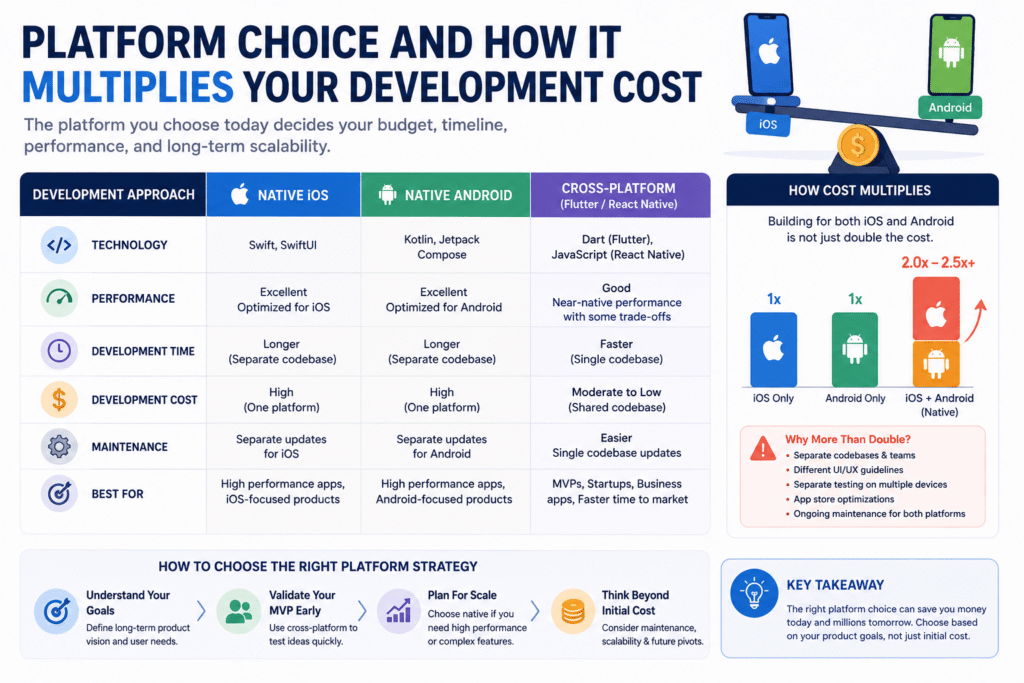
Platform strategy plays a major role in determining how much it costs to develop an app. Many businesses assume building for both iOS and Android simply doubles the budget. In reality, the situation is more complicated because each platform has unique development standards, testing environments, and user behavior expectations.
Native app development uses platform-specific technologies like Swift for iOS and Kotlin for Android. This approach usually delivers the best performance and user experience, but it requires separate development workflows. That naturally increases development hours and maintenance complexity.
Cross-platform frameworks such as React Native and Flutter reduce costs by allowing developers to share large portions of code across both platforms. These frameworks work well for many business applications, especially startups trying to validate ideas quickly. However, they may create limitations for advanced animations, hardware-level functionality, or highly optimized performance needs.
Choosing the wrong platform strategy early can become extremely expensive later. Many startups launch quickly with one technology stack only to rebuild large portions after discovering scalability or performance limitations from real user feedback.
Businesses should align platform decisions with long term product goals instead of focusing only on initial savings. Cheap early decisions often become expensive rebuilds later.
Design Costs That First-Time App Builders Always Underestimate
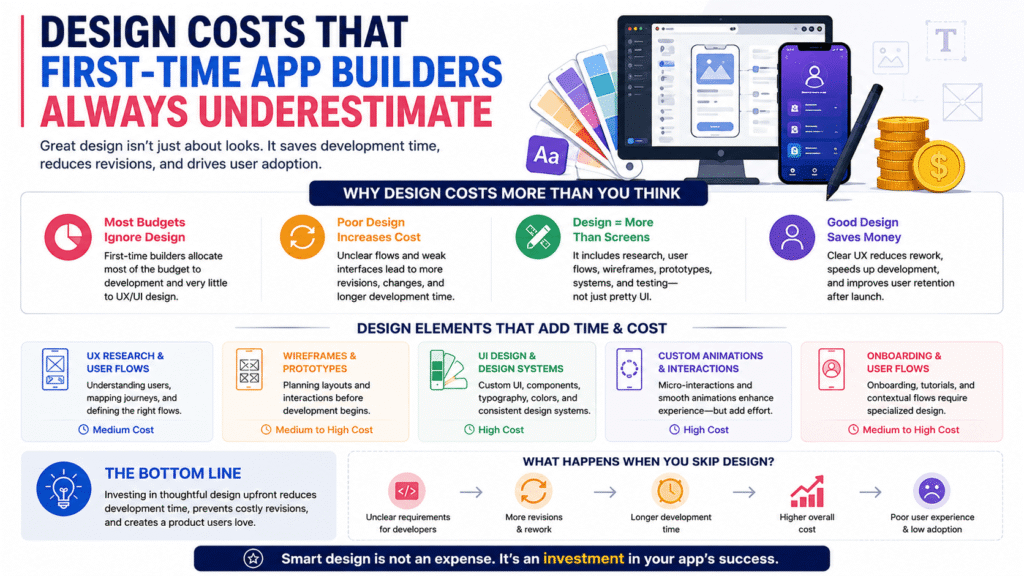
Design is one of the most overlooked areas in app budgeting. Many founders allocate most of their budget to coding while treating UX and UI design as secondary tasks. That mistake creates confusion, delays, and repeated revisions throughout the project lifecycle.
Good design is not just about aesthetics. It defines how users interact with the app, complete actions, navigate screens, and understand workflows. Poor user experience increases support requests, lowers retention rates, and creates frustration that directly impacts business growth.
Unclear interfaces also slow down developers. If design systems and user flows are incomplete, developers constantly pause to clarify interactions or redesign layouts during implementation. That increases development hours and pushes projects beyond their original timelines.
Features like onboarding systems, custom animations, interactive dashboards, and advanced transitions each add additional design and development complexity. Even typography systems and accessibility considerations require careful planning.
Professional app design typically includes wireframes, user journey mapping, prototypes, design systems, responsive layouts, and usability testing. Skipping these steps may reduce initial costs temporarily, but it usually increases long term expenses through redesigns and usability problems after launch.
Backend Infrastructure and What It Adds to the Total Cost
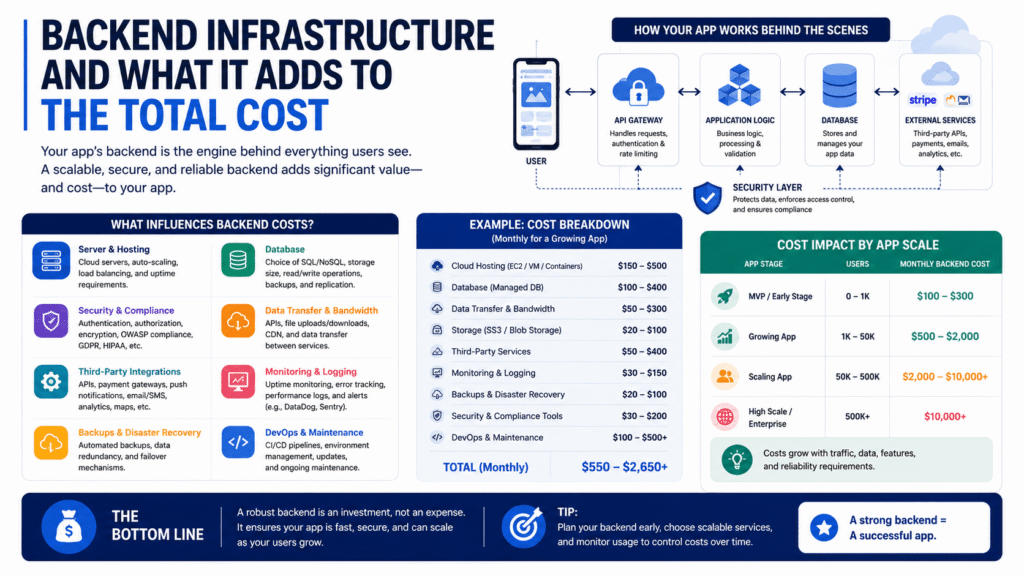
Many apps appear simple from the user perspective while relying on extremely complex backend systems behind the scenes. Backend infrastructure is often one of the largest hidden costs in app development.
Features like user authentication, cloud storage, notifications, messaging systems, payment processing, and real-time synchronization require server-side development. These systems must handle scalability, reliability, and security simultaneously.
For example, a social media app may look straightforward visually, but its backend handles image storage, content delivery, user feeds, recommendation algorithms, and database optimization continuously. The visible interface represents only a small portion of the actual engineering work involved.
Businesses also need to choose between serverless architecture and dedicated backend infrastructure. Serverless systems reduce upfront costs and simplify scaling for smaller applications. Dedicated backend systems provide greater flexibility and control but require higher development and maintenance investment.
Infrastructure costs continue after launch as well. Hosting fees, database usage, cloud storage, monitoring tools, backups, and scaling resources all create recurring operational expenses. Apps with rapid user growth can experience infrastructure costs increasing dramatically within months.
Ignoring backend planning early often results in unstable systems that require expensive restructuring once real traffic arrives.
How Much It Costs to Develop an App With Third-Party Integrations
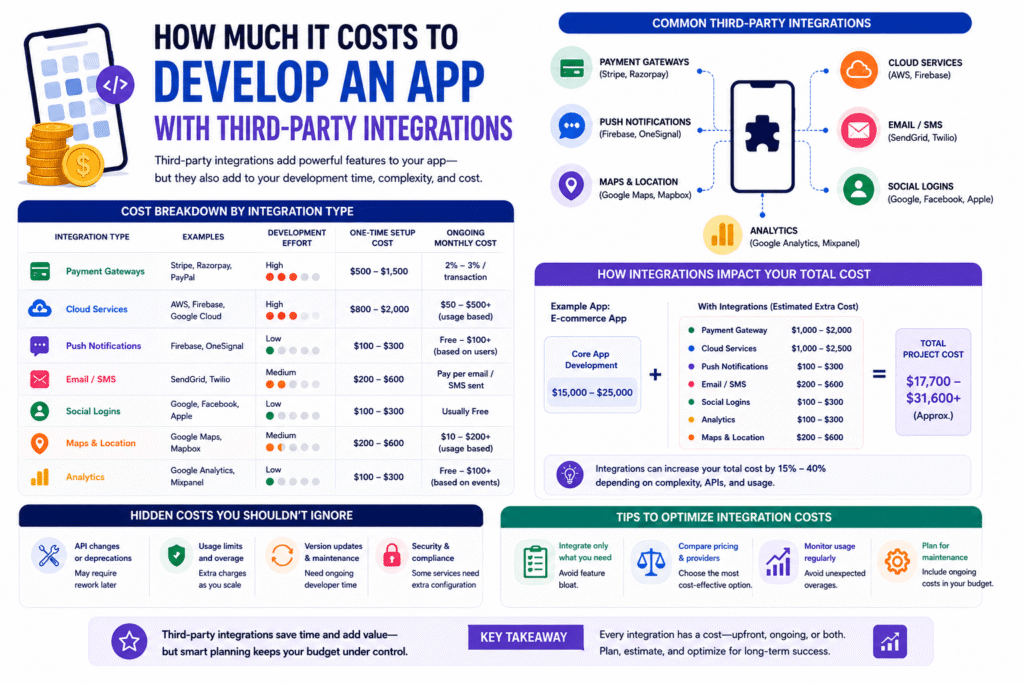
Third-party integrations significantly affect development budgets. Many businesses assume APIs and external services are simple plug-and-play additions. In reality, every integration introduces development complexity, testing requirements, and long term maintenance responsibilities.
Payment gateways like Stripe or PayPal require secure transaction handling and compliance considerations. Mapping services such as Google Maps involve API quotas and usage-based pricing structures. Social login systems introduce authentication dependencies that must remain updated and secure.
Some services appear inexpensive during early development stages because they offer free usage tiers. However, those costs increase rapidly as user activity grows. API pricing models based on requests, storage, or active users can become major operational expenses for successful applications.
Every external dependency also creates maintenance risk. If a provider changes pricing, updates APIs, or discontinues features, your development team may need to rebuild integrations unexpectedly. This creates additional ongoing costs many businesses never include in their initial estimates.
Third-party integrations should always be evaluated not only for development convenience but also for long term scalability, reliability, and financial sustainability.
Security and Compliance Costs That Cannot Be Cut From Certain App Categories
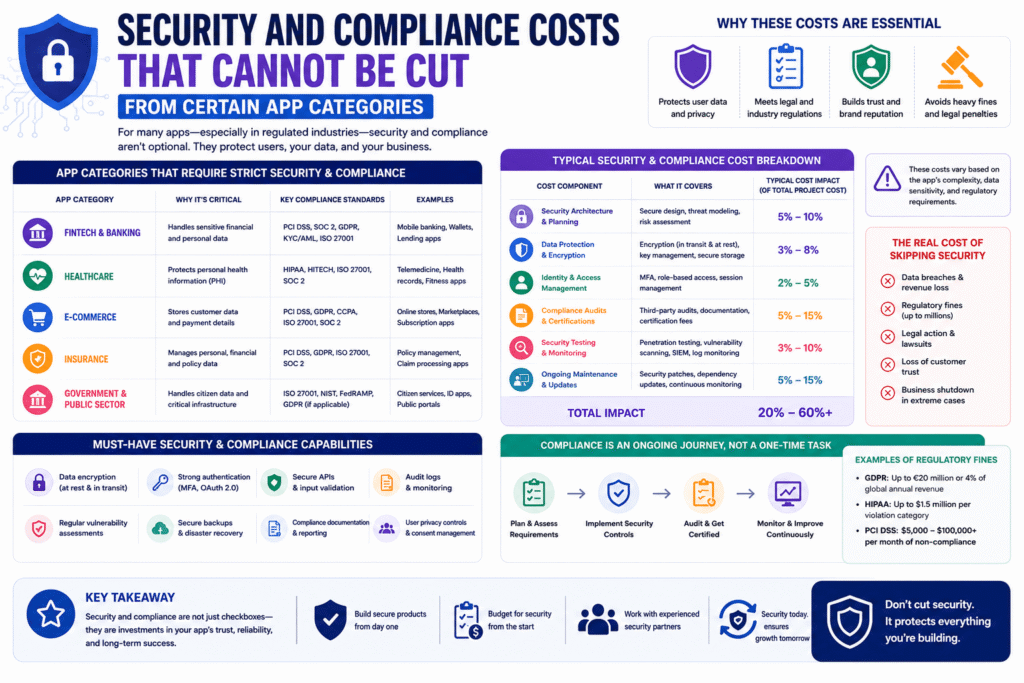
Security is not optional for modern applications. Industries like healthcare, finance, and education require strict compliance standards that significantly increase development costs.
Apps handling sensitive user data must implement encryption, secure authentication systems, role-based permissions, audit logging, and privacy protections. Compliance frameworks such as GDPR, HIPAA, and PCI-DSS introduce additional legal and technical requirements that demand specialized expertise.
Many startups attempt to reduce costs by postponing security investments until later stages. That approach creates major risks. Security vulnerabilities discovered after launch are far more expensive to fix because they often require architectural changes rather than isolated patches.
A single data breach can damage brand reputation permanently while exposing businesses to lawsuits, fines, and customer loss. Users today expect strong privacy protection regardless of company size.
Secure development also increases testing requirements. Penetration testing, vulnerability assessments, secure code reviews, and compliance audits all require additional time and specialized resources. These expenses may seem high initially, but they protect businesses from much larger future liabilities.
For apps operating in regulated industries, security should be considered a foundational investment rather than an optional feature.
The Real Cost of Rushing an App to Market Before It Is Ready
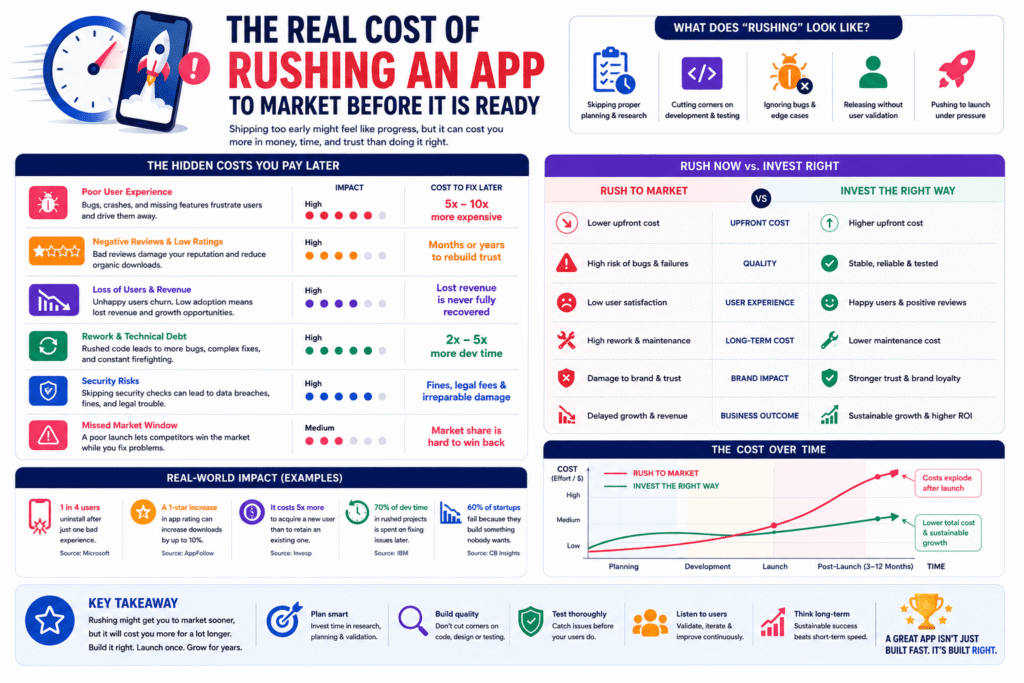
Speed matters in competitive markets, but rushing development often creates expensive long term consequences. Many businesses focus entirely on launching quickly without understanding the technical debt they are accumulating underneath.
Compressed timelines force developers to skip documentation, automated testing, optimization, and clean architecture planning. These shortcuts may reduce short term delivery time, but they increase the cost of every future update and feature addition.
Technical debt compounds over time. A rushed codebase becomes harder to maintain, more prone to bugs, and increasingly expensive to expand. Developers spend more time fixing old issues instead of building new features.
Poor first impressions also damage user trust. If early adopters experience crashes, confusing navigation, or performance issues, many never return. Acquiring users again through marketing becomes more expensive than launching properly from the beginning.
Delaying launch for stability improvements often saves money in the long run. A polished product creates stronger retention, better reviews, and healthier growth momentum than a rushed release full of avoidable problems.
Businesses should prioritize sustainable product quality instead of chasing unrealistic launch deadlines driven by pressure or impatience.
How to Control App Development Costs Without Compromising the Core Product
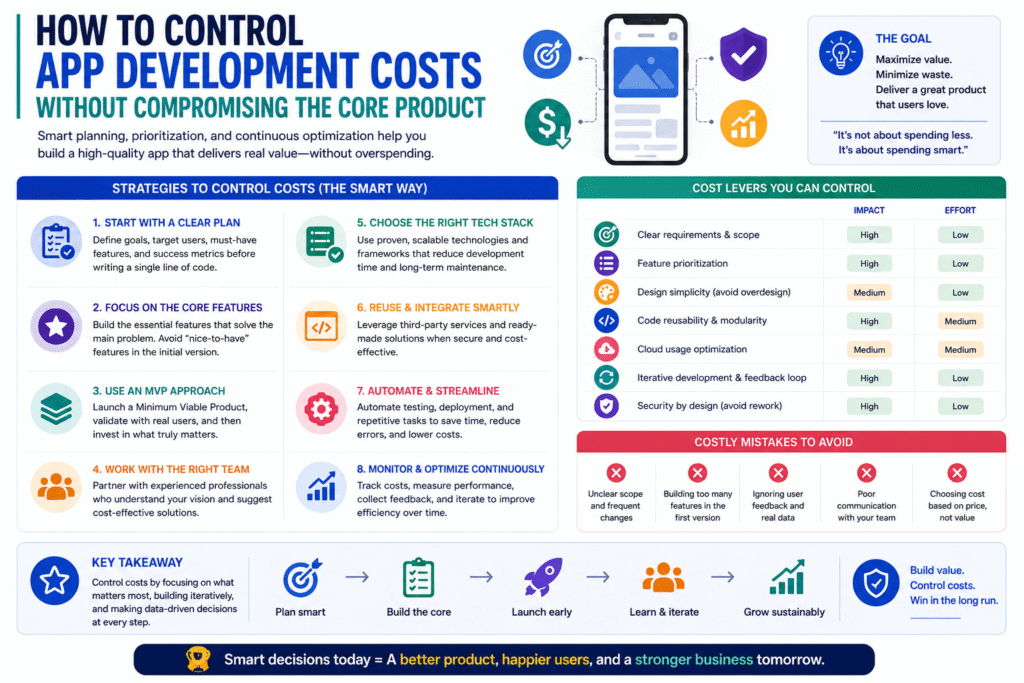
Controlling app development costs does not mean sacrificing quality. The smartest approach focuses on prioritization, phased releases, and disciplined project management.
Launching with a minimum viable product allows businesses to validate demand before investing heavily into advanced functionality. Instead of building every feature immediately, companies can release core functionality first and expand based on real user feedback.
Phased development also spreads financial risk across multiple stages. Businesses avoid overcommitting budgets before understanding how users actually interact with the product. This strategy improves decision-making while preserving flexibility for future improvements.
Choosing the right contract structure also matters. Fixed-price contracts provide budget predictability but reduce flexibility when requirements evolve. Hourly or milestone-based agreements offer greater adaptability but require stronger project oversight.
Weekly milestone reviews are one of the most effective ways to prevent budget overruns. Regular progress evaluations help identify scope creep early before small changes evolve into major financial problems.
Businesses should also invest time into documentation before development starts. Clear requirements reduce misunderstandings, improve estimation accuracy, and minimize revision cycles throughout the project.
The companies that manage app development costs successfully are not always the ones spending the least money. They are the ones making strategic decisions at the right stages of development.
Final Thoughts
Understanding how much does it cost to develop an app requires looking beyond surface-level estimates. App pricing is shaped by technical architecture, platform decisions, backend infrastructure, integrations, security requirements, design quality, and long term scalability planning.
The biggest budgeting mistakes usually happen before development even begins. Undefined requirements, rushed timelines, weak planning, and unrealistic assumptions create expensive consequences later in the project lifecycle.
A successful app is not simply the cheapest one to build. It is the product designed with enough strategic planning to remain scalable, maintainable, secure, and valuable long after launch.
Businesses that approach app development with realistic expectations and structured planning almost always avoid the financial disasters that trap inexperienced founders.
You May Also Like: