Generative AI Tools: The Future of Smart Creation
Generative AI Tools: Best Platforms and How They Work


AI is transforming the way individuals work and produce. AI tools that generate are used to hasten this transformation. They are able to type, create images, create music and create computer programs. This allows individuals and businesses to make content faster and explore new concepts.
Conventional software requires manual feeding. Generative AI on the other hand generates material using simple prompts. You tell one thing and the system gives you a response within seconds.
Such tools have now overrun marketing, alternatively in the education sector, software development, as well as design. This article will explain what generative AI tools are, how they operate, which are the major platforms, and the way they enhance efficiency.
What Are Generative AI Tools?
Generative AI technologies are applications that create original content using artificial intelligence models. Instead of analyzing the data only, these systems learn the trends based on huge amounts of data and subsequently produce new results that can be similar to human-created ones.
A generative AI tool can:
- Write blog posts and emails
- Generate digital artwork
- Create videos or voice messages.
- Create software code
- Overview research papers.
Generative has the meaning of being able to generate a new material. These do not merely automate but generate new ideas, designs and solutions.
Neural networks and advanced machine learning are now generated by modern generative AI. The models acquire associations between words, images, sounds and patterns. Following the training, the system generates new outputs which have the same structures.
How Generative AI Tools Work
The generative AI algorithms follow a few steps. The developers initially train models with substantial datasets, which can be text, images, videos or audio.
The system acquires patterns and relationships during training. As an illustration, a language model acquires grammar, vocabulary and sentence structure.
Then the tool asks the user, a sentence or a question or a description of a desired result.
The AI model subsequently anticipates the most pertinent output forming content at a time until it produces a complete response.
Deep neural networks which are layers of interconnected nodes that process data and identify intricate patterns are used by many tools. The structure allows the AI to mimic human creative abilities and reasoning.
These tools are becoming more accurate, faster as well as more creative with advancement in technology.
Popular Generative AI Tools
Nowadays, there are numerous generative AI tools in various categories. All the tools are dedicated to a particular kind of content creation.
Text Generation Tools
AI tools written aid a user to generate written content at a fast rate. The platforms are used in blogs, marketing text, emails and research summaries.
Examples include:
- ChatGPT
- Jasper AI
- Copy.ai
Language patterns are analyzed using them to produce human-like text. They are applied by businesses to provide customer support, marketing content and automated writing.
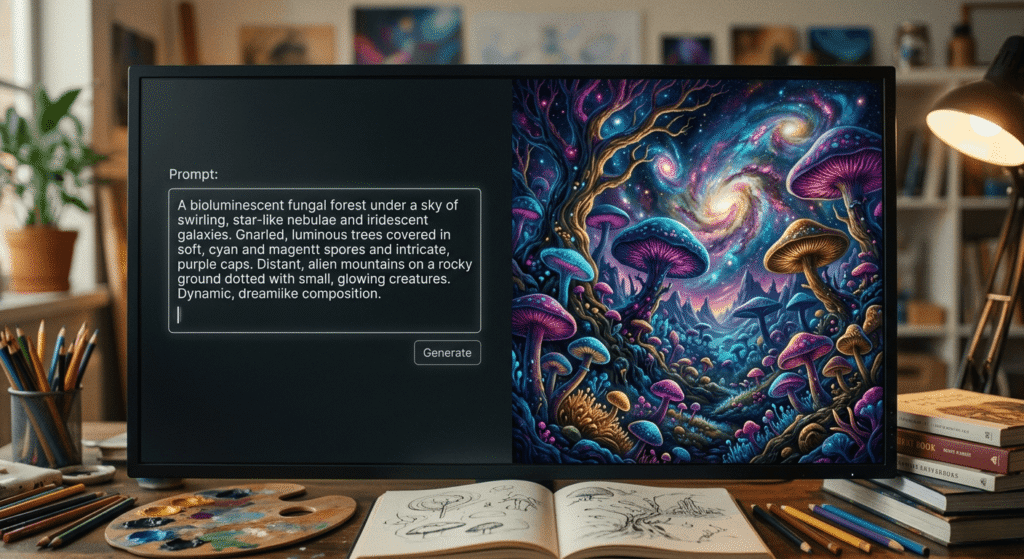
Image Generation Tools
Image-generation software generates computerized images using textual descriptions. They are commonly used by designers and artists to brainstorm and come up with concept art.
Examples include:
- DALL‑E
- Midjourney
- Stable Diffusion
These systems translate text prompts into elaborate images. To illustrate, on entering a query such as a futuristic city at sunset, the tool will come up with various variations of images.
Recent systems such as GPTImage generate images using only natural-text instructions, and may even manipulate existing images.
Video Generation Tools
AI video software allows one to make professional videos without having to edit them.
An example of its popularity is Synthesia. This app produces AI avatars in video form that read off the paper. These videos are used in businesses to train employees, market products, and explain them.
As a result, firms cut the cost of production and produce visual material of a high quality.
AI Coding Tools
Generative AI tools are useful to software developers. The AI code assistants have the capability to create code snippets, describe the concepts of programming and assist in debugging applications.
Examples include:
- GitHub Copilot
- Tabnine
- Coding helper robots built into code editors.
These tools process natural-language instructions and translate them into working code. Due to this, developers work more quickly and pay attention to more complicated problem solving.
Creative Design Tools
Digital design and creative production is also supported by generative AI. Applications like Adobe Firefly can be used to create images, graphics and even videos using text prompts.
The tools enable designers to play with colors, layouts, and artistic styles. They are able to come up with several ideas in a second as compared to spending hours on manual design.
There is also an example of node based systems such as ComfyUI, in which advanced users can create their own image generation workflows with diffusion models.
Advantages of Generative Ai Tools.
The generative AI tools have some significant benefits.
Faster Content Creation
To begin with, the tools save a lot of time that is used to create content. Designers, writers and developers are able to do their tasks in a few minutes rather than hours.
Improved Creativity
Second, generative AI systems assist users in finding new ideas. The system is able to come up with various recommendations, and stimulate creative thinking.
Higher Productivity
Moreover, repetitive tasks can be automated within the teams. This enables members of the profession to work on strategic and complex tasks.
Accessibility
Lastly, the use of generative AI technologies opens up the high-tech world to all people. Minimal prompts make it possible to create professional content by even the non-technical users.
Due to such advantages, AI tools are still being implemented in companies in most industries.
Challenges and Ethical Considerations
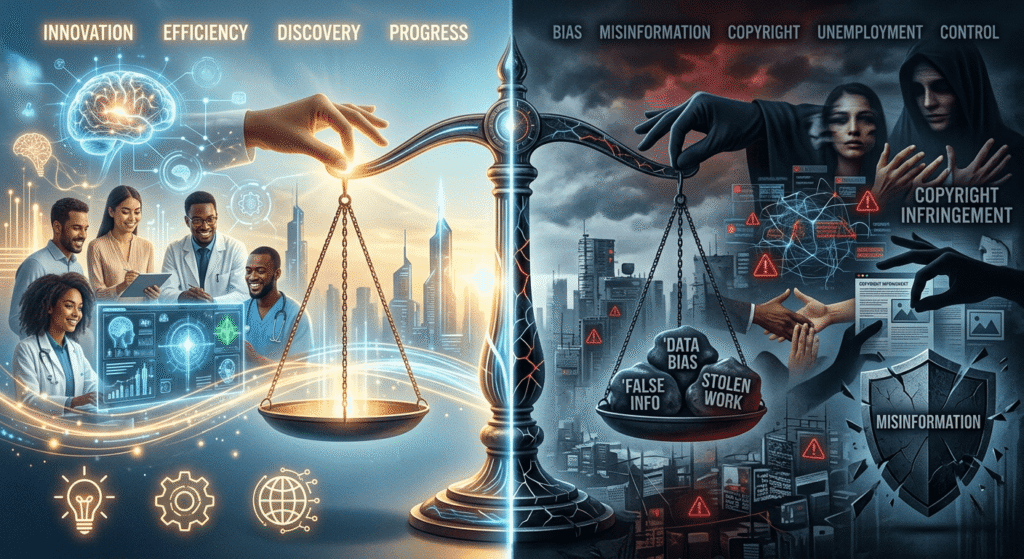
Despite the numerous benefits of the generative AI tools, there are also a number of challenges raised.
Accuracy Issues
There are occasions when AI systems produce wrong information. Thus, users ought to confirm valuable information prior to posting content.
Copyright Concerns
The other problem is one of ownership and copyright. The outputs of AI can be similar to the published ones.
Bias in Data
Training data are utilized to train the AI models. In case such data is biased, the output can also display similar trends.
On these grounds, it is necessary to use the generative AI tools responsibly.
The Future of Generative AI Tools.
The future of generative AI tools is so bright. These systems are still being enhanced by new algorithms and bigger datasets by researchers.
Eventually in the years to come, AI tools will be able to:
- Produce 3D environments and videos of high quality.
- Help scientific discoveries and simulations.
- Have more personalized computer aides.
- Invest in high-level automation in the industries.
As these tools evolve, they will reshape how people work, learn, and create digital content.
How to Start Using Generative AI Tools
If you want to explore generative AI tools, follow these simple steps:
Choose beginner-friendly platforms
Start with popular tools for writing, image generation, or design.
Practice writing clear prompts
Detailed prompts usually produce better results.
Edit and refine AI outputs
AI content works best as a starting point rather than a final product.
Verify important information
Always review facts before sharing generated content.
By following these steps, users can take full advantage of generative AI technology.
Final Thoughts
Generative AI tools represent one of the most important technological innovations of recent years. These tools create text, images, videos, music, and software code using advanced machine learning models.
Moreover, they help individuals and businesses work faster, generate ideas, and automate repetitive tasks.
However, responsible use remains important. Users must verify information, respect copyright rules, and remain aware of potential bias.
Ultimately, generative AI tools will continue transforming creativity, productivity, and digital innovation. As technology evolves, these tools will become essential partners in the way people work and create.