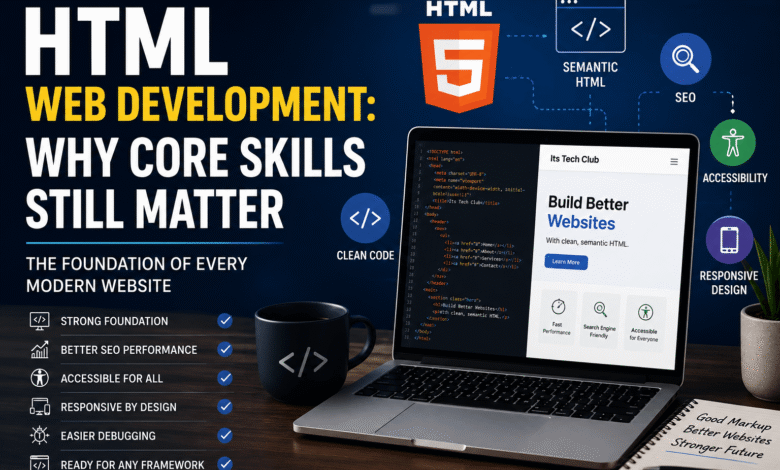
Modern web development changes rapidly, yet strong foundational knowledge remains one of the greatest professional advantages. New frameworks and libraries continue appearing, but every webpage still depends on structured markup to display correctly. Learning HTML web development provides the essential skills needed to create accessible, searchable, and maintainable websites from the beginning. At Its Tech Club, we believe mastering core technologies creates confident developers who can adapt to any future framework.
Many beginners rush into advanced tools before understanding how websites actually work inside a browser. This approach often creates confusion when layouts break or application components fail unexpectedly. A solid understanding of HTML helps developers recognize structural problems before adding styling or interactive features.
Professional developers consistently rely on HTML because it forms the backbone of every successful website. Search engines, browsers, accessibility tools, and front end frameworks all depend on well-structured markup for reliable performance. Investing time in HTML fundamentals continues delivering benefits throughout every stage of a web development career.
The Backbone of Every Modern Website
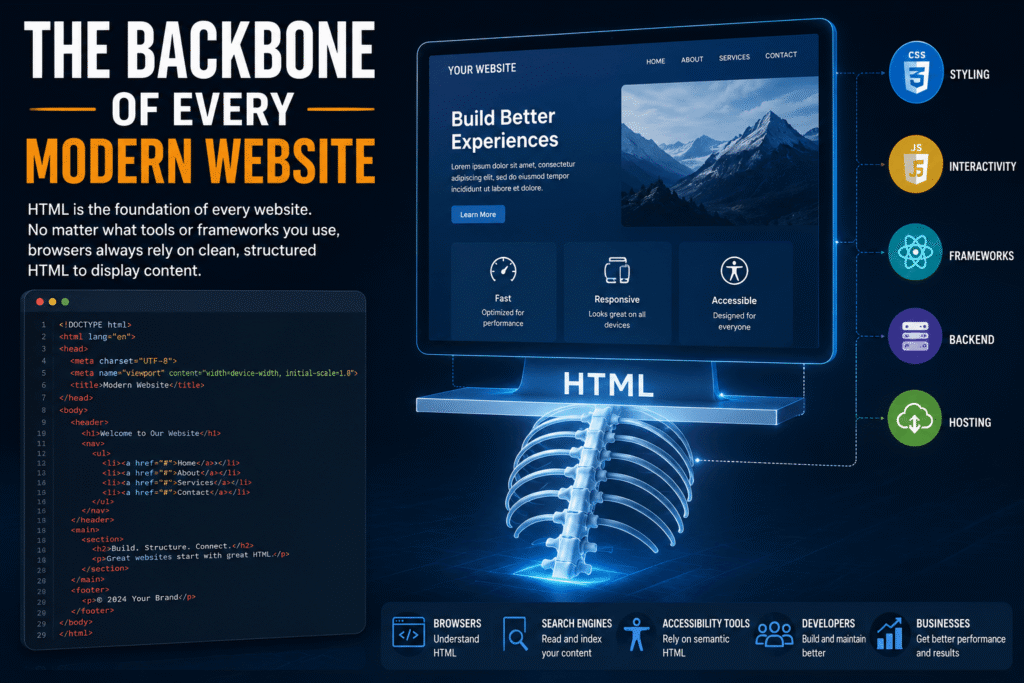
Every website begins with HTML because browsers interpret structured markup before processing styles or scripts. Regardless of the framework used, browsers ultimately render HTML elements to display content correctly. This reality explains why HTML web development remains an essential skill despite rapid technological advancement.
Many junior developers immediately begin learning React, Angular, or Vue without understanding basic document structure. They often become overwhelmed when components fail because they cannot identify underlying markup problems. Understanding headings, sections, forms, lists, and semantic elements makes troubleshooting significantly easier during complex projects.
Strong HTML knowledge also improves communication between designers, developers, and search engine optimization specialists. Clean document structure creates predictable layouts while supporting maintainable code across larger development teams. Every advanced technology eventually returns to properly organized HTML that browsers can interpret efficiently.
You may also like:
How Clean Code Impacts Website SEO
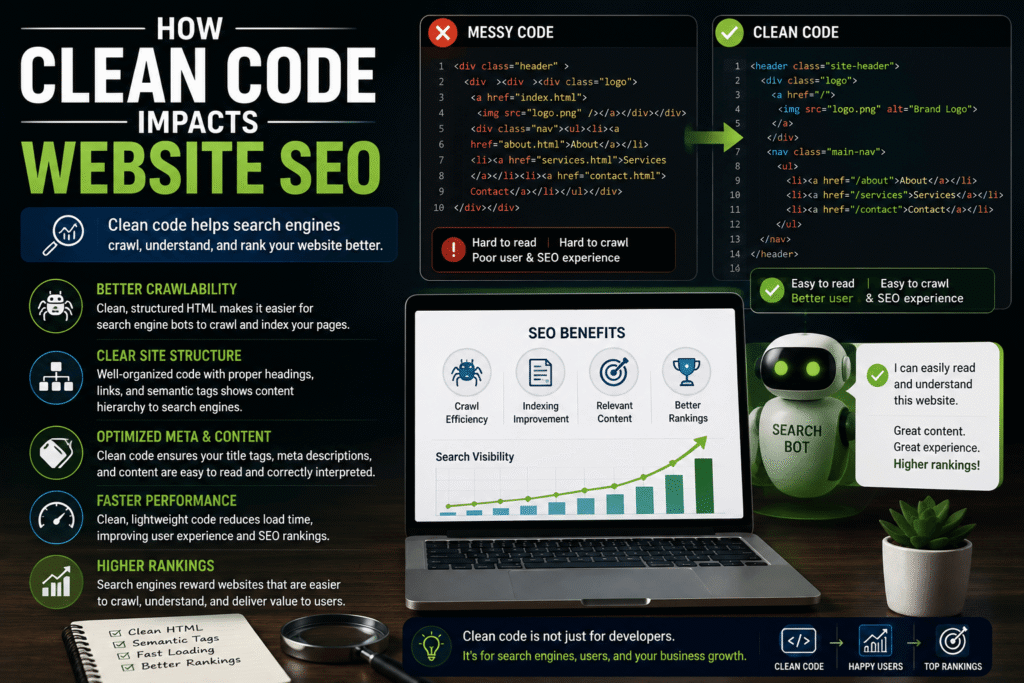
Search engines rely on structured HTML to understand website content and determine its relevance for users. Clear headings, descriptive metadata, logical page hierarchy, and semantic elements help search engine crawlers interpret information accurately. Poorly organized markup often makes indexing more difficult and reduces opportunities for stronger search visibility.
Messy code containing unnecessary elements may increase page complexity while making websites harder to maintain. Although search engines primarily evaluate valuable content, clean HTML improves crawl efficiency and supports better technical optimization. Proper title tags, meta descriptions, canonical links, and structured headings all contribute to stronger overall SEO performance.
Developers should also organize navigation, internal links, and page sections using meaningful semantic elements whenever possible. These practices improve user experience while helping search engines understand relationships between different content areas. Well-structured HTML creates a stronger technical foundation before additional optimization strategies are introduced.
You may also like:
Accessibility Starts with Proper Markup
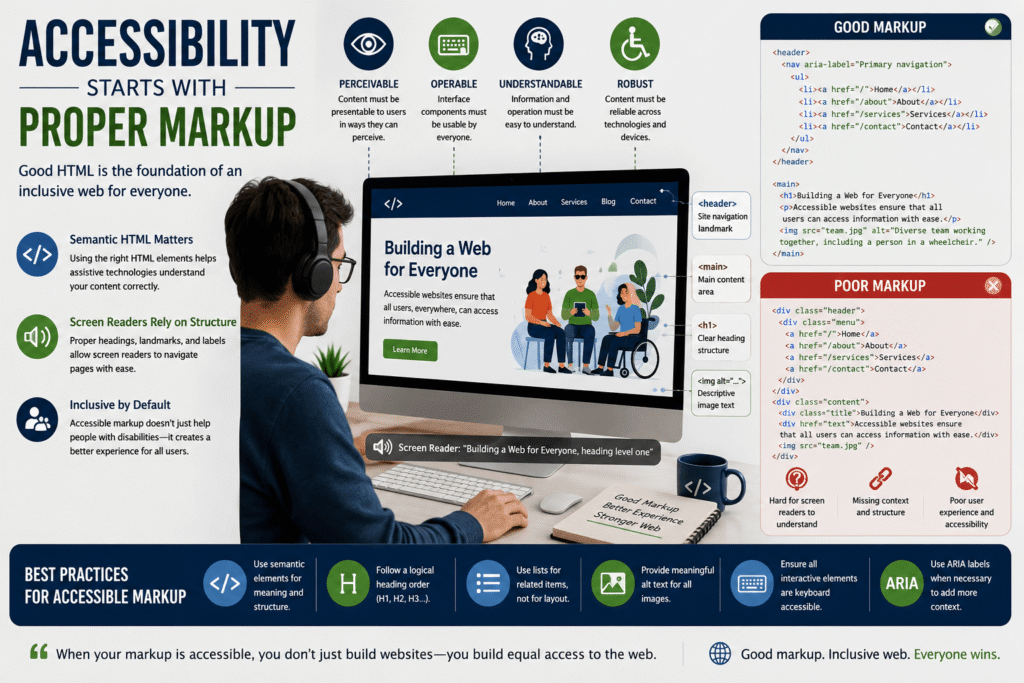
Accessibility ensures websites remain usable for people with different abilities, devices, and assistive technologies. Screen readers depend heavily on semantic HTML to identify headings, navigation menus, buttons, forms, and page landmarks correctly. Poor markup often creates confusing experiences that prevent users from accessing important information efficiently.
Using standard HTML elements instead of unnecessary custom containers improves compatibility across browsers and accessibility software. Meaningful heading structures help users navigate long pages more quickly while understanding overall content organization. Adding descriptive alternative text to images also allows visually impaired users to understand visual information through screen readers.
Accessible websites benefit everyone by improving usability, readability, and overall user satisfaction across different platforms. Many accessibility improvements require thoughtful HTML rather than complicated programming techniques or expensive software solutions. Building accessibility into every project from the beginning creates inclusive digital experiences while supporting long-term website quality.
You may also like:
Responsive Design Basics Using Native Elements
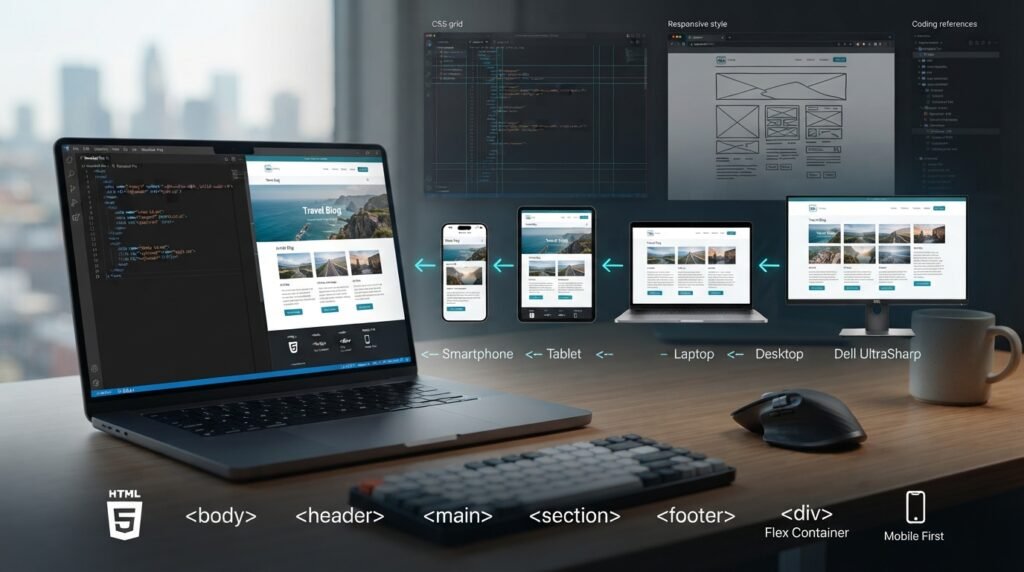
Modern websites must provide a consistent experience across smartphones, tablets, laptops, and desktop computers. Responsive design begins with well-structured HTML instead of relying entirely on advanced styling techniques. A strong markup foundation allows layouts to adapt more smoothly as screen sizes continue changing.
The viewport meta tag plays an essential role in ensuring pages display correctly on mobile devices. Without proper viewport settings, browsers may scale content incorrectly and create frustrating user experiences. Developers should also use semantic containers that naturally support flexible layouts before introducing complex CSS frameworks.
Simple structural decisions often prevent future layout issues that become difficult to diagnose later. Organizing content with meaningful sections creates predictable page behavior across different browsers and devices. Strong HTML web development practices make responsive design easier while reducing unnecessary troubleshooting during future updates.
You may also like:
Debugging Layout Issues at the Source
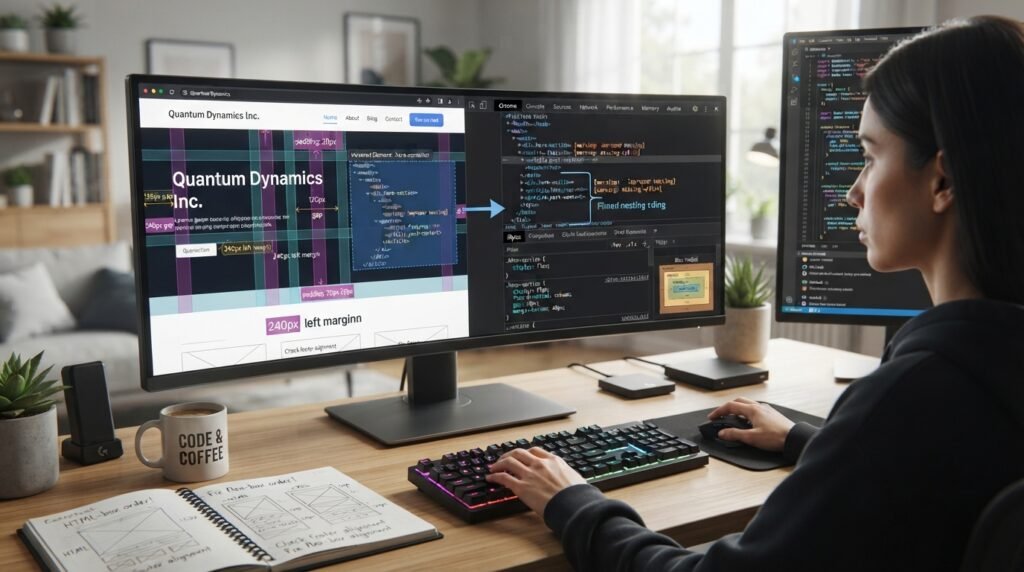
Every developer eventually encounters broken layouts, misplaced elements, or unexpected spacing problems during development. Browser developer tools provide powerful features that simplify debugging when developers understand the underlying HTML structure. Learning these tools early saves valuable time while improving confidence during real projects.
Most browsers include an inspection panel that highlights page elements directly within the document structure. Developers can examine nested containers, identify missing closing tags, and verify applied styles without changing source files immediately. Understanding the relationship between HTML elements and browser rendering makes structural problems easier to identify.
Instead of guessing solutions, developers should inspect the document hierarchy before modifying CSS or JavaScript. Many visual issues originate from incorrect markup rather than styling or scripting mistakes. Strong HTML fundamentals transform browser inspection tools from confusing interfaces into practical problem-solving resources.
You may also like:
Preparing for Advanced Front End Frameworks

Popular libraries such as React, Vue, and Angular build dynamic interfaces using familiar HTML concepts underneath. Although these frameworks introduce reusable components, they still generate structured markup for browsers to display. Developers who understand HTML often learn advanced frameworks faster and troubleshoot problems more effectively.
Many rendering issues occur because components contain incorrect structure, missing attributes, or improperly nested elements. Developers with solid HTML knowledge recognize these mistakes quickly instead of assuming framework-specific bugs exist. This understanding reduces debugging time while improving code quality across larger applications.
Frameworks continue evolving, but HTML remains a permanent foundation of front end development. Strong markup skills support better collaboration, cleaner code, improved accessibility, and stronger search engine optimization across every project. Investing in HTML today prepares developers for tomorrow’s technologies with greater confidence and long-term success.
You May also like:
Conclusion
Mastering HTML web development remains one of the smartest investments any aspiring or experienced developer can make. Every modern website depends on structured markup that browsers, search engines, accessibility tools, and frameworks understand consistently. Building strong HTML skills creates a reliable foundation that supports every stage of web development.
Advanced technologies will continue changing, but core web standards remain essential for creating high-quality digital experiences. Developers who understand HTML solve problems faster, write cleaner code, and adapt more easily to new frameworks and industry trends. At Its Tech Club, we encourage every developer to strengthen their HTML knowledge because lasting success always begins with mastering the fundamentals.