Choosing what language is best for app development begins with understanding your product, audience, budget, and growth plans. No single programming language wins every project because each option balances performance, flexibility, cost, and maintenance differently. Swift remains a strong choice for Apple applications, while Kotlin supports modern native Android development effectively. Dart with Flutter and TypeScript with React Native offer practical cross-platform routes for ambitious startups.
This Its Tech Club guide explains the six decisions shaping a dependable mobile development technology stack.
Understanding Your Project Scope Before Picking a Tech Stack

Project scope should determine your language choice before developers compare frameworks, libraries, or fashionable coding trends. Start by defining target platforms, core features, performance expectations, security requirements, launch timing, and available funding. Choosing prematurely can create technical limitations that block essential features after months of expensive development.
Teams asking what language is best for app development should first document every demanding product requirement. Camera processing, Bluetooth connections, background tasks, offline storage, and complex animations often require deeper platform access. Native languages usually handle specialized hardware features sooner because platform owners support their development tools directly.
Consider expected growth before committing your startup to a convenient prototype stack. The correct technology stack should support modular architecture, automated testing, secure authentication, and efficient application performance. It must also fit your existing systems because rewriting stable infrastructure wastes valuable time and money.
Create a requirements document that separates essential features from later improvements. Then evaluate every candidate language against measurable needs instead of personal developer preferences.
You may also like:
Evaluating Native Versus Cross Platform Solutions for Your Startup

Native app development offers direct platform access, responsive interfaces, and reliable support for demanding device capabilities. Swift suits applications focused entirely on Apple platforms, while Kotlin remains recommended for modern Android projects. Their main disadvantage involves maintaining separate codebases when your audience uses both major mobile ecosystems.
Cross-platform app development allows teams to share substantial code across iOS and Android applications. Flutter uses Dart to deliver consistent interfaces, while React Native commonly uses TypeScript for native mobile experiences. A single codebase can reduce duplicated work, accelerate releases, and simplify feature coordination across smaller teams. However, shared code never removes every platform difference, especially around permissions, notifications, payments, and device hardware.
Complex dashboards can expose poorly planned rendering, state management, or data processing regardless of the selected framework. Sluggish animations frequently result from architectural mistakes rather than an unavoidable cross-platform performance limitation.
Startups should choose native development when outstanding performance or immediate platform integration creates their competitive advantage. Cross-platform solutions fit products prioritizing faster market validation, consistent design, and controlled development costs. The best programming language for app development therefore depends on which compromise supports your commercial strategy.
You may also like:
Surviving the Steep Learning Curve of Modern Mobile Frameworks
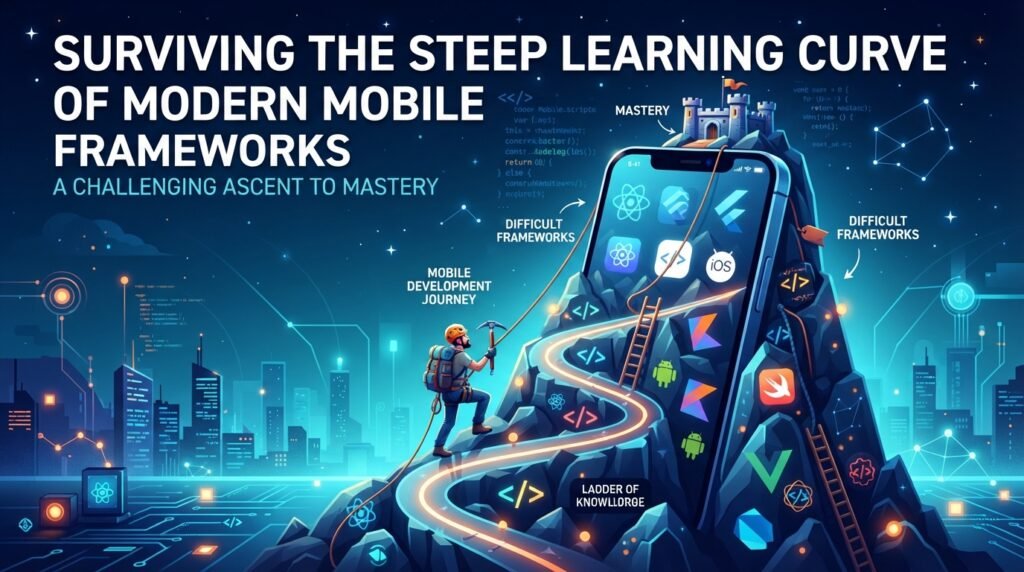
Modern mobile frameworks can overwhelm developers transitioning from familiar web design patterns. Newcomers must understand application lifecycles, asynchronous operations, navigation, state management, testing, permissions, and release processes.
Web developers often adapt faster to TypeScript and React Native because many component concepts feel familiar. Developers comfortable with strongly typed languages may prefer Kotlin, Swift, or Dart for structured application code. Familiarity increases early momentum, but teams must still learn platform conventions and mobile performance constraints.
Documentation quality matters because unclear guidance can turn simple problems into expensive research sessions. Before selecting any framework, review official tutorials, migration guides, package maintenance, issue discussions, and release notes. Build a small prototype containing authentication, navigation, API requests, local storage, and one demanding interface.
Community support also reduces risk when your chosen framework produces unexpected production behavior. Active forums, maintained libraries, and frequent educational updates help developers solve problems without prolonged isolation. Avoid niche tools when only senior specialists can understand their architecture or repair abandoned dependencies. A manageable learning path supports faster onboarding, cleaner code reviews, and stronger long-term maintainability.
You may also like:
Analyzing the Availability of Skilled Developers in the Job Market
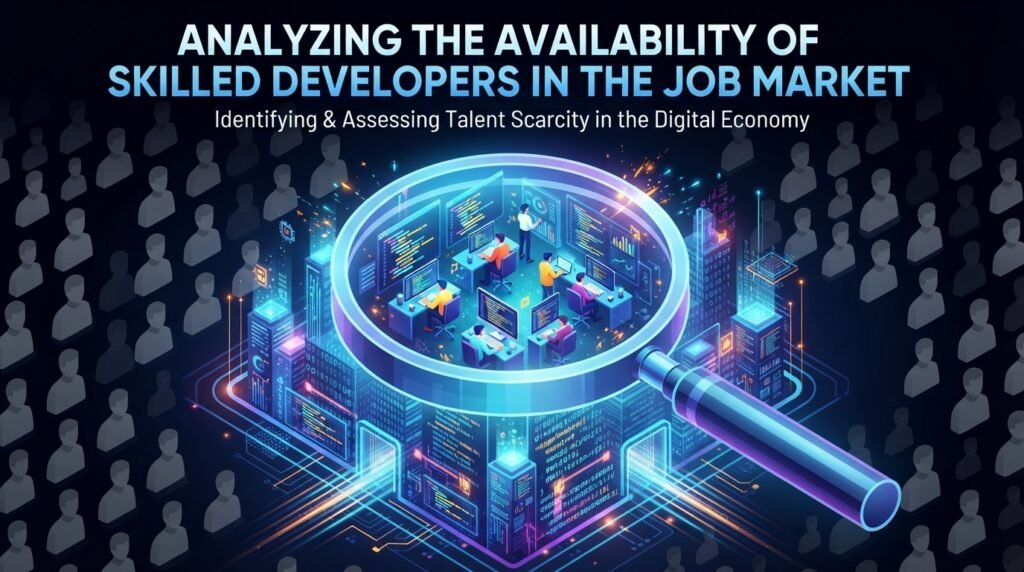
Language selection affects recruitment costs, delivery speed, and your ability to replace departing engineers. Niche or outdated tools can appear affordable initially but become expensive when qualified candidates remain scarce.
Analyze local and remote job markets before approving your final mobile development stack. Compare candidate availability across Kotlin, Swift, Dart, TypeScript, JavaScript, Java, and relevant backend technologies. Review whether applicants understand production architecture rather than recognizing only language syntax. Strong mobile engineers must handle testing, accessibility, security, deployment, analytics, and performance monitoring effectively.
Your existing team deserves equal consideration because retraining may beat recruiting an entirely separate department. A capable web team can often adopt React Native more efficiently than unfamiliar native ecosystems. Organizations already using Microsoft technologies may find C# attractive across business systems and supporting mobile applications.
Avoid architectures understood by only one senior developer because that dependency creates operational risk. Shared conventions, written decisions, automated checks, and understandable modules help less experienced engineers contribute safely. The answer to what language is best for app development must include who can maintain it.
You may also like:
Integrating Backend Systems and Cloud Databases Seamlessly

Mobile applications depend on backend services for authentication, payments, notifications, analytics, business logic, and synchronized user data. Your client language should have mature libraries for secure API communication and your preferred cloud database. Weak integrations create connection timeouts, inconsistent error handling, and unnecessary custom code across important workflows.
Evaluate networking libraries under realistic latency, interrupted connections, expired credentials, and large response payloads. These architectural choices often matter more than minor performance differences between popular mobile app development languages.
Offline behavior deserves special attention because mobile networks remain unreliable during ordinary user journeys. Applications should preserve appropriate local data, record pending changes, and resolve conflicts after connectivity returns. Managed cloud databases can simplify synchronization, but teams must still define ownership and conflict resolution rules. Otherwise, users may overwrite newer information or encounter duplicated actions after reconnecting.
Keep backend contracts independent enough to support future client changes without rewriting every service. Typed data models, versioned APIs, consistent validation, and automated integration tests reduce failures between mobile and cloud systems.
When considering what language is best for app development, inspect its entire networking and database ecosystem. Reliable libraries, observable failures, and predictable offline recovery create stronger experiences than fashionable syntax ever delivers.
You may also like:
Future Proofing Your Application Against Operating System Updates
Operating system updates regularly introduce new features, security restrictions, behavior changes, and deprecated application interfaces. Delayed support can cause crashes on new devices or block submissions under revised store requirements.
Native Swift and Kotlin projects usually receive early access to platform capabilities and updated development guidance. Cross-platform teams depend additionally on framework maintainers and plugin authors adapting their abstraction layers. That dependency remains manageable when projects use popular packages with visible maintenance and responsible release practices.
Future-proofing requires active maintenance rather than predicting one permanent language winner. Schedule dependency reviews, remove deprecated interfaces, test beta operating systems, and monitor application store security policies. Automated tests should cover critical purchases, authentication, notifications, background operations, and data synchronization across supported devices.
Avoid excessive reliance on obscure plugins because abandoned packages can force urgent architectural rewrites. Prefer stable platform interfaces, modular boundaries, and replaceable integrations wherever business requirements allow flexibility. Keep build tools current through controlled upgrades instead of postponing every change until submission fails.
So, what language is best for app development in 2026? Swift offers excellent Apple integration, while Kotlin provides a modern foundation for Android applications. Dart with Flutter supports consistent multiplatform interfaces, while TypeScript with React Native benefits web-oriented teams. The right answer matches your product scope, performance needs, available developers, backend systems, and maintenance capacity.
Its Tech Club recommends validating that choice through a focused prototype before funding complete production. A thoughtful decision today prevents painful rewrites while keeping your application adaptable throughout.
You May also like:
conclusion
In conclusion, Its Tech Club recommends validating your choice through a focused prototype before funding full production. This step reduces costly rewrites while keeping your application adaptable throughout future platform