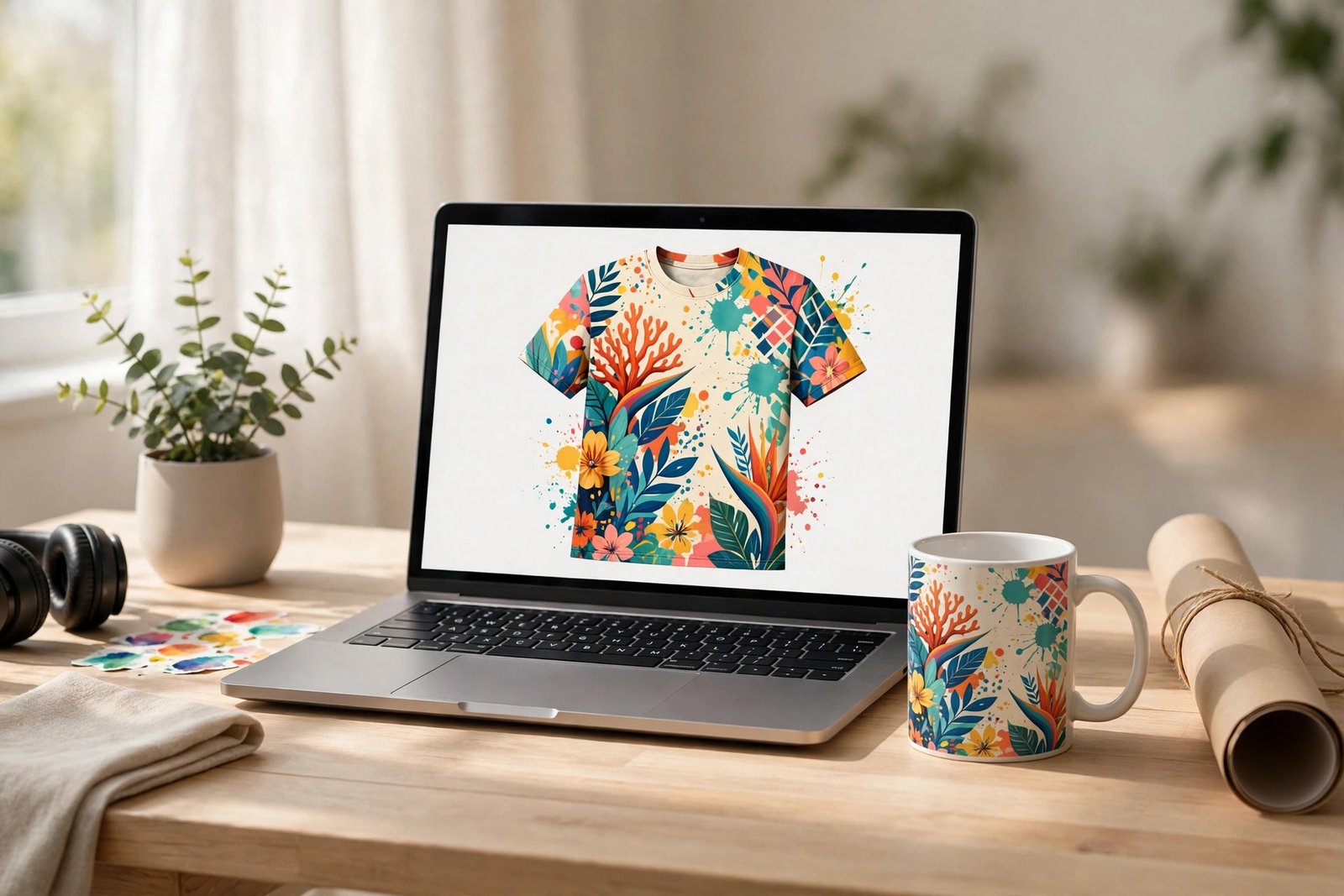
Do you want to sell custom products online without holding stock, packing boxes, or renting storage space? Etsy print on demand lets you do exactly that. You create the designs, a print provider makes each item only after a customer orders it, and Etsy gives you access to millions of shoppers who already search for unique gifts, custom shirts, mugs, posters, and home decor.
This model suits beginners because the startup cost stays low and the risk stays small. You do not need to buy inventory in advance. You do not need a printer, a studio, or a shipping setup. You need a clear niche, original designs, honest pricing, and a shop that looks trustworthy from the first listing.
In this guide, you will learn how to start Etsy print on demand the right way in 2026. You will see the real Etsy fees, how to compare print providers, how to launch your shop step by step, and how to price products so you actually earn a profit.
To start an Etsy print on demand shop in 2026, open an Etsy seller account, connect a print provider such as Printful or Printify, upload your own original designs, set prices that cover Etsy fees and provider base costs, publish listings with clear photos and keywords, then promote your shop to earn your first sales.
What Is Print on Demand on Etsy?
Print on demand is a simple way to sell custom products without inventory. When a customer buys a shirt, mug, or poster from your Etsy shop, your print provider prints your design on that item, packs it, and ships it directly to the customer. You never touch the product.
Etsy is a strong fit for this model because buyers visit Etsy to find items they cannot find in regular stores. They search for funny quotes, personalised gifts, pet portraits, wedding designs, hobby themed art, and seasonal products. If your design speaks to a clear group of buyers, it can stand out even in a busy marketplace.
There is one rule you must respect from the start. Etsy requires handmade, vintage, or craft supply items, and print on demand designs must be your own original work. You cannot copy another artist, use trademarked characters or logos, or upload designs you do not own. Original work protects your shop and builds a brand buyers can trust.
How Much Does It Cost to Start an Etsy Print on Demand Shop?
You can start with a small budget, but you should know the fees before you set your first price. Etsy charges a listing fee of $0.20 per listing, and each listing lasts for four months. If the item does not sell in that time, you can renew it for another $0.20 or let it expire.
When you make a sale, Etsy charges a transaction fee of 6.5 percent of the item price plus shipping and gift wrap. Payment processing costs about 3 percent plus $0.25 per order for US sellers. These fees apply on top of what your print provider charges to make and ship the product.
Etsy also runs Offsite Ads, which can promote your listings on other websites. The fee is 15 percent of the sale when an ad leads to a purchase. Once your shop earns over $10,000 in sales in the prior 365 days, that fee drops to 12 percent. New sellers should focus first on strong listings and clear photos, and treat ads as a later step once sales are steady.
Your other main cost is the provider base cost, which is the amount the print provider charges for the blank product, printing, and shipping. Base costs vary by product, so always check the provider catalog before pricing. A shirt, a mug, and a poster can have very different base costs, and those costs shape your profit on every order.
Which Print on Demand Provider Should You Choose for Etsy?
Your provider affects product quality, shipping speed, and profit, so choose with care. Printful and Printify integrate directly with Etsy, which makes it easy to sync products, send orders automatically, and keep stock levels updated. A direct integration saves time and reduces mistakes as your shop grows.
If you want a wider view of the options before you commit, read this best print on demand sites guide to compare features side by side. It will help you see which provider fits your niche, your budget, and the products you want to sell first.
Use the table below to compare four popular providers for Etsy sellers. Look beyond price alone. A provider with slightly higher base costs can still be the better choice if print quality is consistent and delivery is reliable.
| Provider | Base Cost Approach | Product Range | Etsy Integration | Print Quality Reputation |
|---|---|---|---|---|
| Printful | Provider sets the base cost for each product | Wide range, including apparel, mugs, posters, and home goods | Direct Etsy integration | Strong reputation for consistent quality and quality checks |
| Printify | Base cost varies by print provider in its marketplace | Very wide range through many print providers | Direct Etsy integration | Good overall, with quality that varies by print provider |
| Print Aura | Provider sets the base cost for each product | Focused range, mainly apparel and accessories | Etsy integration available | Solid reputation, best suited to simple apparel designs |
| Gelato | Provider sets the base cost for each product | Wide range, including apparel, wall art, and photo products | Etsy integration through its app | Strong reputation for local production and reliable prints |
Printful is a good starting point if you want consistent quality and simple setup. Printify is a good choice if you want more product options and the freedom to compare print providers. If you are torn between the two main options, this Printful vs Printify comparison breaks down the differences for Etsy sellers in clear detail.
Order samples before you scale. A sample lets you check print sharpness, fabric feel, colour accuracy, and packaging. It also gives you real photos for your listings, which can build trust faster than mockups alone.
How Do You Start an Etsy Shop With Print on Demand Step by Step?
Follow these steps in order. Each one builds on the last, and skipping ahead often leads to listings that look rushed or prices that lose money.
- Pick a niche you understand. Choose a clear audience, such as dog lovers, new parents, teachers, gardeners, or fans of a hobby. A focused niche makes design ideas easier and helps buyers remember your shop.
- Research demand on Etsy. Search your niche, study the top listings, read reviews, and note the words buyers use. Look for gaps, such as a popular theme with few fresh designs or a product type that buyers ask for in reviews.
- Create your Etsy seller account. Sign up, choose a shop name that is easy to spell and remember, add a shop logo and banner, and write a short shop story that explains what you sell and why it matters.
- Choose your print provider and connect it to Etsy. Link your provider account, set your shipping settings, and confirm where orders will be produced. Printful and Printify integrate directly with Etsy, so setup is quick.
- Design your first products. Start with 10 to 20 designs across a small set of products. Use original art, text, or illustrations, and keep each design clean and easy to read at a small size.
- Upload products and set prices. Add each product to your provider, sync it to Etsy, and set a price that covers the base cost, Etsy fees, and a profit margin. Write clear titles and descriptions for every listing.
- Add strong photos and mockups. Use bright, clear images that show the design, the product, and the scale. Include a lifestyle photo when you can, so buyers can picture the item in real use.
- Publish your listings and check them. Open each listing as a buyer would see it. Check spelling, photos, sizes, colours, shipping details, and prices before you move on.
- Promote your shop and collect feedback. Share your shop on social media, ask friends for honest feedback, and watch which listings get views. Use that early data to guide your next designs.
How Do You Create Designs That Sell on Etsy?
Great Etsy designs solve a small problem or express a clear feeling. A mug that makes a nurse smile after a long shift, a shirt that celebrates a new dad, or a poster that fits a nursery theme will always beat a generic design with no clear buyer in mind.
Start with words and ideas before you open design software. Write down phrases your audience uses, jokes they share, and moments they celebrate. Then turn the best ideas into simple, bold designs. Clean text, strong contrast, and one clear focal point usually perform better than busy art with too many elements.
Use tools you already know, such as Canva, Adobe Illustrator, or Procreate, and export files at high resolution. Check your design on a mockup at full size and at thumbnail size. If it is hard to read when small, simplify it. If colours look dull on fabric, increase contrast and test a sample.
Avoid trends you do not understand and designs that rely on borrowed art. Original work takes longer, but it keeps your shop safe and gives buyers a reason to choose you over a shop that copies everyone else.
How Do You Price Your Products for Profit?
Pricing is where many new sellers lose money, so use a simple formula. Start with the provider base cost, add the Etsy listing fee, add the transaction fee of 6.5 percent, add payment processing of about 3 percent plus $0.25, then add your profit. If you plan to offer free shipping, include the shipping cost in the price as well.
Test your price against similar listings. If your price is far above the market, buyers may scroll past. If it is far below, you may win sales but earn almost nothing. Aim for a price that feels fair to the buyer and leaves you a clear profit after every fee.
Do not compete on price alone. Better photos, clearer descriptions, faster responses, and thoughtful packaging can justify a higher price. Buyers on Etsy often pay more for a product that feels personal, well made, and carefully presented.
How Do You Get Your First Sales on Etsy?
Your first sales usually come from visibility, not luck. Etsy search rewards listings with relevant titles, tags, and descriptions, so use the exact words buyers type when they search. Include your main keyword early in the title, repeat it naturally in the description, and use all available tags with useful phrases.
Keyword research is worth your time before you publish. This keyword research guide shows free ways to find search terms buyers already use, so you can target phrases with real demand instead of guessing.
Share your shop outside Etsy as well. Post your products on Pinterest, Instagram, and TikTok, and show the product in use rather than only posting a mockup. A short video of a mug, shirt, or poster in a real setting can bring clicks that search alone will not.
Ask early buyers for a review after delivery, and reply quickly to every message. Fast, friendly service builds trust and can turn one buyer into a repeat customer. Even a small number of positive reviews can lift your shop in search and make new visitors feel safe to order.

Frequently Asked Questions
Do I need inventory to start an Etsy print on demand shop?
No, you do not need inventory. Your print provider makes each item only after a customer orders it, then ships it directly to the buyer. You pay the base cost only when an order comes in, which keeps your startup cost low and removes the risk of unsold stock.
How much money can I make with Etsy print on demand?
Earnings vary widely and depend on your niche, prices, and sales volume. Your profit on each order is the sale price minus the provider base cost and Etsy fees. Shops that publish many quality listings, target clear niches, and promote steadily tend to earn more over time than shops with only a few listings.
Is print on demand allowed on Etsy?
Yes, print on demand is allowed when you follow Etsy rules. Your designs must be your own original work, and you must list your print provider as a production partner in your listing details. You cannot sell copied designs, trademarked art, or items you did not design.
How long does it take to get your first Etsy sale?
It can take days, weeks, or longer, and it depends on your niche, listing quality, and promotion. Shops with 20 or more strong listings, clear photos, and useful keywords usually get seen faster. Keep adding listings, improving titles, and sharing your shop while you wait for early traction.
Final Thoughts on Starting Your Etsy Print on Demand Shop
Learning how to start Etsy print on demand is the easy part. The real work is choosing a clear niche, creating original designs, pricing with care, and publishing listings that buyers can trust. Start small, order samples, and improve one listing at a time.
Your first shop does not need to be perfect. It needs to be live, honest, and focused on real buyers. Publish your first products, learn from the early results, and keep adding designs that serve your audience. With steady effort, your Etsy shop can grow from a first sale into a reliable source of income.