What Is the Jones Act? A Complete Guide
What Is the Jones Act? A Complete Guide for U.S. Shipping

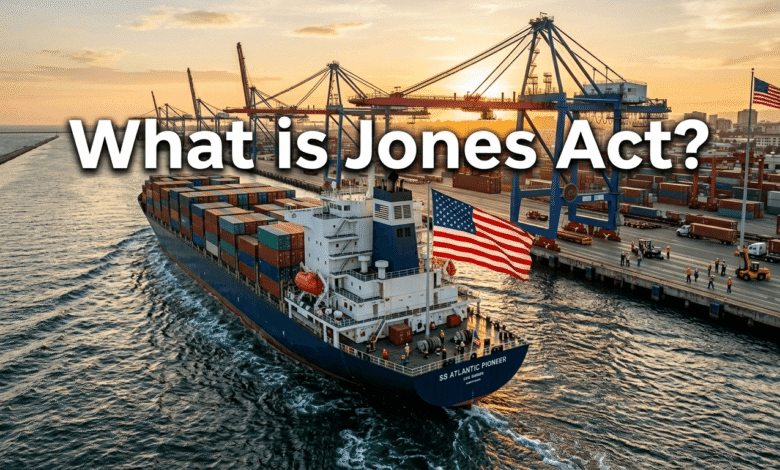
The Jones Act (Merchant Marine Act of 1920) is a key U.S. law regulating domestic maritime commerce. It sets strict standards for ships, crew qualifications, and operations for vessels transporting goods between U.S. ports. By doing so, it shapes shipping costs, supports a locally trained maritime workforce, and helps maintain national security. This analysis examines the law’s history, legal mechanisms, and its effects on shipowners, shippers, labor unions, and defense planning, explaining complex legal concepts in a clear, accessible way.
What Is the Jones Act?
Jones Act is a federal statute that regulates the shipping within the United States ports. Shipping between ports entails the transportation of goods by water between any two ports in the U.S. Any ship which does so, according to the law, must fulfill some rules:
It should be manufactured in the United States.
- It should be owned by United States individuals and business enterprises.
- It must fly a U.S. flag.
- The majority of its crew should be U.S citizens.
Simply put, Jones Act would have to be obeyed by a ship that wishes to transport cargo between ports in America. Unless it complies with the rules, it is not allowed to run on such route.
The law is aimed at benefiting and safeguarding the U.S. shipping business. It retains jobs in shipbuilding and aboard the ships as well. National defense also is an issue of the law, as it is desired to have a good U.S. fleet, which can be of use in case of emergency.
Why Was the Jones Act Created?
The Jones Act began at the beginning of the 20th Century. The desire of the lawmakers was to make the U.S merchant fleet more powerful, retain employment and ensure that the nation could transport goods via water without having to rely on foreign vessels.
The U.S. at that time traded by using numerous foreign ships. This, according to politicians, was dangerous during emergencies or wars. That is why they created the Jones Act to aid in the development of a powerful marine labor force and infrastructure.
The other objective of the law was to expand the economy of towns on the coast and islands. Transporting water is normally less expensive than transport on land and legislators compelled American ships to operate within the country.
How the Jones Act Works
There are four general requirements of a ship to be qualified under the Jones Act:
Built in the United States
The vessel should be constructed at a shipyard in the U.S. The rule is useful in maintaining ship building jobs in America.
Owned by U.S. Citizens
The proprietor should be an individual or a corporation in the U.S. The legislation prevents the ownership of the ship by more than a few foreign owners.
U.S. registered or Flagged.
The ship must fly the U.S. flag. This keeps it under U.S. law.
Crewed by Americans
The majority of the crew has to be U.S citizens or individuals who are legally able to reside in the U.S.
In case a ship does not meet these requirements, then it cannot legally carry cargo between ports in the U.S.
This may seem tough. Nevertheless, according to proponents, the regulations save American jobs and industries. They say too that the rules are what make things safe, and keep law abiding.

Who Does the Jones Act Affect?
The Jones Act has far reaching implications on the U.S. economy stakeholders. These include:
Maritime Workers
The legislation provides employment to the U.S. seafarers and dockworkers. Since the U.S citizens are the only ones allowed to serve in a Jones Act ship, it encourages work in the maritime industry. This incorporates the roles of captains, engineers and deck hands.
Shipbuilders
Since the ships have to be constructed at the shipyards in the U.S., the Jones Act favors local production. This need leads to an increase in demand for shipbuilding labor and supplies as well as associated services.
Shippers and Businesses
Goods that are being transported on companies moving between U.S. ports ought to be carried using qualified vessels. This incorporates businesses which transport petroleum and construction materials, food products among others. The scarcity of compliant vessels in a few instances may end up being costly in domestic transport.
Consumers
This can be higher shipping costs that are transferred to consumers in the form of high prices of goods. An example is, coastal and island communities that depend on water transport at high rates may be affected by an increase in the cost of living consequently.
National Security
Defense planning involves a powerful marine fleet of the U.S. Jones Act vessels may assist the military logistics and emergency response in case of an emergency.
Typical Applications of the Jones Act.
To see the relevance of the Jones Act, one can take into consideration the following real-world examples:
Shipment Among Coast states.
When a firm in Florida is interested in transferring goods to a Maine port using water, the ship has to adhere to the Jones Act regulations. In case there is no vessel complying with those regulations, the company has to find another option or incur higher costs going to shipping.
Island and Remote Areas
Such destinations as Alaska, Hawaii, or Puerto Rico depend on water shipping of various valued goods. Since the Jones Act is in effect of such paths, the citizens there usually spend higher prices on goods imported elsewhere.
Emergency Response
U.S. vessels that comply with the Jones Act can prove to be extremely useful when natural disasters such as hurricanes occur, to deliver supplies and assist in recovery.
Debate and Controversy
Although the Jones Act has obvious supporters, there are also opponents to it.
Higher Costs
Opponents argue that competition should not be restricted as it increases the costs of shipping. They note that the option of using the U.S. ships alone can decrease the quantity of ships. Consequently, this can cause an increase in transport prices.
Limited Fleet
Since it is more expensive to construct ships in the U.S. than overseas, there are only a small number of Jones Act-compliant ships. In case of high demand, this shortage can lead to bottlenecks.
Calls for Reform
Other policymakers and economists desire to update the law. They propose a reduction in the requirements on some routes to ensure the reduction of costs and still secure the main maritime employment.
Proponents argue that the law is still critical in national security and stability of industries. They claim that the repeal or even the watering down of the Jones Act would be detrimental to American maritime workers and shipbuilders.
The Jones Act and Puerto Rico
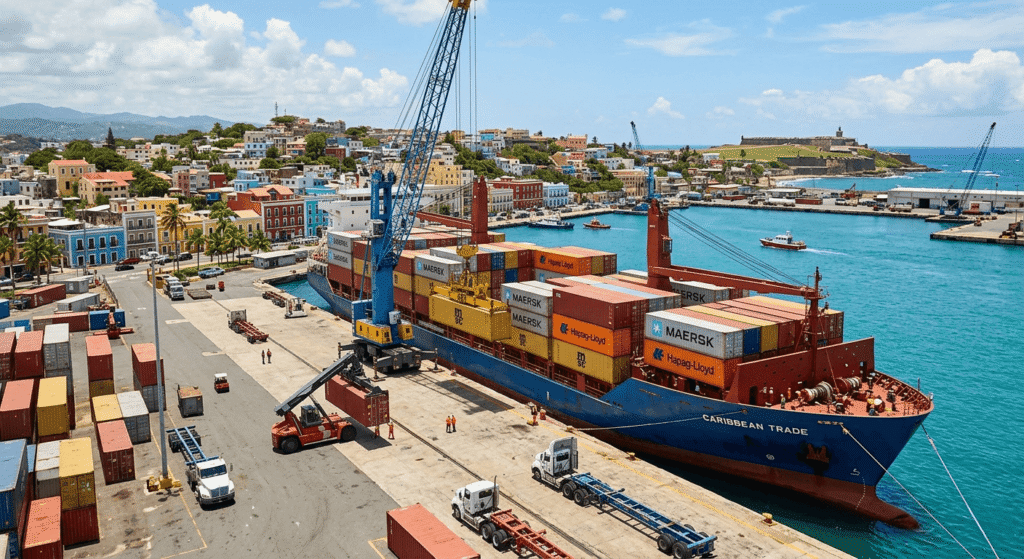
The Jones Act is something that is discussed in Puerto Rico. Puerto Rico being a U.S. territory, any goods to be transported by sea by the mainland must be transported through the ships which conform to the law.
Critics believe that this rule increases the cost of life on the island. They also opine that it decreases competition and increases freight costs.
The advocates argue that the law will ensure safe shipping solutions in the U.S. in case of emergencies such as hurricanes.
The two parties continue debating the need to provide Puerto Rico with exemptions to assist the island without impacting on the greater maritime objectives.
Benefits of the Jones Act
Regardless of this criticism, the Jones Act has a number of advantages:
- It provides employment to the U.S. sailors.
- It strengthens the U.S. shipbuilding industry.
- It maintains major transportation routes within the control of the U.S.
- It maintains a fleet, which is useful in defense and emergencies.
The merits retain the American maritime workforce experienced and reduce foreign ship dependency.
Final Thoughts
One of the most crucial maritime laws of the United States is the Jones Act. It determines who is authorized to transport goods between these ports of the US and the exercises of shipping services. Although it helps to save American industries and jobs it can also make them more expensive and less competitive.
Being aware of this law will assist businesses, policymakers and ordinary consumers to know about the trade offs in regulating domestic shipping.
Regardless of your opinion of the law or your desire to change, the Jones Act is at the core of American maritime commerce and national security.