Many website owners wonder, do nofollow links help SEO after building backlinks. The answer requires more nuance than simply saying yes. Nofollow links generally do not function like ordinary links for ranking credit. However, Google treats nofollow as a hint rather than an absolute instruction.
A nofollow link tells search engines about the relationship between two linked pages. Website owners commonly use this attribute when they do not want to imply endorsement. Nofollow links can still bring visitors, exposure, and potential brand awareness. Those benefits can make them useful within broader SEO strategies.
At Its Tech Club, we understand why different backlink types matter for SEO. Instead of judging links only by their ranking value, consider their wider purpose. A relevant nofollow link can still introduce your website to valuable audiences. Understanding this distinction can help you build a more balanced SEO strategy.
What Is a Nofollow Link?
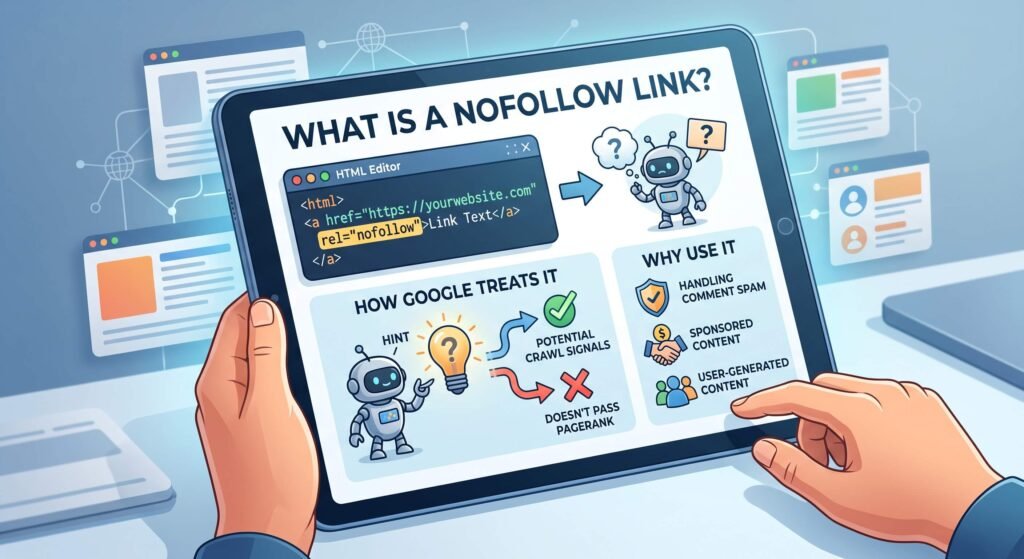
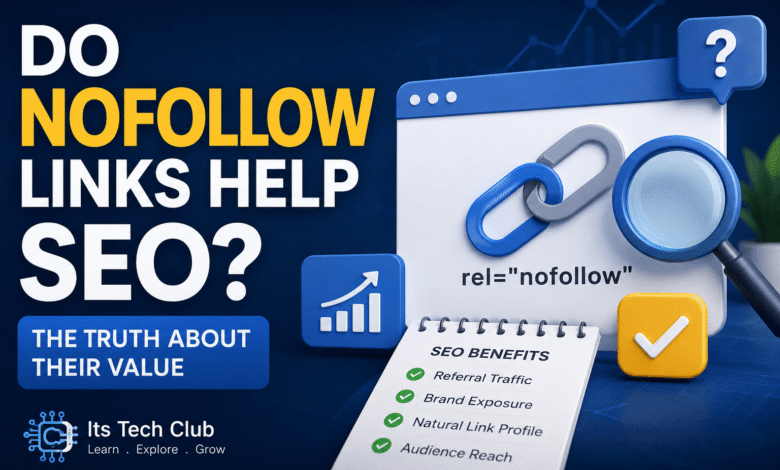
A nofollow link uses the rel="nofollow" attribute within an HTML anchor element. This attribute tells Google that you do not necessarily endorse the destination. Google introduced nofollow primarily to help website owners handle comment spam. Its use later expanded to other situations involving links.
For example, a basic nofollow link can look like this:
<a href="https://example.com" rel="nofollow">Example Website</a>
Google’s current documentation explains that nofollow should be used when you do not trust the linked source. Google also recommends appropriate attributes for sponsored and user-generated links. These include rel="sponsored" and rel="ugc" respectively.
The important point involves understanding how Google interprets these attributes today. Since 2019, Google has treated nofollow, sponsored, and UGC attributes as hints. Therefore, they are not necessarily absolute commands for search systems. Google can consider additional signals when processing these links.
Nofollow vs Dofollow Links: What’s the Difference?
People commonly use “dofollow” to describe ordinary links without qualifying attributes. Technically, dofollow is not an HTML attribute that website owners need. Standard crawlable links generally use an anchor element containing an appropriate href attribute.
The major difference concerns how the link relationship is communicated. A nofollow link indicates that the publisher does not necessarily endorse its destination. Ordinary links can provide stronger signals about relationships between relevant pages. However, Google evaluates links using multiple signals rather than one simple rule.
Both link types can still send visitors to your website when clicked. A relevant nofollow link can therefore generate genuine referral traffic. It may also expose your brand to people who have never encountered it. That visibility can provide useful marketing value beyond traditional ranking considerations.
Do Nofollow Links Help SEO Directly?
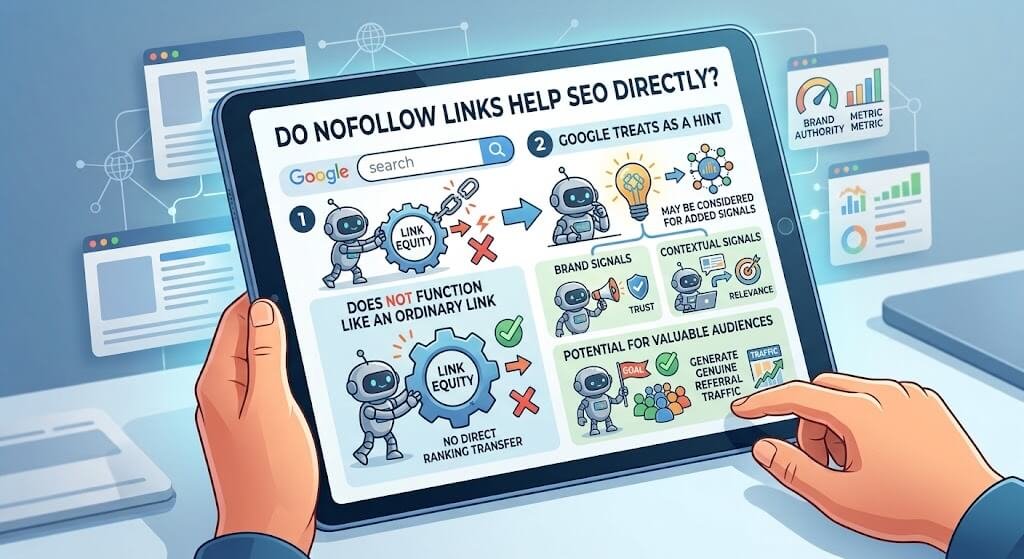
So, do nofollow links help SEO through direct ranking credit? You should not assume that every nofollow backlink will improve rankings. Google specifically says nofollow is used when publishers do not want to imply endorsement or pass ranking credit. However, Google now treats nofollow as a hint within its systems.
This means the old idea that Google simply ignores every nofollow link is outdated. Google explained that links contain information that can help search systems understand websites. The company therefore moved from a strict directive toward a hint-based approach.
Still, you should never build a strategy around forcing nofollow links. Their potential search value remains less predictable than marketers sometimes suggest. Instead, focus on earning relevant links from legitimate websites and useful content. A healthy SEO strategy should prioritize relevance, trust, and genuine audience value.
How Nofollow Links Can Still Benefit Your Website
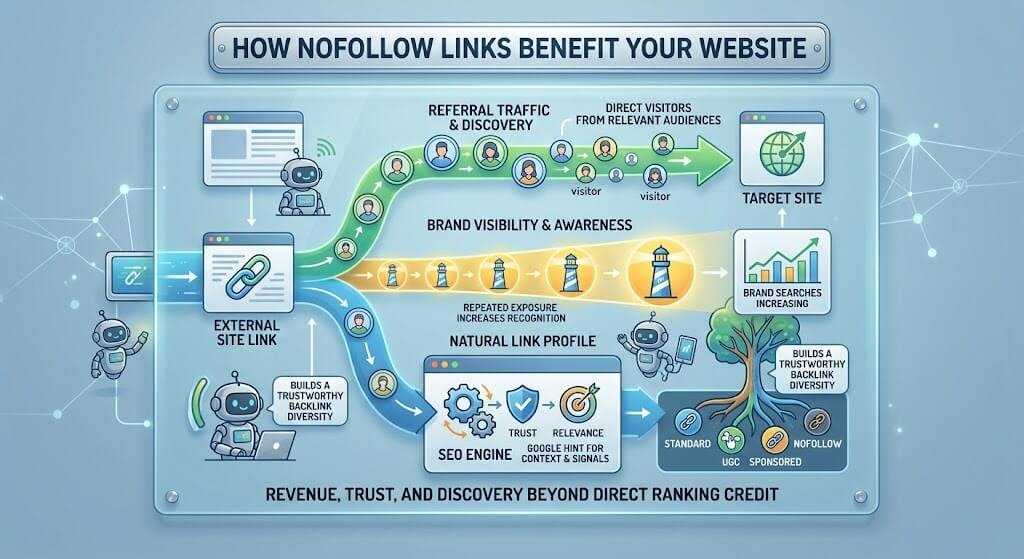
One obvious benefit involves referral traffic from people clicking the link. A relevant article can introduce your website to readers already interested in your subject. Those visitors may explore additional pages after discovering your content. This makes audience relevance more important than simply counting backlinks.
Nofollow links can also increase brand visibility across different websites and communities. When people repeatedly encounter your brand, recognition can gradually improve. Some readers may later search for your brand directly or mention your website elsewhere. These outcomes can create valuable opportunities without relying on direct ranking credit.
Nofollow links can also become part of a natural backlink profile. Real websites naturally receive links with different attributes from many sources. Google also emphasizes creating useful, trustworthy content and using links appropriately. Therefore, pursuing only one specific backlink type can create an unnecessarily narrow strategy.
When Should You Use Nofollow Links?
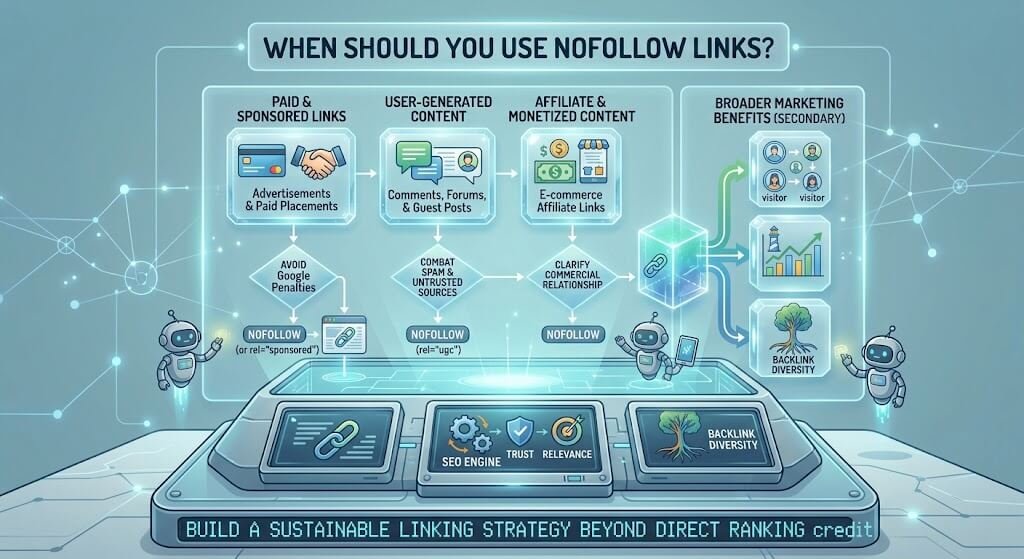
Website owners should use nofollow when they do not trust a linked source or want to avoid implying endorsement. Google specifically recommends nofollow for links where other qualifying attributes do not apply. This makes the attribute useful for managing relationships with external websites.
Paid links require particular attention because Google provides specific guidance. Google recommends using rel="sponsored" for advertisements and paid placements. Nofollow remains an acceptable alternative for qualifying these links. Using the appropriate attribute helps communicate the relationship clearly.
User-generated links can also require additional qualification. Google recommends rel="ugc" for links within comments and forum posts. Website owners can combine attributes when multiple descriptions apply. The important principle involves accurately communicating why the link exists.
How to Build a Natural Backlink Profile
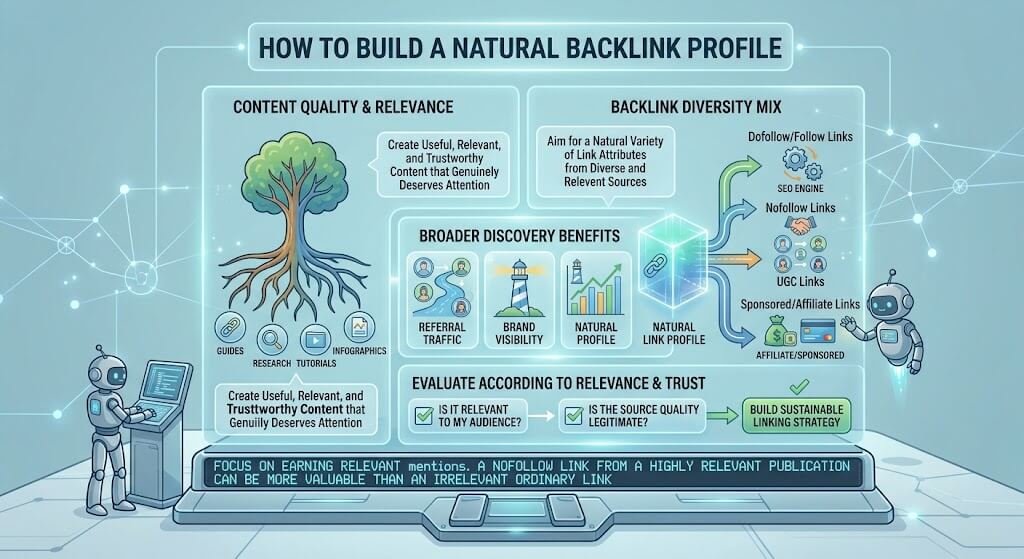
A strong backlink strategy should focus primarily on relevance and genuine value. Create useful content that other websites have legitimate reasons to reference. Industry resources, original research, helpful guides, and valuable explanations can attract relevant attention. Quality should remain more important than simply increasing backlink numbers.
Avoid building backlinks through manipulative tactics designed primarily to influence rankings. Google identifies practices such as low-quality directory links, keyword-rich hidden links, and certain manipulative link schemes. Creating low-value content mainly to manipulate linking signals can also violate Google’s spam policies.
Instead, evaluate backlinks according to their relevance, source quality, and potential audience. A nofollow link from a highly relevant publication can sometimes be more useful than an irrelevant ordinary link. Consider whether readers would genuinely benefit from visiting your website. That mindset creates a more sustainable approach to link building.
Conclusion
So, do nofollow links help SEO? They should not be viewed as ordinary ranking links that automatically transfer SEO value. However, they can still provide referral traffic, brand exposure, and opportunities for people to discover your website. Google also treats nofollow as a hint rather than an absolute directive.
The best approach involves building a varied and natural backlink profile. Focus on earning links because your content genuinely deserves attention. Do not reject a valuable opportunity simply because the resulting link contains nofollow. Its audience, relevance, and potential referral value can still matter.
At Its Tech Club, we believe effective SEO requires understanding the purpose behind different strategies. Nofollow links are one part of a much larger search optimization picture. Build useful content, earn relevant mentions, and evaluate backlinks based on their overall value. This approach provides a stronger foundation than chasing one specific link attribute.