
Starting a small business does not always require a large amount of money. Many successful businesses begin with a simple idea, limited resources, and a strong willingness to learn. The internet has also made it easier for beginners to reach customers, promote products, provide services, and build a brand without renting an expensive office or opening a physical store.
The most important thing is not how much money you have at the beginning, but how carefully you use the money available to you. A small budget requires you to focus on essential expenses, avoid unnecessary purchases, understand your target customers, and choose a business model that can generate revenue quickly. Whether you want to start a home-based business, an online store, a service business, or a local business, proper planning can help you reduce financial risks and improve your chances of success.
Choose a Business Idea That Fits Your Budget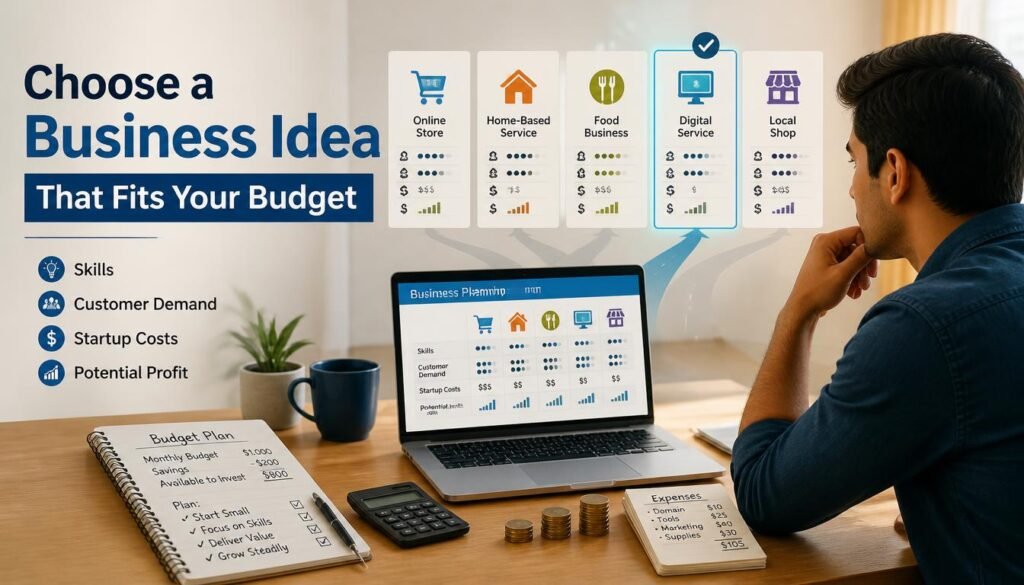
The first step in starting a small business is choosing an idea that matches your available resources. Beginners often make the mistake of choosing a business simply because it sounds profitable. A better approach is to consider your skills, experience, interests, available time, and the needs of people around you.
Service-based businesses can be particularly suitable for people with limited capital because they often require fewer physical resources. For example, graphic design, photography, social media management, website development, content creation, cleaning services, repair services, consulting, personal assistance, and other specialized services can be started on a small scale. If you already have the necessary skills and equipment, your initial expenses can be relatively low.
Product-based businesses can also be started with limited money, but they usually require more planning. Instead of purchasing a large amount of inventory, a beginner can start with a small selection of products and test customer demand. Another option is to use a pre-order model, where customers place orders before you purchase or produce a larger quantity.
When evaluating a business idea, ask yourself whether people actually need what you are offering. A good business solves a problem, saves customers time, provides convenience, improves an existing product or service, or offers something customers genuinely want. The stronger the problem you solve, the easier it can be to explain your value to potential customers.
Research Your Market Before Spending Money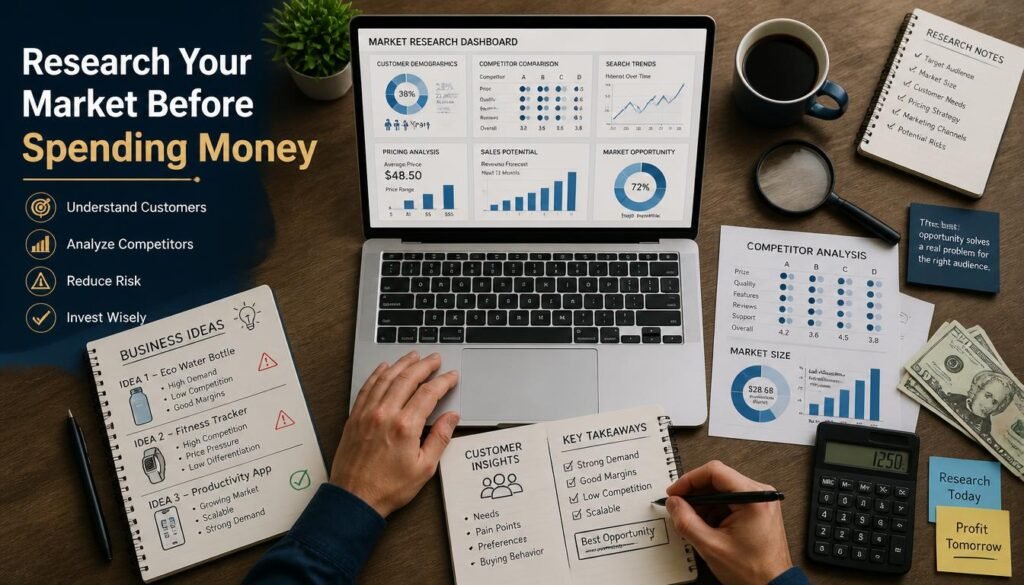
Market research is one of the most important steps for a new business, especially when your budget is limited. You do not want to spend your available money on a product or service that customers are not interested in buying.
Start by identifying your potential customers. Think about their age, location, income level, interests, common problems, buying habits, and expectations. You do not need expensive research software to understand your audience. You can speak directly with potential customers, examine competitors, read online reviews, participate in relevant communities, and observe what people are already buying.
Competitor research can also reveal useful information. Look at businesses that offer similar products or services and study their pricing, customer service, marketing, website, social media presence, and customer reviews. Pay attention to complaints because they can reveal opportunities for your business. If customers repeatedly complain about slow delivery, poor communication, limited options, or low-quality service, you may be able to compete by solving those problems.
You should also test your idea before investing heavily. Offer a small version of your product or service to a limited number of customers. Their feedback can help you identify weaknesses and improve your offer. This approach reduces the risk of spending your entire budget before discovering that changes are necessary.
Create a Simple Business Plan
A business plan does not have to be a long and complicated document. For a small business, a simple plan can be enough to organize your ideas and guide your decisions.
Start by clearly describing what your business will sell and who will buy it. Then identify the main problem your business solves and explain why customers should choose you instead of competitors. Next, determine how you will make money. Your business model could involve selling products, charging for services, subscriptions, commissions, project-based payments, or another method.
Your plan should also include basic financial estimates. List your expected startup expenses, monthly operating costs, expected sales, and estimated profit. Try to be realistic rather than overly optimistic. Include costs that beginners sometimes overlook, such as packaging, transportation, payment processing, internet services, software, advertising, taxes, permits, maintenance, and unexpected expenses.
You should also establish short-term goals. For example, your first goal might be to find your first five customers. After that, you could aim for ten or twenty customers and gradually increase your sales. Smaller goals make it easier to measure progress and identify what needs improvement.
Start With the Essentials
When money is limited, controlling expenses is extremely important. Many new entrepreneurs spend too much money on things that do not directly help them make their first sale. An expensive office, premium equipment, complicated website, large inventory, and unnecessary subscriptions can consume a small startup budget very quickly.
Instead, identify the minimum resources required to deliver your product or service professionally. If you can work from home, consider doing so instead of renting an office. If free or affordable software can handle your basic tasks, there may be no reason to purchase expensive business software immediately.
The same principle applies to branding. A professional-looking business is useful, but you do not need to spend a fortune on a logo or visual identity at the beginning. Focus first on having a clear business name, understandable messaging, reliable communication, and a consistent presentation.
Keep your personal and business finances organized from the beginning. Track every business-related expense and every payment you receive. Even a simple spreadsheet can help you understand where your money is going. Good financial records also make it easier to calculate profit and make better decisions as the business grows.
Build an Online Presence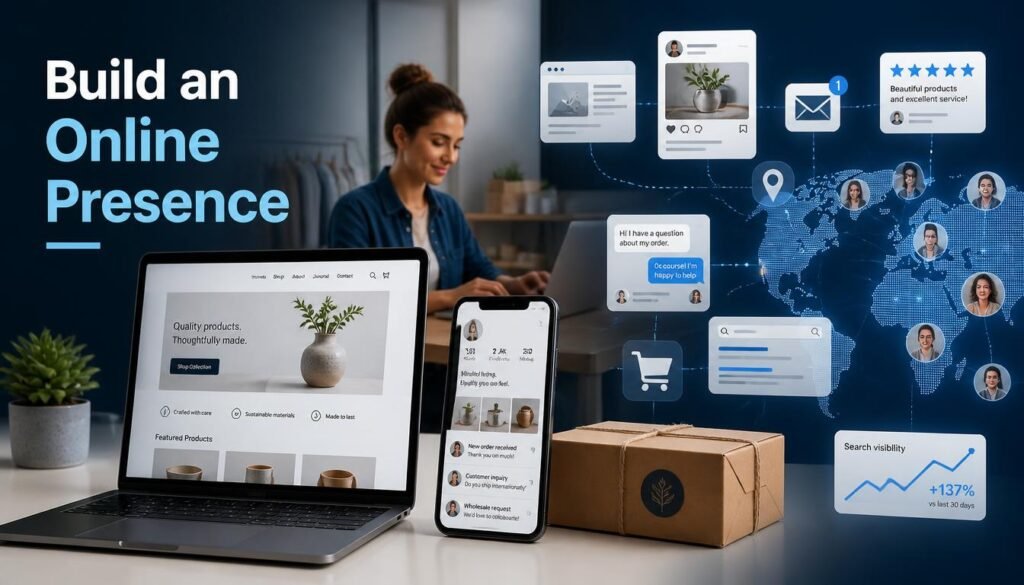
An online presence can help a small business reach customers without the cost of traditional advertising. Depending on your business type, you may need a website, social media profiles, an online marketplace account, or a combination of these platforms.
Your online presence should clearly explain what you offer, who it is for, how much it costs when appropriate, and how customers can contact or purchase from you. Avoid making customers search through complicated pages to understand your business.
Social media can be particularly useful for small businesses because it allows you to demonstrate products, share educational content, answer questions, show customer experiences, and build relationships with potential buyers. Instead of posting random content, create material that is connected to your customers’ problems and interests.
For example, a clothing business can show styling ideas, product demonstrations, customer photos, and care instructions. A food business can share preparation videos, menus, customer feedback, and behind-the-scenes content. A service provider can demonstrate previous work, explain common problems, and share useful tips.
Consistency is more important than trying to become popular overnight. A small business can gradually build an audience by providing useful information and maintaining a professional presence.
Find Your First Customers
Getting the first customers is often one of the hardest parts of starting a business. At the beginning, your goal should not necessarily be to reach thousands of people. Instead, focus on finding people who genuinely need your product or service.
Start with your existing network when appropriate. Friends, family members, former colleagues, local contacts, and community groups may help you find your first customers or referrals. However, do not rely entirely on personal contacts. You should also develop methods for reaching new customers.
Local businesses can benefit from direct outreach, community groups, local listings, partnerships, and referrals. Online businesses can use search engine optimization, social media, email marketing, content marketing, online communities, and targeted advertising.
Customer referrals can become especially valuable as your business grows. A satisfied customer may recommend your business to several other people. To encourage referrals, focus on delivering a reliable experience rather than simply asking everyone to recommend you.
Your first customers can also provide valuable feedback. Ask them what they liked, what they disliked, what could be improved, and whether the price felt reasonable. Use this information to improve your product, service, and customer experience.
Price Your Products or Services Properly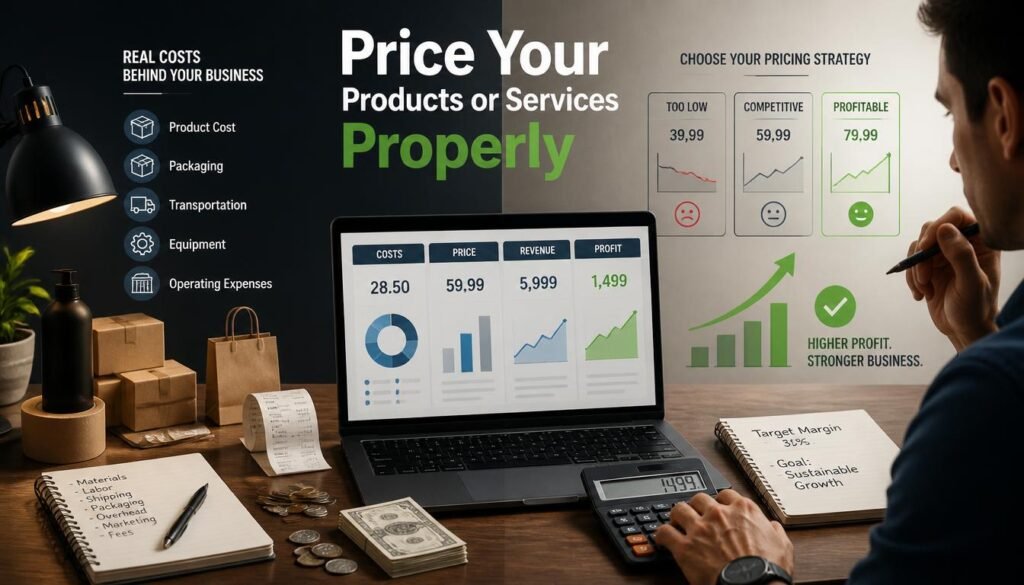
Pricing is one of the most important decisions in a small business. Setting your price too low may attract customers but leave you without enough profit to sustain the business. Setting it too high without providing sufficient value can make it difficult to attract buyers.
Begin by calculating your costs. For products, consider the purchase or production cost, packaging, transportation, platform fees, payment fees, storage, and other expenses. For services, consider the time required, equipment, software, transportation, administrative work, and other operating costs.
Then research competitors to understand the market range. Competitor pricing should not automatically determine your price, but it provides useful context. Your final price should reflect your costs, customer expectations, market conditions, and the value you provide.
Remember that revenue is not the same as profit. If you sell a product for $20 but spend $15 on the product and related costs, your actual profit is much smaller than $20. Understanding this difference is essential for making responsible business decisions.
As your business becomes established, you can adjust your pricing based on demand, costs, customer feedback, and the quality of your offer.
Promote Your Business With a Small Budget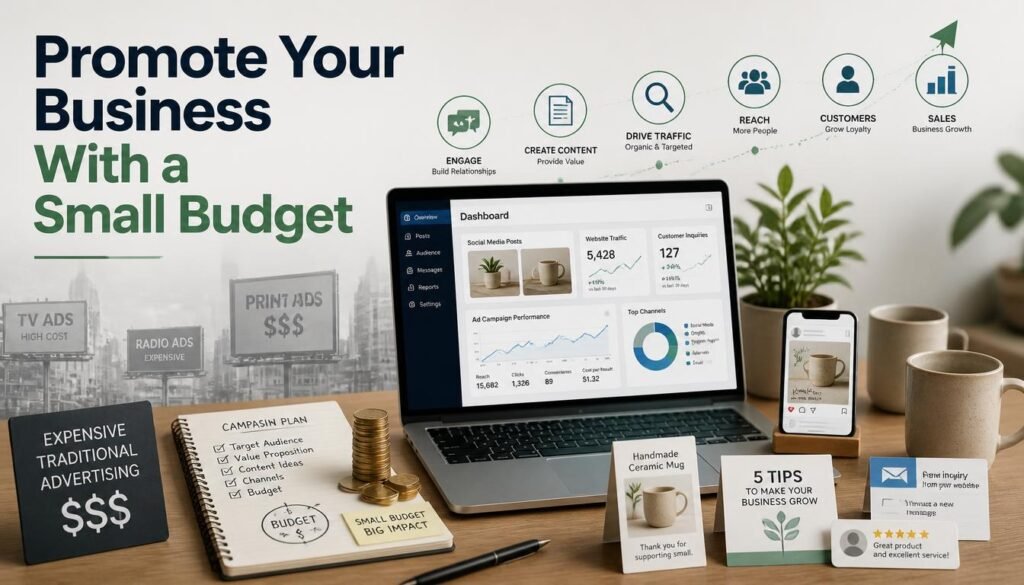
Marketing does not always require a large advertising budget. When starting with limited money, concentrate on marketing methods that allow you to reach a specific audience without wasting resources.
Content marketing is one affordable approach. You can create helpful articles, short videos, tutorials, product demonstrations, guides, or social media posts related to your industry. Useful content can attract people who are already interested in the problem your business solves.
Search engine optimization can also help businesses gain organic traffic over time. By creating useful content around questions and keywords that potential customers search for, your website can gradually become more visible in search results.
Partnerships can provide another low-cost marketing opportunity. A business that serves the same audience but offers a different product or service may be willing to collaborate with you. For example, a photographer could work with an event planner, or a web designer could partner with a marketing consultant.
Paid advertising can be useful, but beginners should test small campaigns before spending significant amounts. Measure the results carefully and stop campaigns that are not producing worthwhile results. The goal is not simply to get views or clicks but to generate profitable customers.
Manage Money and Grow Gradually
Once your business starts generating revenue, resist the temptation to spend all of it immediately. A growing business needs cash for inventory, marketing, equipment, unexpected expenses, taxes, and future opportunities.
Separate business revenue from personal spending as much as possible. Track your income and expenses regularly and review your financial performance every month. Pay attention to revenue, gross profit, operating expenses, cash flow, and customer acquisition costs.
Reinvesting some profits can help the business grow. You might invest in better equipment, improved packaging, marketing, software, inventory, employee support, or customer service. However, every investment should have a clear purpose.
Growth should also happen gradually. You do not need to expand into multiple locations, hire a large team, or launch many products immediately. First prove that your basic business model works. Once you have consistent demand and predictable revenue, you can consider expanding.
The most successful small businesses are often built through repeated improvements rather than one huge investment. Listen to customers, monitor your finances, study competitors, improve your offer, and continue learning.
Common Mistakes to Avoid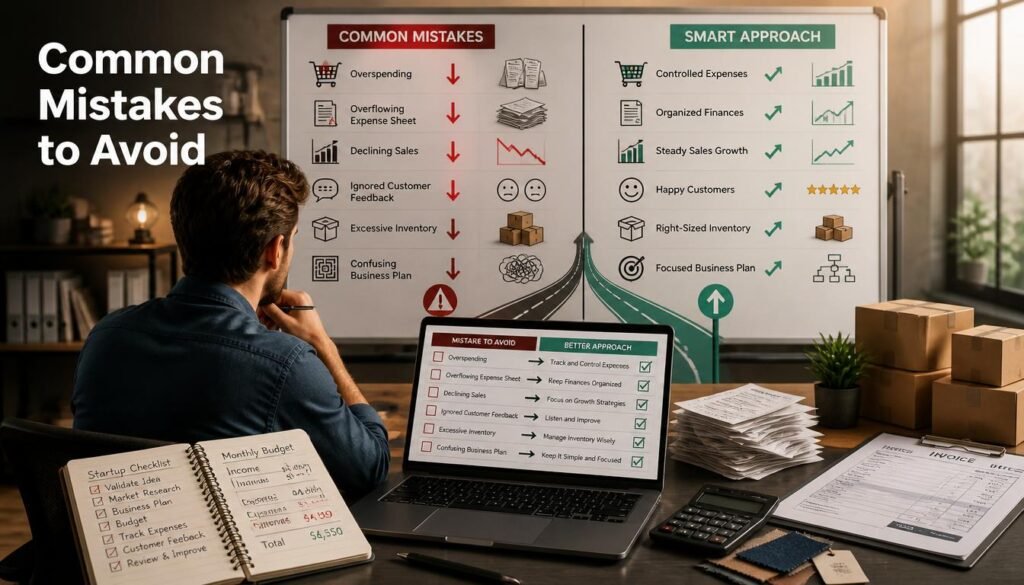
Starting with little money makes it especially important to avoid preventable mistakes. One common mistake is spending too much before validating the business idea. Always test demand before making major investments whenever possible.
Another mistake is trying to serve everyone. A clearly defined target market makes it easier to create products, pricing, marketing messages, and content that appeal to the right customers.
Poor financial tracking is another serious problem. A business can appear busy while actually losing money. Keep accurate records and understand exactly how much it costs to operate.
Some beginners also focus too much on appearance and not enough on customer value. A professional logo and attractive website are useful, but they cannot replace a good product, competitive pricing, reliable service, and strong customer relationships.
Finally, avoid expecting immediate success. A small business usually takes time to establish a reputation and develop a consistent customer base. Treat the early stage as a learning period. Every sale, customer conversation, mistake, and piece of feedback can help you build a stronger business.
Conclusion
Starting a small business with little money is possible when you focus on practical decisions rather than trying to look like a large company from day one. Choose a business idea that matches your skills and resources, research your market, create a simple plan, control your expenses, build an online presence, find your first customers, and carefully manage your cash flow.
The key is to start small and learn before making major investments. You do not need everything to be perfect before launching. What matters is creating something valuable, finding people who need it, delivering a good experience, and improving the business based on real customer feedback.
A limited budget can actually encourage better business habits because it forces you to prioritize what truly matters. With patience, careful financial management, consistent marketing, and a willingness to adapt, a small idea can gradually become a sustainable and profitable business.