Small businesses need effective marketing strategies to attract customers and compete in a crowded market. Today, most customers use search engines, social media, and online platforms before making a buying decision. This makes digital marketing an important part of growing almost every small business.
Two of the most common digital marketing strategies are Search Engine Optimization (SEO) and paid advertising. SEO helps a business gain visibility through organic search results, while paid advertising allows businesses to pay for immediate exposure on platforms such as search engines and social media.
Both strategies can bring valuable traffic, leads, and sales. However, they work differently and have different costs, benefits, and timelines. Understanding the difference between SEO and paid advertising can help small business owners choose a marketing strategy that fits their goals and budget.
Understand How SEO Works for Small Businesses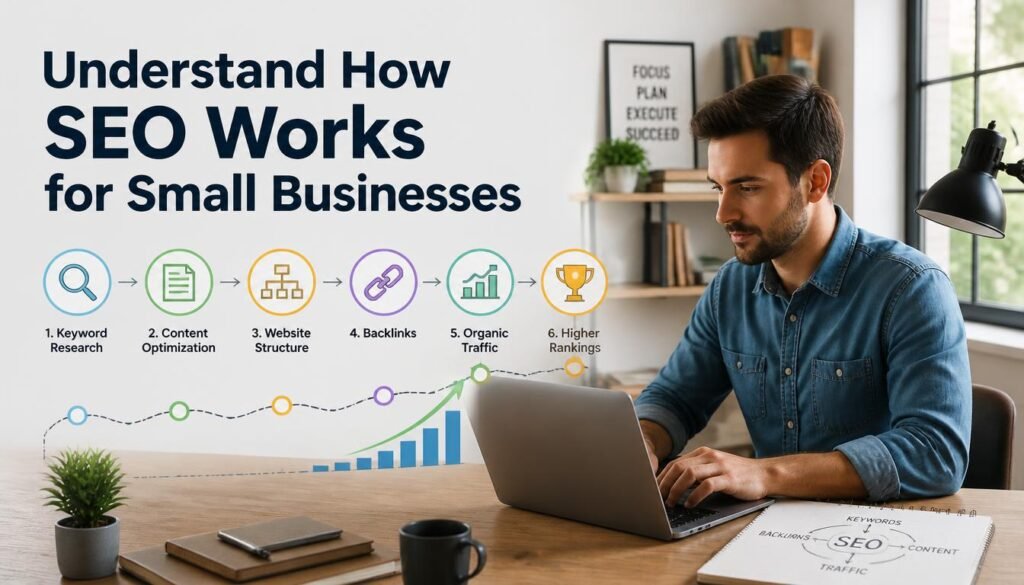
SEO is the process of improving a website so that it can appear more prominently in organic search engine results. It involves optimizing website content, titles, headings, URLs, internal links, technical elements, and other important factors that help search engines understand a website.
For example, a local plumbing business may want to appear when people search for terms such as “plumber near me” or “emergency plumber in [city].” By creating useful content and optimizing its website for relevant search terms, the business can improve its chances of appearing in organic results.
SEO is not only about adding keywords to a website. A successful SEO strategy also focuses on search intent, content quality, website usability, technical performance, and authority. Businesses need to create content that genuinely helps users while making their websites easy for search engines to crawl and understand.
The biggest advantage of SEO is that it can create long-term visibility. Once a page achieves strong organic rankings, it may continue attracting visitors without the business paying for every individual click.
Understand How Paid Advertising Works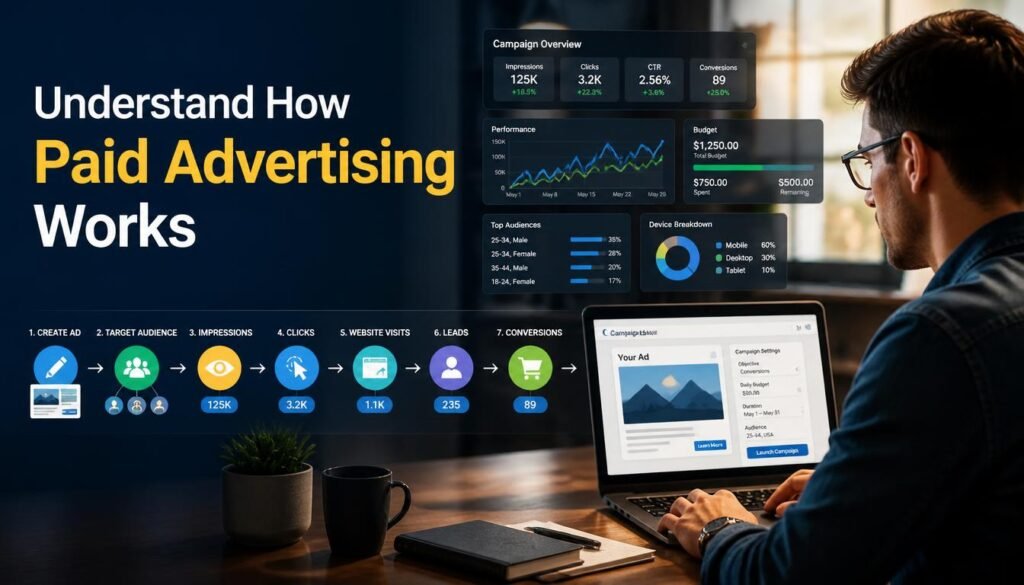
Paid advertising works differently from SEO because businesses pay advertising platforms to show their advertisements to potential customers. Common platforms include Google Ads, Facebook, Instagram, and other digital advertising networks.
With paid advertising, businesses can target specific audiences based on factors such as location, interests, demographics, search terms, and online behavior. This allows a small business to focus its advertising budget on people who are more likely to be interested in its products or services.
For example, a small clothing store can create an online advertising campaign targeting customers in a specific city. The business can promote new products, discounts, seasonal offers, or special campaigns and monitor how people respond to the advertisements.
One of the biggest benefits of paid advertising is speed. A business does not need to wait for months to build organic rankings before reaching potential customers. A properly configured campaign can begin generating visibility and traffic shortly after it is launched.
However, paid advertising requires continuous spending. When the advertising campaign stops, the traffic generated from the advertisements will generally decrease or stop as well.
Compare the Costs of SEO and Paid Advertising 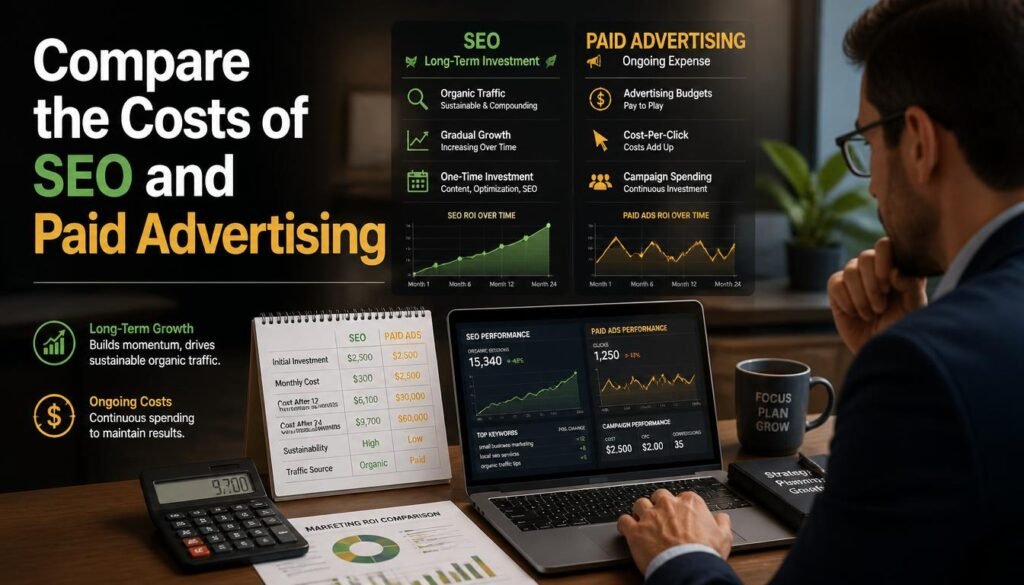
Cost is one of the most important factors for small businesses when choosing a marketing strategy. Both SEO and paid advertising require investment, but the way businesses spend money is different.
SEO usually requires investment in content creation, keyword research, website optimization, technical improvements, link building, and ongoing monitoring. The results may take time, but successful SEO work can continue providing value after the initial investment.
Paid advertising usually requires a regular advertising budget. Businesses may pay based on clicks, impressions, conversions, or other advertising models depending on the platform and campaign. Competitive industries can have high advertising costs, which means businesses need to monitor their campaigns carefully.
A small business should not automatically choose the cheapest option. Instead, it should consider the potential return on investment. A marketing strategy is valuable when it can consistently generate customers and revenue at a sustainable cost.
SEO can become more cost-effective over the long term, while paid advertising can be useful when a business needs quick exposure and has enough budget to maintain campaigns.
Consider the Speed of Results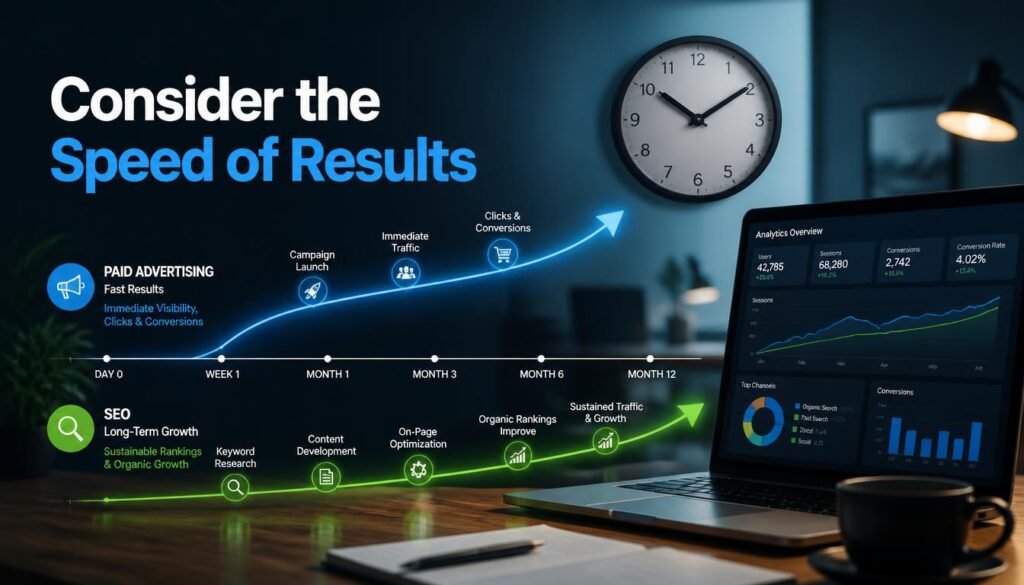
The time required to see results is another major difference between SEO and paid advertising.
SEO is generally a long-term strategy. A new website may need considerable time to build authority, publish useful content, earn quality links, and achieve competitive rankings. The exact timeline depends on the industry, competition, website quality, content strategy, and other factors.
This does not mean SEO is slow or ineffective. Instead, SEO works by building a stronger online presence over time. A website that consistently produces useful content and improves its technical and on-page SEO can gradually increase its organic visibility.
Paid advertising can provide much faster results. Once a campaign is properly configured and approved, advertisements can start appearing to the selected audience. This makes paid advertising particularly useful for product launches, limited-time offers, events, and businesses that need immediate traffic.
For small businesses, the choice often depends on how quickly results are required. If immediate visibility is important, paid advertising may be useful. If the goal is sustainable organic growth, SEO should be part of the long-term plan.
Build Long-Term Growth With SEO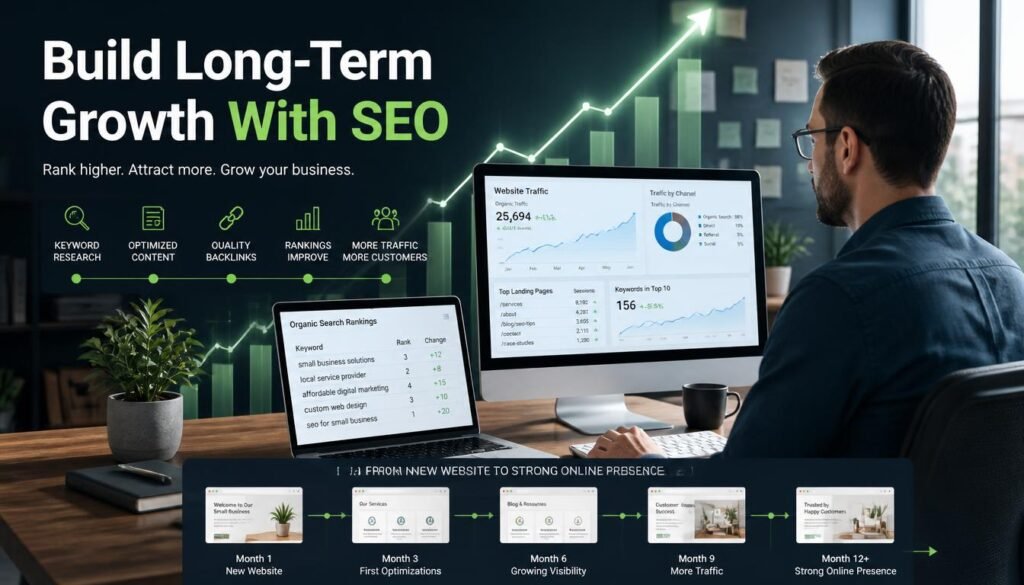
One of the strongest advantages of SEO is its potential to support long-term business growth. A useful article, service page, or product page can continue receiving organic traffic after it has achieved good search rankings.
SEO can also help businesses build authority within their industry. When a website consistently provides useful answers and information, it can become a trusted resource for potential customers.
Local SEO can be especially valuable for small businesses. Restaurants, repair companies, salons, service providers, retailers, and other local businesses can optimize their online presence to reach customers searching for nearby services.
Another benefit is that SEO can support different stages of the customer journey. Informational content can attract people who are researching a problem, while service and product pages can target people who are closer to making a purchase.
However, SEO requires consistency. Search engine rankings can change, competitors can improve their websites, and user expectations can change over time. Businesses should continue monitoring their SEO performance and updating important content when necessary.
Use Paid Advertising for Immediate Visibility
Paid advertising is particularly useful when a small business wants to reach customers quickly. Instead of waiting for organic rankings, the business can use advertisements to place its products or services in front of a targeted audience.
This can be helpful for businesses that are launching something new. A new online store, for example, may use paid advertising to attract its first visitors while it works on building its organic search presence through SEO.
Paid advertising can also be useful for seasonal promotions. If a business has a limited-time discount, holiday offer, or special event, waiting several months for SEO results may not be practical. Paid campaigns can provide exposure during the period when the promotion is active.
Another important advantage is campaign data. Advertising platforms provide information about impressions, clicks, conversions, and spending. Businesses can use this information to identify which advertisements, audiences, and offers perform best.
However, paid advertising needs careful management. Poor targeting, weak landing pages, unclear offers, or uncontrolled spending can reduce campaign profitability. Small businesses should therefore monitor advertising performance and make improvements instead of simply increasing the budget.
Decide Which Strategy Is Better for Your Business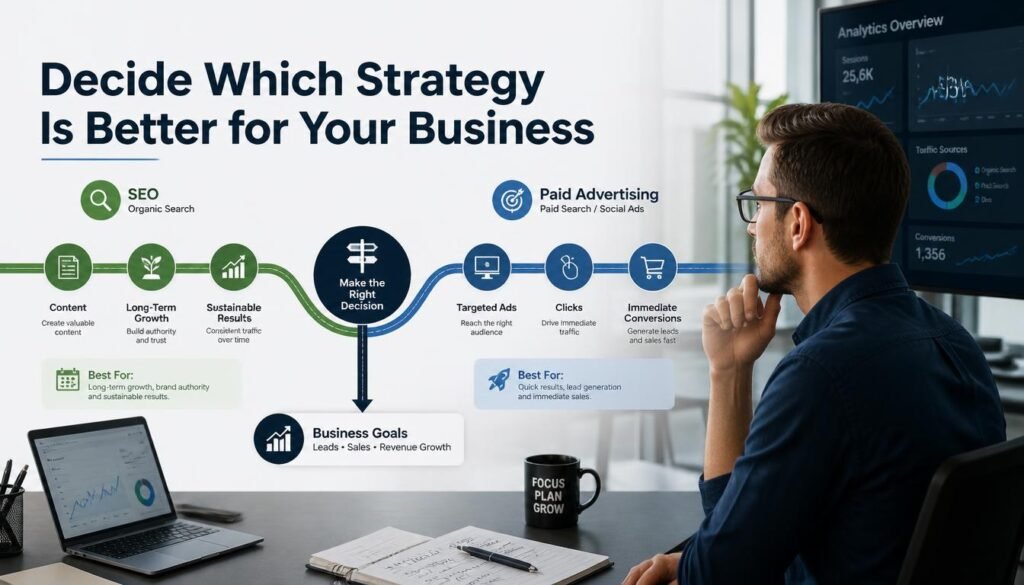
There is no single answer to the question of whether SEO or paid advertising is better for every small business. The right choice depends on the company’s goals, industry, competition, budget, and timeline.
SEO may be a better option for businesses that want to build long-term organic traffic and establish a strong online presence. It is particularly useful for businesses whose customers regularly search online for information, products, or services.
Paid advertising may be a better choice for businesses that need immediate visibility, want to promote a specific offer, or need to generate traffic quickly. It can also be useful when a website is new and has not yet developed strong organic rankings.
The most important point is that businesses do not necessarily have to choose only one. SEO and paid advertising can work together as part of a broader digital marketing strategy.
Combine SEO and Paid Advertising for Better Results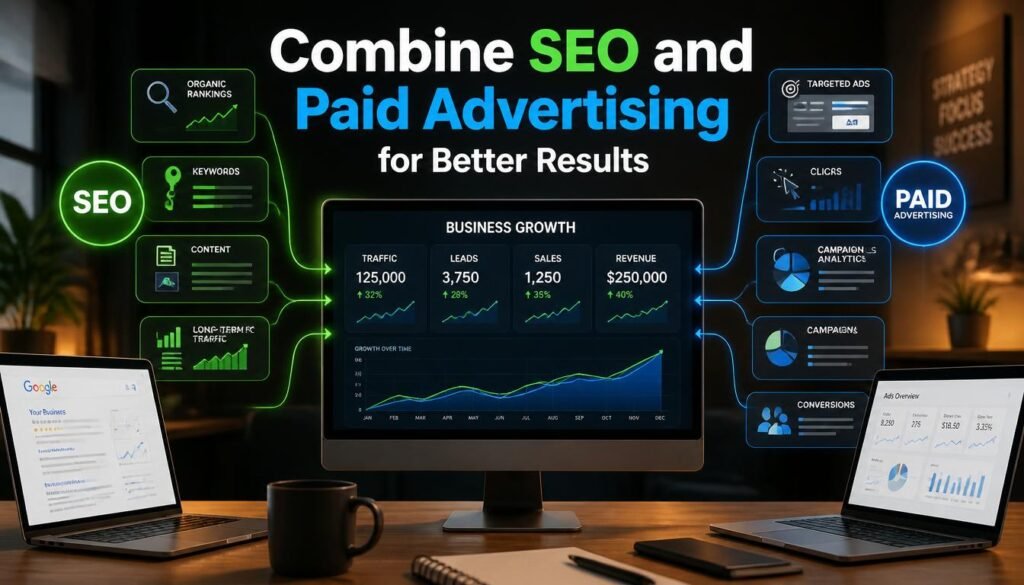
For many small businesses, combining SEO with paid advertising can provide a more balanced approach to digital marketing.
Paid advertising can generate immediate traffic while SEO builds long-term visibility. This means a business can attract customers today while also developing an organic traffic source for the future.
Advertising data can also provide useful insights for SEO. For example, a business can identify which keywords or offers generate conversions through paid campaigns and then create SEO content around relevant topics.
At the same time, organic search traffic can reduce a business’s dependence on paid campaigns. When important pages begin ranking well, the business may continue receiving visitors without paying for every click.
This combination allows businesses to use paid advertising for short-term opportunities while using SEO to build sustainable online growth.
Conclusion
SEO and paid advertising can both help small businesses grow, but they work in different ways. SEO is a long-term strategy that can build organic traffic, online visibility, and trust over time, while paid advertising provides faster results and allows businesses to reach targeted customers quickly.
For businesses with limited budgets, SEO can be a valuable long-term investment, while paid advertising is useful for immediate promotions, product launches, and lead generation. The best approach for many small businesses is to combine both strategies. Using paid advertising for short-term results and SEO for long-term growth can create a stronger and more sustainable digital marketing strategy.