
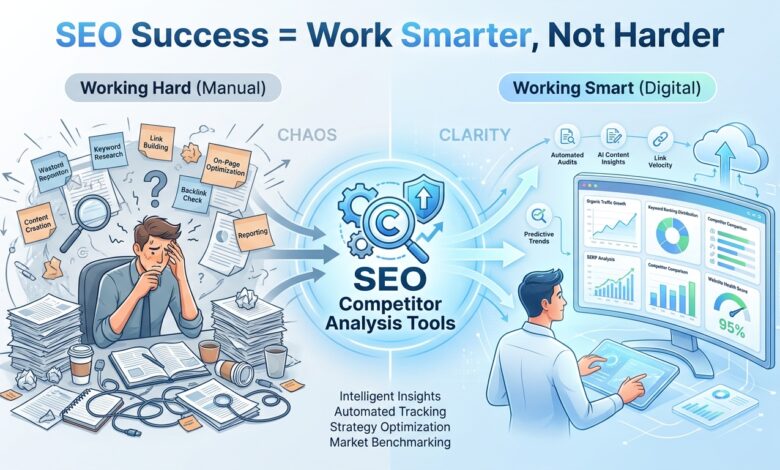
Ranking on Google is no longer about guessing keywords or publishing random content. Using SEO competitor analysis tools is now essential to understand exactly what your competitors are doing—and doing it better.
That’s where these tools come in.
They show you what’s already working in your niche so you can stop guessing and start competing strategically.
What Are SEO Competitor Analysis Tools?
SEO competitor analysis tools are platforms that help you study your competitors’ websites to understand:
- What keywords they rank for
- Where their backlinks come from
- Which pages bring them traffic
- How their content is structured
- Why they rank higher than you
Instead of starting from zero, you learn from what is already proven to work.
Why Competitor Analysis Matters in SEO

If you ignore your competitors, you are basically trying to win a race blindfolded.
Here’s what competitor analysis gives you:
- Clear keyword opportunities they missed
- Content gaps you can fill
- Backlink sources you can target
- Better content structure ideas
- Faster ranking strategy
In simple terms:
You stop guessing and start copying what works—then improving it.
Best SEO Competitor Analysis Tools in 2026

1. Ahrefs – Best All-in-One Competitor Research Tool
Ahrefs is one of the most powerful tools for analyzing competitors.
You can use it to:
- Find competitor keywords
- Check backlinks
- Analyze top-performing pages
- Track organic traffic trends
Best for: Deep SEO research and backlink analysis
2. SEMrush – Best for Complete SEO Strategy
SEMrush gives a full picture of competitor performance.
It helps you:
- Compare domains side-by-side
- Find keyword gaps
- Analyze paid ads and SEO traffic
- Track rankings over time
Best for: Full SEO + PPC competitor insights
3. Ubersuggest – Best Budget-Friendly Option
Ubersuggest is a simpler but effective tool for beginners.
It allows you to:
- Analyze competitor domains
- Discover keyword ideas
- Check backlink profiles
- View content performance
Best for: Beginners and small websites
4. SpyFu – Best for Keyword Spying
SpyFu focuses heavily on keyword competition.
You can:
- See every keyword competitors rank for
- Track their ad history
- Analyze SEO + PPC strategies
Best for: Keyword-focused competitor research
5. SimilarWeb – Best for Traffic Insights
SimilarWeb helps you understand overall website traffic behavior.
It shows:
- Traffic sources (organic, social, direct)
- Audience behavior
- Top referring websites
- Engagement metrics
Best for: High-level competitor traffic analysis
6. Moz – Best for Domain Authority Tracking
Moz is useful for measuring SEO strength.
It helps you:
- Track domain authority
- Analyze backlinks
- Compare competitor site strength
Best for: Authority and link analysis
How to Use SEO Competitor Analysis Tools Effectively
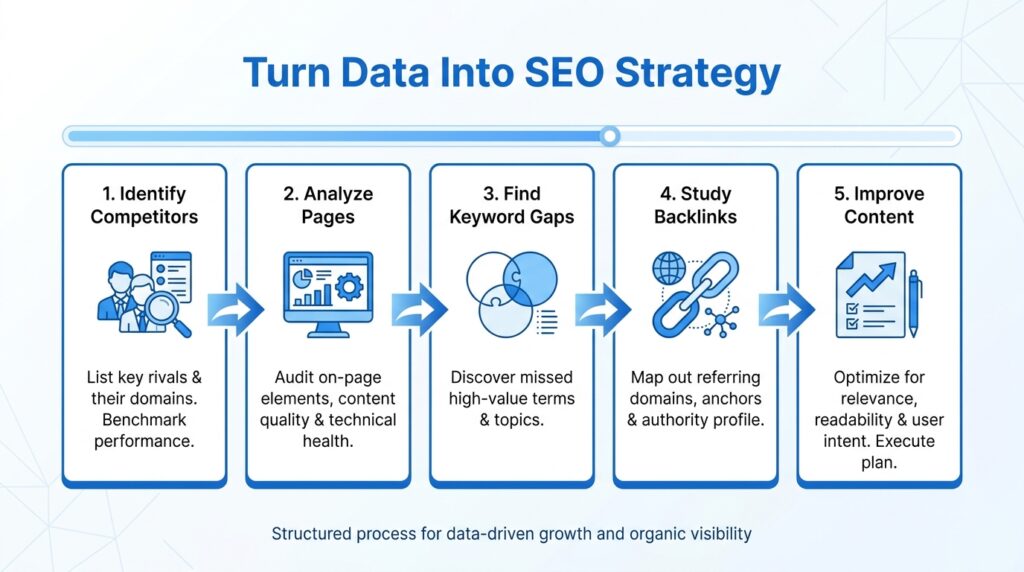
Just having tools is not enough. You need a strategy.
Follow this simple process:
1. Identify Your Top Competitors
Search your main keywords on Google and note the top 5 ranking sites.
2. Analyze Their Top Pages
Check which pages bring them the most traffic and engagement.
3. Find Keyword Gaps
Look for keywords they rank for that you are missing.
4. Study Their Backlinks
Identify where their backlinks come from and target similar sources.
5. Improve, Don’t Copy
Don’t duplicate content—create something more detailed, updated, and useful.
Common Mistakes to Avoid
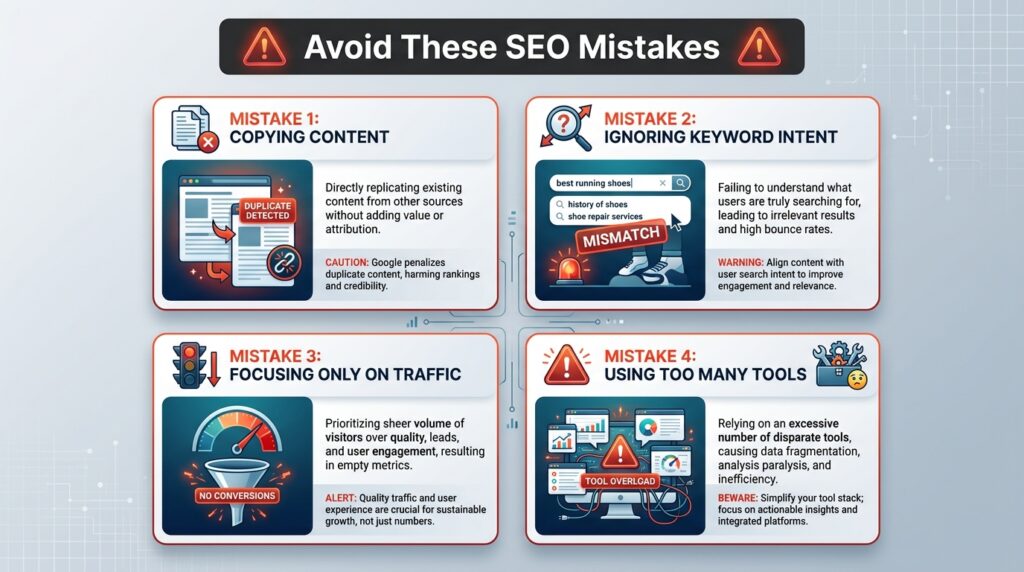
Many people misuse competitor tools. Avoid these errors:
- Copying content directly
- Ignoring low-competition keywords
- Focusing only on traffic, not intent
- Using too many tools without strategy
Remember: tools give data, not decisions.
Conclusion
SEO success is not about working harder—it’s about working smarter with the right data.
SEO competitor analysis tools help you see what’s already working in your niche before you create content. Instead of guessing, you can identify winning keywords and strategies used by competitors.
With these insights, you can make better decisions, improve your content, and increase your chances of ranking higher.
Use them consistently, and you’ll move from competing to outperforming.
You may also like: