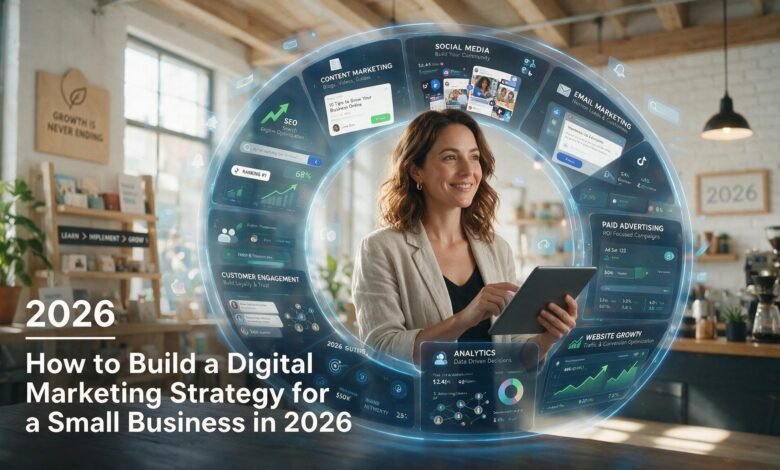
Digital marketing has become one of the most important ways for small businesses to attract customers, build brand awareness, and increase sales. In 2026, simply having a website or posting occasionally on social media is no longer enough. Businesses need a clear digital marketing strategy that connects SEO, content marketing, social media, paid advertising, email marketing, and data analysis.
The good news is that small businesses do not need a huge marketing budget to compete online. With the right strategy, consistent content, useful tools, and a strong understanding of their target audience, even a small business can build a powerful online presence.
In this guide, you will learn how to create a practical digital marketing strategy for your small business in 2026.
1. Define Your Business Goals and Target Audience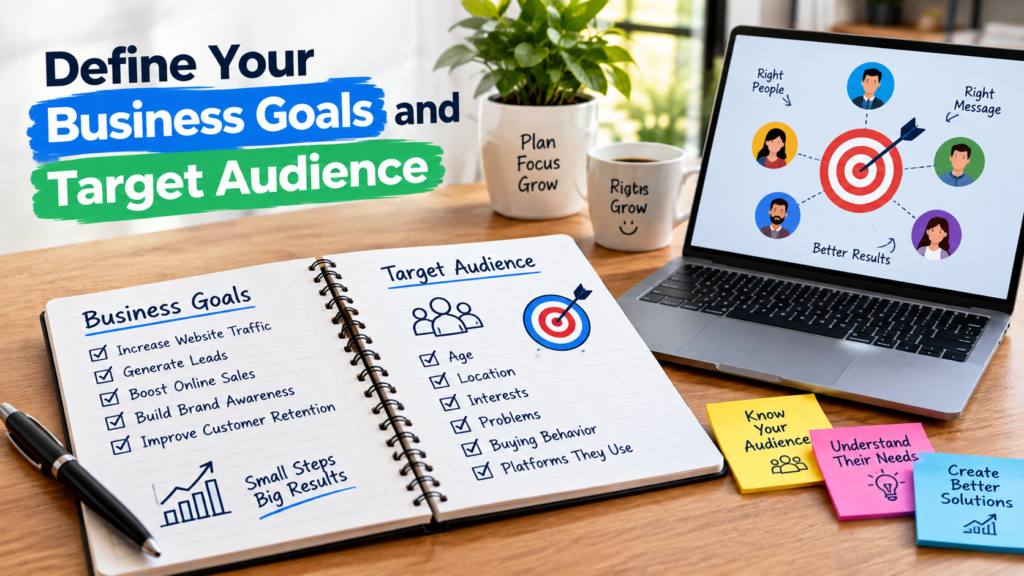
The first step in creating a successful digital marketing strategy is understanding what you want to achieve. Marketing without clear goals can waste both time and money.
Start by defining your primary business objectives. Your goals could include increasing website traffic, generating leads, getting more online sales, increasing local customers, building brand awareness, or improving customer retention.
Try to make your goals specific and measurable. Instead of saying, “I want more customers,” set a goal such as increasing qualified leads by 25% over the next six months.
You should also identify your ideal customer. Think about their age, location, interests, problems, buying behavior, and the platforms they use.
For example, a local clothing business may target young adults who discover products through Instagram and TikTok, while a B2B software company may focus more heavily on Google Search and LinkedIn.
Understanding your audience helps you decide what content to create, where to promote it, and how to communicate with potential customers.
2. Build a Strong Website and Online Presence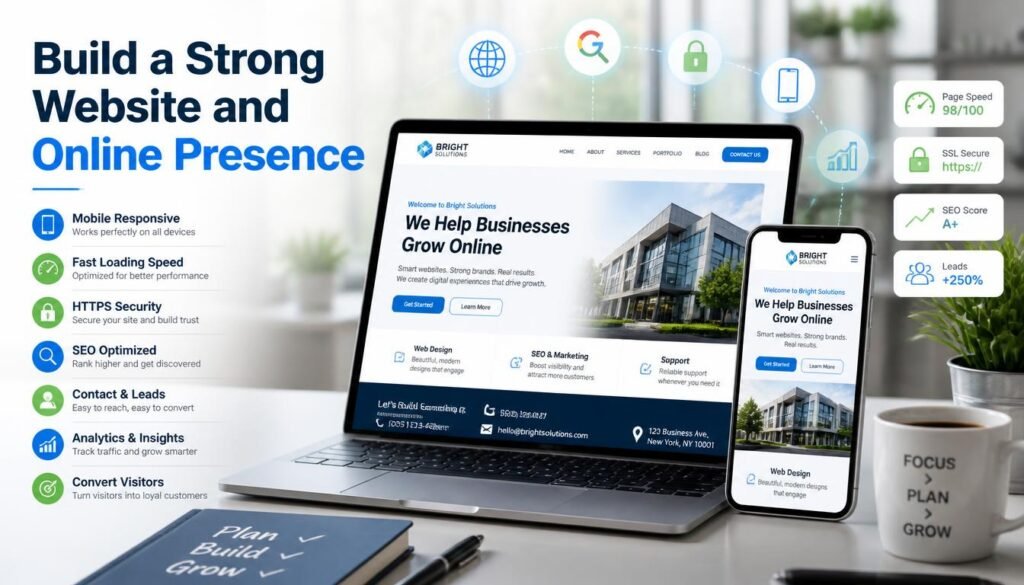
Your website is often the center of your digital marketing strategy. Social media platforms can help you reach people, but your website gives you more control over your brand, content, customer experience, and conversions.
Make sure your website is mobile-friendly, fast-loading, easy to navigate, secure with HTTPS, simple and professional, optimized for search engines, easy to contact, and designed around conversions.
Every important page should have a clear purpose.
For example, your homepage should explain what your business offers, who it serves, and why customers should choose you. Product and service pages should provide enough information for visitors to make a decision.
You should also create important pages such as About, Contact, Services or Products, FAQs, and Privacy Policy.
For local businesses, include accurate business information such as your address, phone number, opening hours, service areas, and location details.
A strong online presence should not stop at your website. Claim and optimize relevant business profiles and maintain consistent branding across platforms.
3. Use SEO to Generate Long-Term Organic Traffic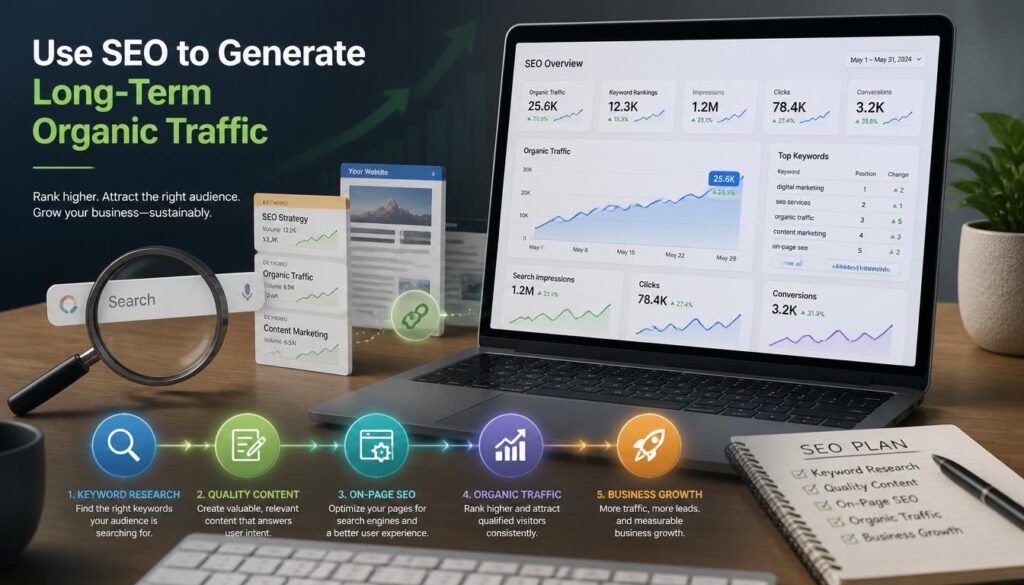
Search engine optimization remains an important part of digital marketing in 2026. Instead of paying for every visitor, SEO can help your business attract people who are already searching for your products, services, or solutions.
Start with keyword research. Find the phrases your potential customers use when searching for information related to your business. Focus on relevant keywords that match search intent rather than simply choosing keywords with high search volume.
Create useful content around your target topics. Your website should answer common customer questions, explain your products or services, and demonstrate your expertise.
Optimize important on-page elements such as page titles, headings, URLs, meta descriptions, internal links, images, and content structure.
Technical SEO also matters. Make sure search engines can crawl your website properly and that pages load efficiently on mobile devices.
For local businesses, local SEO should be a major priority. Optimize your business profile, maintain consistent business information, collect genuine customer reviews, and create location-relevant content.
SEO usually takes time, so focus on consistency and quality rather than expecting immediate results.
4. Create a Content Marketing Strategy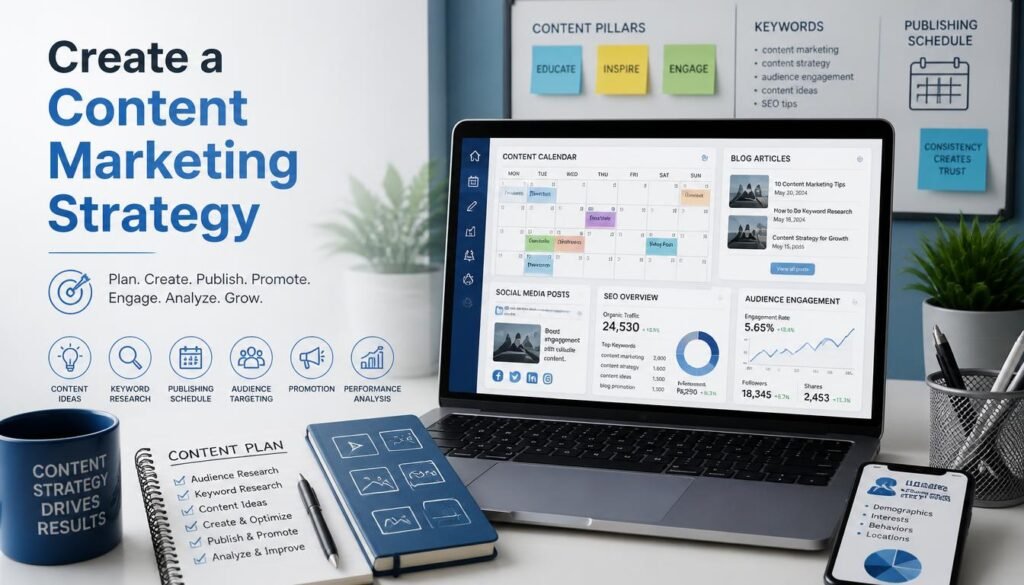
Content marketing helps businesses attract potential customers by providing useful information instead of constantly promoting products.
Your content strategy should be based on the questions, problems, and interests of your target audience.
You can create blog posts, how-to guides, case studies, tutorials, product comparisons, FAQs, short-form videos, infographics, social media posts, and email newsletters.
For example, a digital marketing agency could publish articles about SEO, Google Ads, social media marketing, website optimization, and marketing analytics.
Instead of publishing random topics, organize related articles into topic clusters. Create one comprehensive pillar article and support it with several smaller articles that link to each other.
Repurpose successful content across multiple platforms. A detailed blog post can become several social media posts, a short video, an email newsletter, or an infographic.
The goal is not simply to publish more content. The goal is to publish content that attracts the right audience and moves potential customers closer to a purchase.
5. Use Social Media to Build Brand Awareness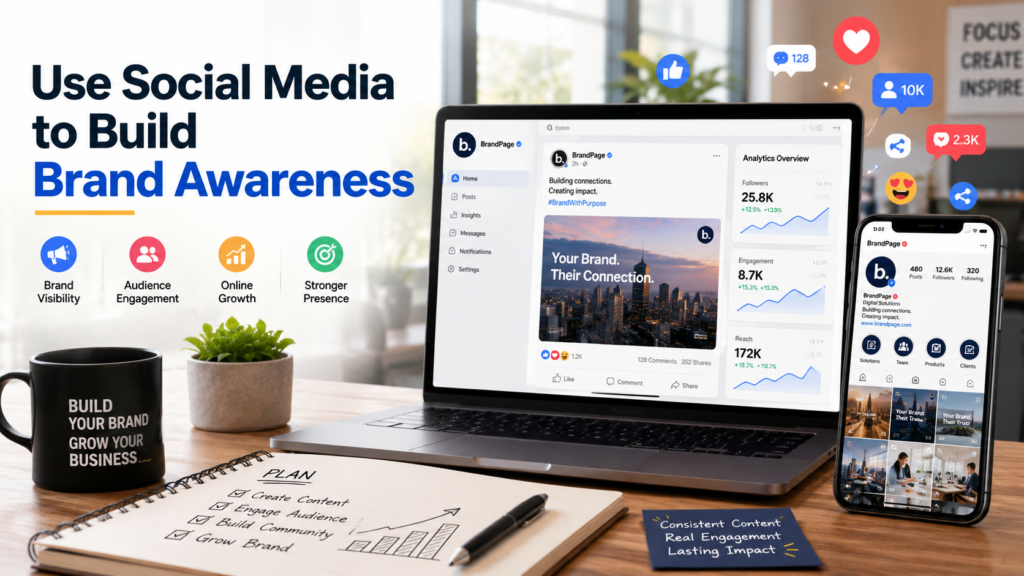
Social media gives small businesses an opportunity to communicate directly with customers and build a recognizable brand.
Do not try to be active on every platform. Choose the platforms where your target customers are most active.
For example, Instagram and TikTok may work well for visually focused businesses, LinkedIn can be valuable for B2B companies, and Facebook can remain useful for many local businesses and communities.
Create a realistic posting schedule that your business can maintain. Consistency is generally more valuable than posting a large amount of content for a short period and then becoming inactive.
Use different types of posts, including educational content, behind-the-scenes content, customer stories, product demonstrations, testimonials, industry tips, and promotional offers.
Engage with your audience rather than treating social media as a one-way advertising channel. Respond to comments, answer questions, and encourage meaningful conversations.
Track which posts generate the most engagement, website visits, leads, or sales. Use those insights to improve your future content.
6. Add Paid Advertising When It Makes Sense
Organic marketing can take time, so paid advertising can help small businesses reach potential customers more quickly.
Popular options include search advertising, social media advertising, display advertising, and video advertising.
Start with a small budget and test your campaigns before increasing spending. Create different versions of your ads and compare their performance.
Your advertisements should have a clear offer, a specific target audience, strong but honest messaging, a relevant landing page, and a clear call to action.
Avoid sending every paid visitor to your homepage. If the advertisement promotes a specific product or service, send visitors to a relevant landing page designed to help them take the next step.
Track metrics such as cost per click, conversion rate, cost per lead, return on ad spend, and customer acquisition cost.
Paid advertising works best when it supports your overall marketing strategy rather than replacing SEO, content, and customer retention.
7. Build an Email Marketing and Customer Retention System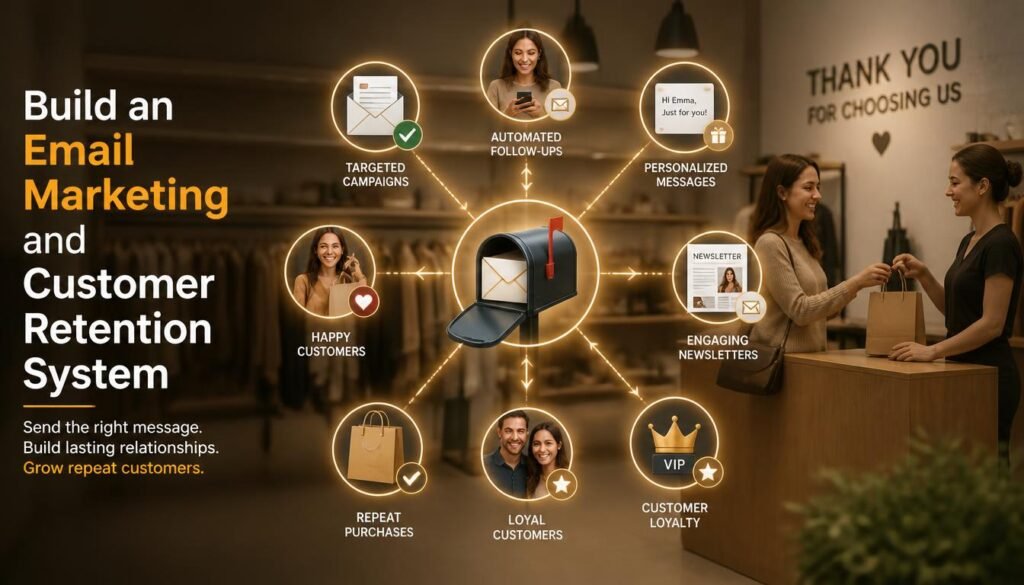
Getting a new customer can cost more than keeping an existing one, which makes customer retention an important part of digital marketing.
Email marketing allows businesses to maintain relationships with customers after their first interaction or purchase.
Build your email list ethically and provide a clear reason for people to subscribe. You can offer useful resources, updates, special offers, or educational content.
Depending on your business, email campaigns can include welcome emails, product recommendations, special offers, educational newsletters, abandoned-cart reminders, customer feedback requests, and re-engagement campaigns.
Personalization can make emails more useful. Instead of sending exactly the same message to everyone, segment your audience based on interests, behavior, purchases, or customer stage.
Make sure your emails provide genuine value and follow applicable privacy and marketing regulations.
8. Track Results and Improve Your Strategy
A digital marketing strategy should never remain static. Use analytics to understand what is working and what needs improvement.
Monitor important metrics such as organic traffic, website conversions, leads generated, sales, social media engagement, email open and click rates, cost per lead, customer acquisition cost, and return on advertising spend.
Do not focus only on vanity metrics such as follower counts or page views. A smaller audience that generates qualified leads can be more valuable than a large audience that never buys anything.
Review your marketing performance regularly. Identify your strongest channels and content types, then invest more resources into what produces meaningful business results.
At the same time, stop or adjust activities that consistently consume resources without producing useful outcomes.
A successful digital marketing strategy is an ongoing process of testing, measuring, learning, and improving.
9. Create a Practical 2026 Digital Marketing Plan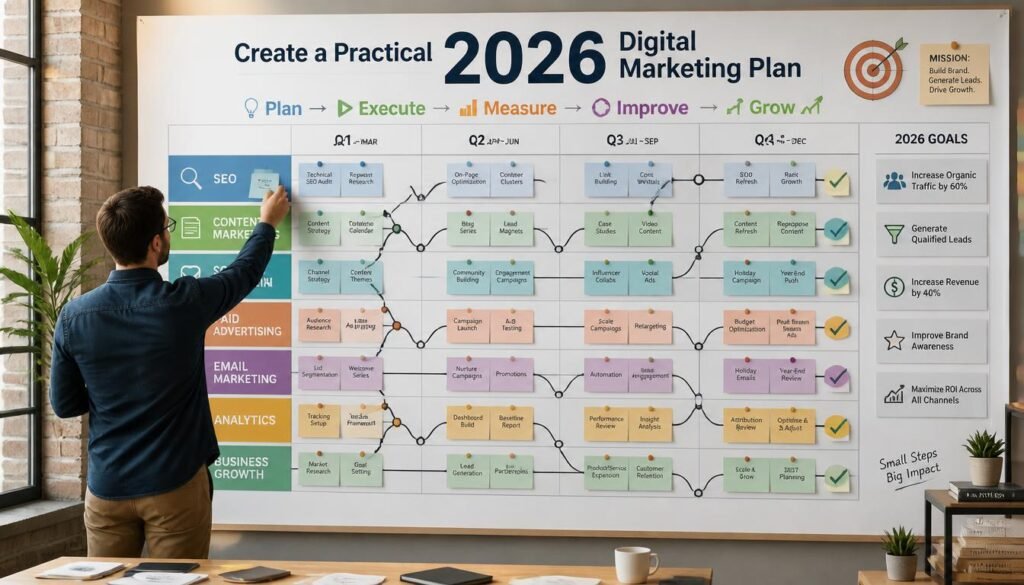
Once you understand your goals, audience, website, SEO, content, social media, advertising, email marketing, and analytics, bring everything together into one practical plan.
Start by choosing two or three primary marketing channels rather than trying to manage everything at once.
A small business could use a strategy such as SEO to attract long-term organic traffic, blog content to answer customer questions, social media to build awareness and engagement, paid advertising to generate immediate leads, and email marketing to retain customers.
Create a monthly content calendar and assign realistic deadlines. Set a marketing budget and divide it between organic activities, paid campaigns, software, and content production as needed.
Review your results every month and make adjustments based on real data.
Most importantly, keep your strategy focused on business outcomes. The purpose of digital marketing is not simply to get more clicks, views, or followers. It is to attract the right people, build trust, generate customers, and grow the business sustainably.
Conclusion
Building a digital marketing strategy for a small business in 2026 does not require an enormous budget or a large marketing team. It requires clear goals, a defined target audience, a strong online presence, useful content, effective SEO, consistent social media activity, careful use of paid advertising, customer retention, and regular performance analysis.
Start with the channels that are most relevant to your audience and business goals. Measure the results, learn from your data, and improve your strategy over time. With consistency and a customer-focused approach, digital marketing can become a powerful source of sustainable growth for a small business.