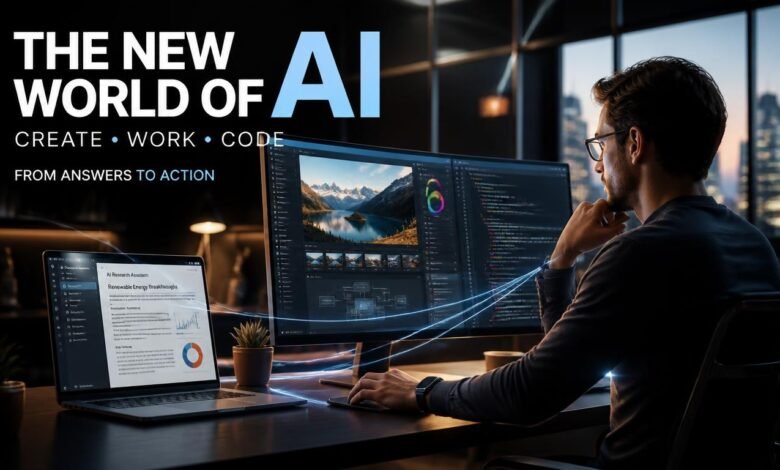
Artificial intelligence is no longer just a chatbot that answers questions. A new generation of AI tools is emerging that can edit photographs, build websites, research complicated topics, create presentations, write code, manage workflows, and even complete multi-step tasks with surprisingly little human intervention.
This is the new world of AI—a shift from simply asking AI for answers to giving AI a goal and letting it figure out how to get there.
Tools such as Nano Banana, Genspark, and Claude Code show exactly where the industry is heading. Instead of using one application for every small task, people can increasingly work with AI systems that understand context, use multiple tools, and perform actual work.
So, what makes these new AI tools different, and which ones deserve your attention?
AI Is Moving From Chatbots to AI Agents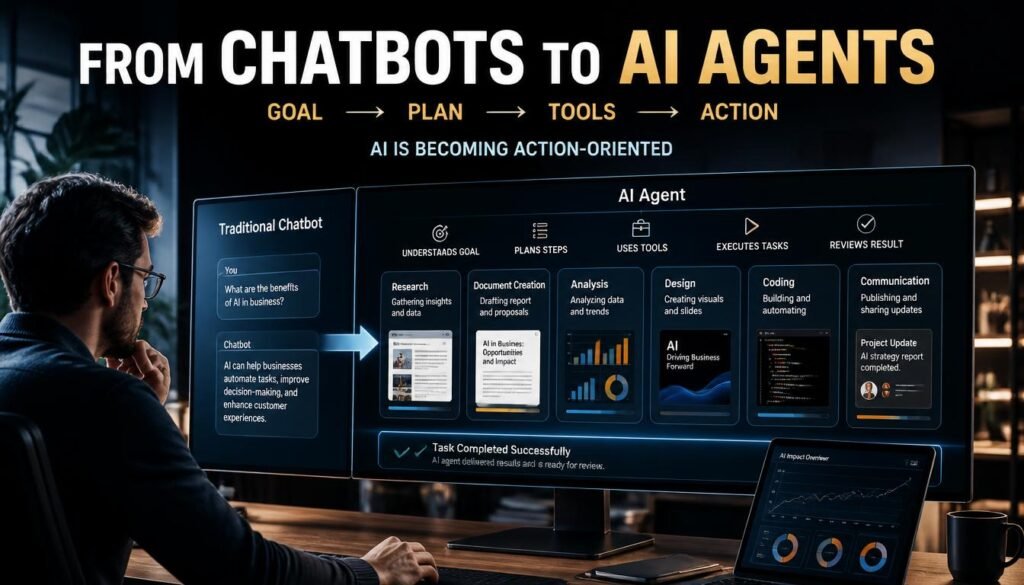
The first major change is the rise of Agentic AI.
Traditional AI usually follows a simple pattern: you ask a question, and the system gives you an answer. Agentic AI aims to go further. You provide an objective, and the AI can break the objective into smaller steps, choose tools, gather information, create something, evaluate its progress, and continue working toward the result.
That makes modern AI assistants feel less like search boxes and more like digital coworkers.
Genspark is a strong example of this direction. Its Super Agent is designed to plan and execute tasks across research, content, analysis, design, coding, and communication rather than merely responding with text.
This is one of the biggest developments behind the Next-gen AI movement: AI is becoming action-oriented.
Nano Banana: The AI Image Editor Everyone Is Talking About
Among the most interesting developments in AI image generation is Google’s Nano Banana.
Originally introduced as an image generation and editing model inside Gemini, Nano Banana became particularly popular because it could modify existing images while maintaining important visual details. Google highlighted capabilities such as changing outfits, blending images, transforming objects, and maintaining the likeness of people and pets across edits.
That makes Nano Banana AI different from a basic image generator.
Instead of saying, “Create a picture of a man standing on a beach,” you can start with an existing photograph and ask the AI to change specific elements. The result is closer to having a conversational AI photo editor.
Want to change the background? Alter clothing? Combine multiple photographs? Transform a person into a different artistic style?
These kinds of edits can increasingly be handled through natural-language instructions.
Google has since expanded the Nano Banana family. Its current Gemini image lineup includes Nano Banana 2 and Nano Banana 2 Lite, while Nano Banana Pro is available for higher-end generation and editing needs in supported plans.
For creators, marketers, social-media managers, and designers, this represents a major change in AI graphic design.
Why AI Image Editing Is Becoming So Powerful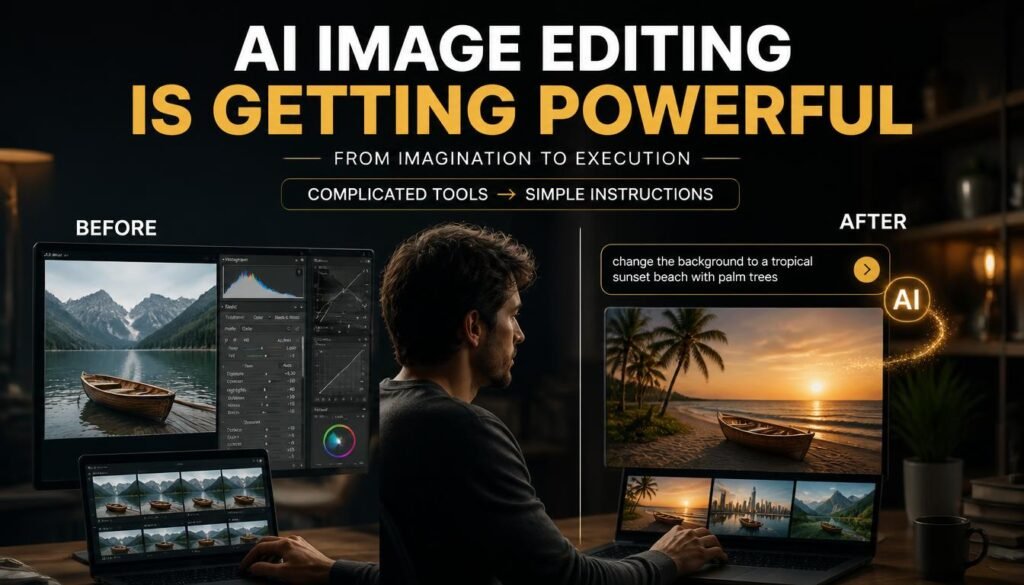
Traditional photo editing often requires technical knowledge. You may need Photoshop skills, layers, masks, selections, brushes, color correction, and considerable patience.
The new generation of AI image editors changes that workflow.
Instead of manually selecting an object, you can describe what you want.
Instead of learning complicated editing software, you can communicate with the image using ordinary language.
This makes AI image generation and editing accessible to people who have never considered themselves designers.
The bigger story, however, is not simply that AI can make beautiful pictures. It is that the barrier between imagination and execution is becoming smaller.
A business owner can create marketing visuals. A content creator can experiment with concepts. A student can create illustrations for a project. A designer can rapidly explore dozens of directions before choosing one.
The creative process is becoming faster—and much more conversational.
Genspark: From AI Workspace to Digital Team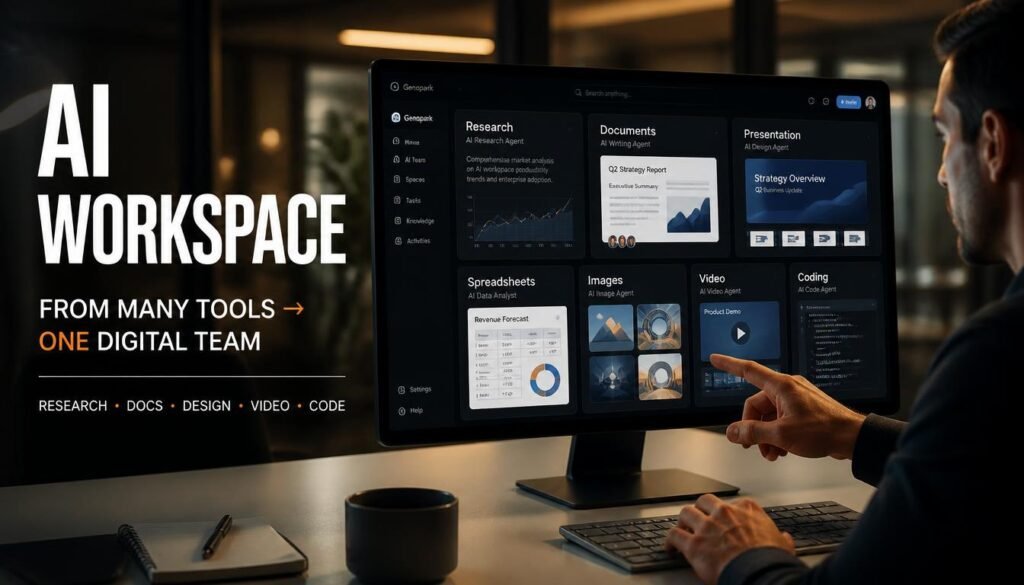
If Nano Banana represents the evolution of visual AI, Genspark represents another important direction: the AI workspace.
Modern users often jump between dozens of applications. One tool handles research, another creates slides, another generates images, another writes documents, another analyzes spreadsheets, and another helps with coding.
Genspark is trying to bring many of these workflows into one environment.
Its current platform describes an all-in-one workspace containing multiple AI models and capabilities for slides, documents, spreadsheets, images, videos, coding, research, and other tasks.
Its latest workspace architecture also includes SecondBrain for persistent context, Super Agent for intelligence and execution, specialized suites for different types of work, and GenTeam for collaboration between people and AI agents.
This is an important change.
Instead of thinking about AI as one tool, we’re beginning to think about AI as an entire working environment.
Genspark and the Rise of AI Teammates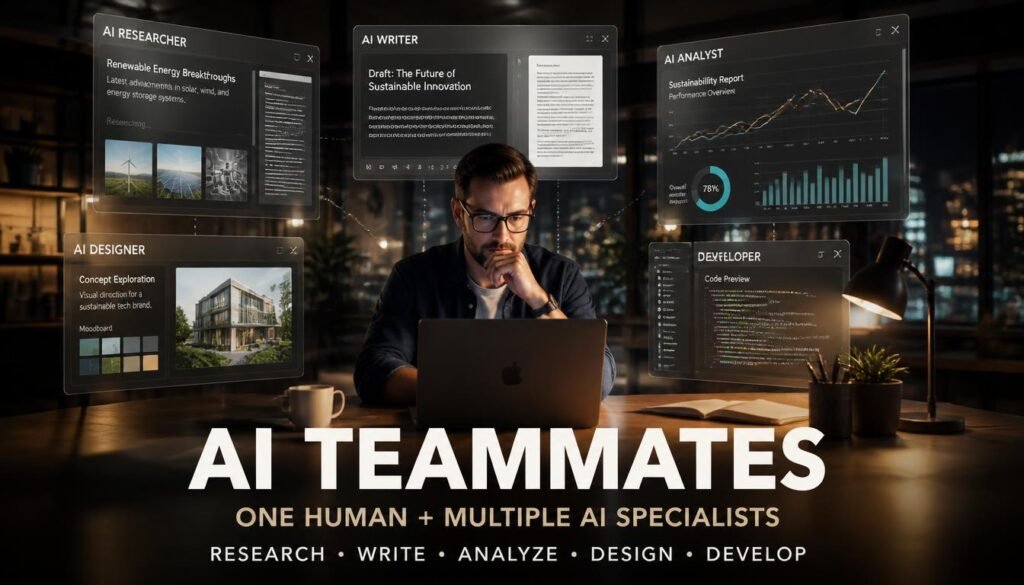
One particularly interesting development is Genspark’s GenTeam.
The concept is simple: instead of constantly opening a chatbot and explaining what you need, you can create AI agents with specific roles and allow them to work alongside humans.
According to Genspark, these agents can maintain context, participate in channels, handle tasks, and work with files. They can also connect with coding tools such as Claude Code and Codex on a user’s computer.
Imagine having an AI researcher, writer, analyst, designer, and developer working in the same digital environment.
That sounds futuristic—but this is exactly where AI productivity is heading.
The important question is no longer, “What can AI tell me?”
It is becoming:
“What can AI do for me?”
Claude Code: AI Enters the Developer’s Terminal
Another major shift is happening in software development.
Meet Claude Code, Anthropic’s AI coding tool designed to work directly in a terminal or supported development environment.
Rather than simply generating a code snippet in a chat window, Claude Code can be used to delegate complex coding tasks while keeping the developer involved and maintaining visibility into the work.
This makes Claude Code much closer to an AI coding agent than a traditional coding assistant.
A developer can describe a feature, ask the system to inspect a project, make changes, run tests, investigate an error, or work through a larger implementation.
That changes the role of the developer.
The developer increasingly becomes the person who defines the problem, provides direction, reviews the results, and makes important architectural decisions.
The AI handles more of the execution.
who knows enough to direct AI extremely well.
What About Other New AI Tools?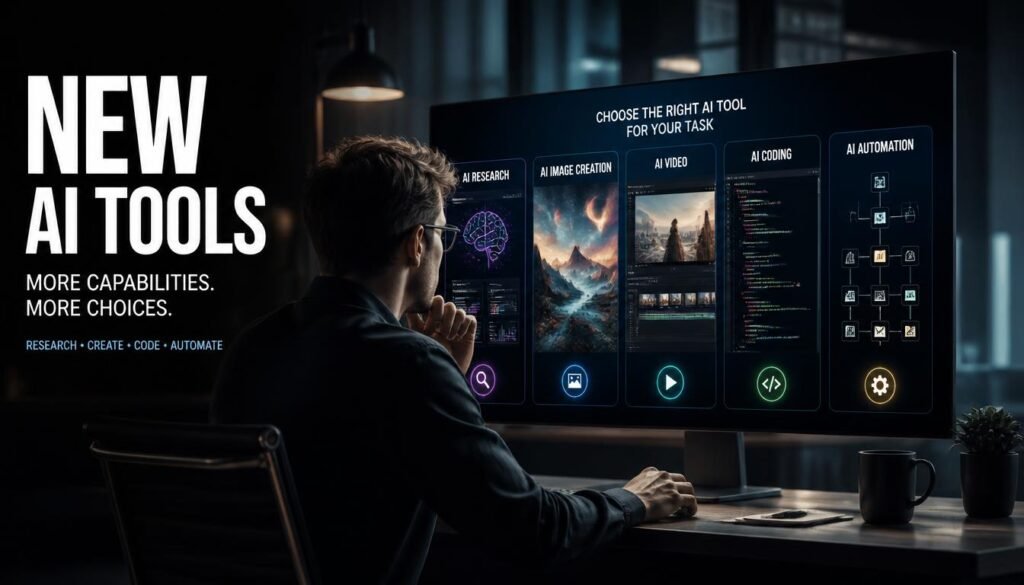
Nano Banana, Genspark, and Claude Code are only examples of a much larger movement.
The best AI tools are increasingly specialized around particular types of work.
Some focus on writing and research. Others specialize in images, video, presentations, coding, automation, meetings, or data analysis.
Tools such as Bimg AI and other emerging visual platforms are part of the expanding ecosystem of AI photo editor and image-generation products. Meanwhile, models associated with the Gemini ecosystem continue to push multimodal capabilities across text, images, and other formats.
The important thing is not to chase every new tool.
AI products appear at an incredible speed, and today’s exciting application can quickly become tomorrow’s outdated software.
Instead, pay attention to capabilities.
Can the tool understand context?
Can it work across multiple steps?
Can it use external tools?
Can it remember useful information?
Can it edit rather than simply generate?
Can it execute rather than merely answer?
Those questions reveal where the technology is actually going.
The New AI Advantage: One Prompt, Many Actions
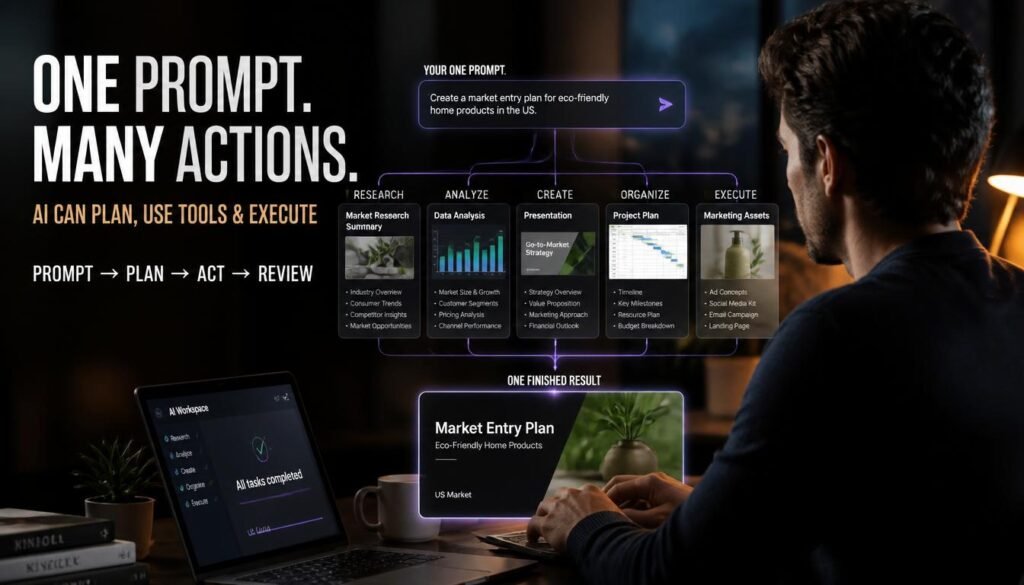
The most important trend connecting these tools is the move from generation to execution.
Nano Banana can turn an idea into an image or transform an existing photograph.
Genspark can take a broad request and coordinate research, content creation, analysis, design, and other tasks.
Claude Code can take a programming objective and work through parts of the development process.
Together, these examples reveal a new philosophy of AI.
The future isn’t necessarily about having the most powerful chatbot.
It’s about having AI systems that can understand your intention and turn it into results.
That is why AI workspace, AI assistants, AI coding agent, and Agentic AI have become such important concepts.
What This Means for Everyday Users
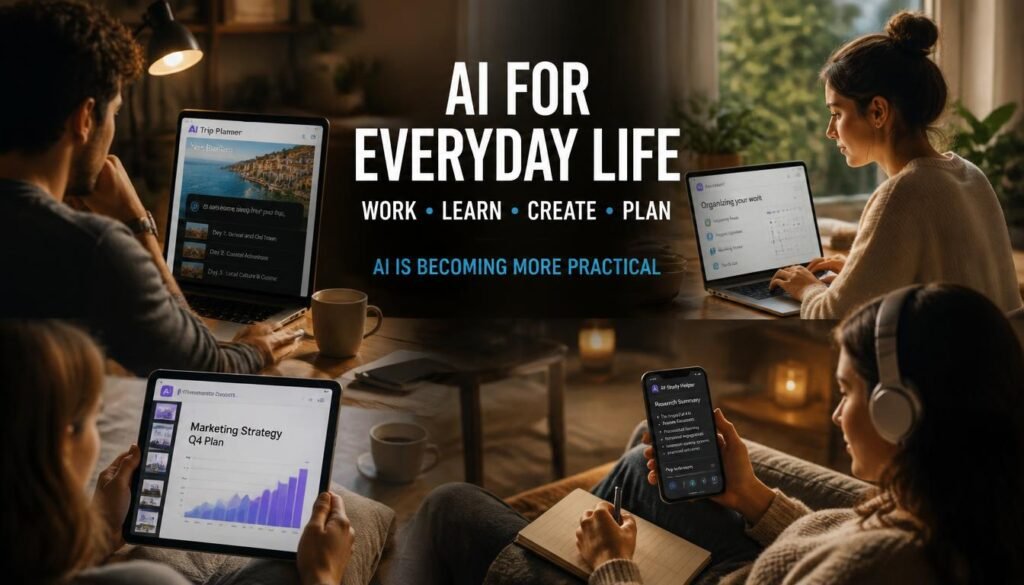
You don’t need to be a programmer or AI researcher to benefit from this transformation.
A marketer can generate campaign concepts and visuals.
A business owner can research competitors and create presentations.
A designer can rapidly experiment with images.
A developer can delegate repetitive coding tasks.
A student can organize research and create visual explanations.
A content creator can move from an idea to a finished piece much faster.
The real advantage comes from combining human judgment with machine speed.
AI is excellent at generating possibilities. Humans are still responsible for deciding which possibilities are actually good.
The New World of AI Is Already Here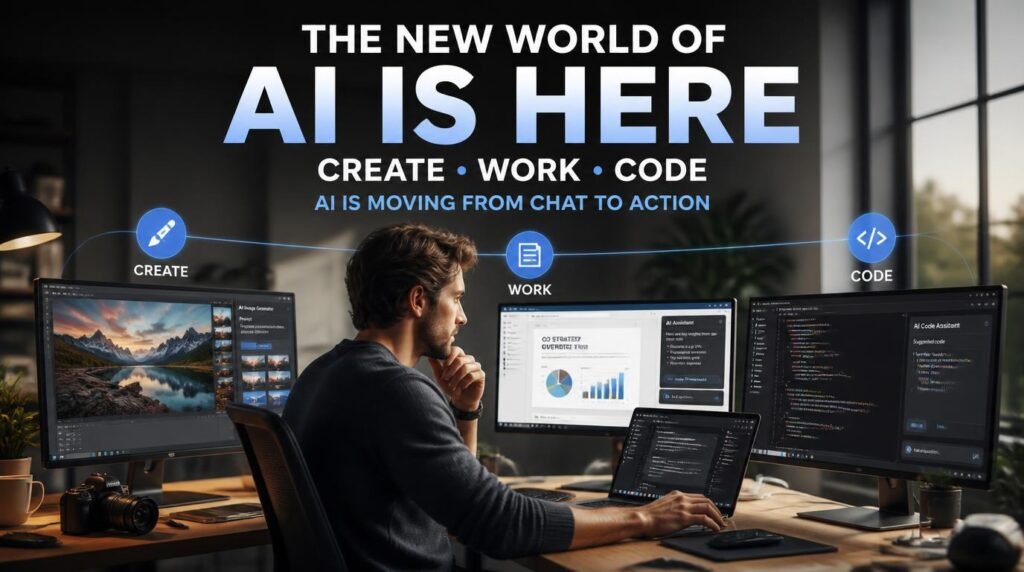
The AI revolution is entering a new phase.
The first era taught people to ask AI questions.
The next era is teaching AI to perform work.
Nano Banana AI demonstrates how natural-language image editing can transform visual creation. Genspark demonstrates how an AI workspace can combine models, agents, and productivity tools. Claude Code shows how an AI coding tool can move into the developer’s terminal and take on increasingly complex implementation work.
And these are not isolated experiments.
They are signals of a broader transformation toward AI agents, multimodal systems, autonomous workflows, and software that responds to human intent.
The biggest opportunity isn’t simply finding the newest AI tool.
It’s learning how to use this new generation of technology intelligently.
Because in the new world of AI, the winning skill may not be knowing how to do everything yourself.
It may be knowing what to delegate, what to create, what to verify, and what only a human should decide.