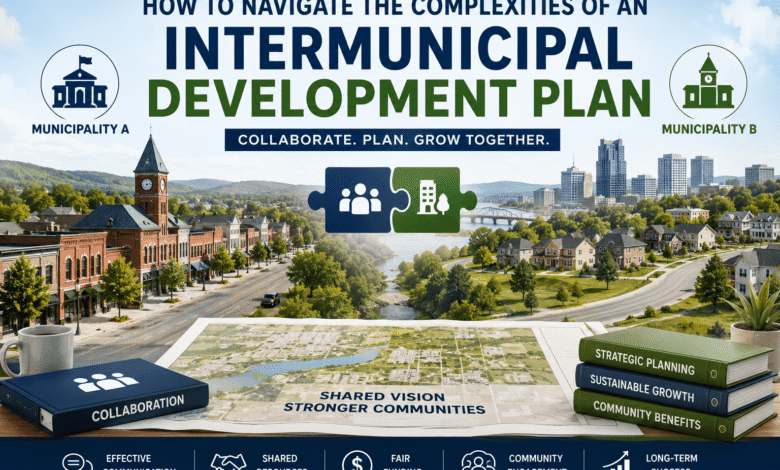
Effective regional growth requires cooperation between neighboring municipalities. As communities expand, many local governments turn to an Intermunicipal Development Plan to coordinate land use, infrastructure investment, environmental protection, and economic development across shared boundaries. While these collaborative agreements offer significant benefits, they also introduce unique challenges that can complicate planning and implementation.
Successfully navigating an Intermunicipal Development Plan requires clear communication, shared objectives, financial cooperation, and long-term commitment from all participating municipalities. Understanding the common obstacles and practical solutions can help local governments create stronger partnerships and more sustainable development outcomes.
Understanding the Basics of Collaborative Planning
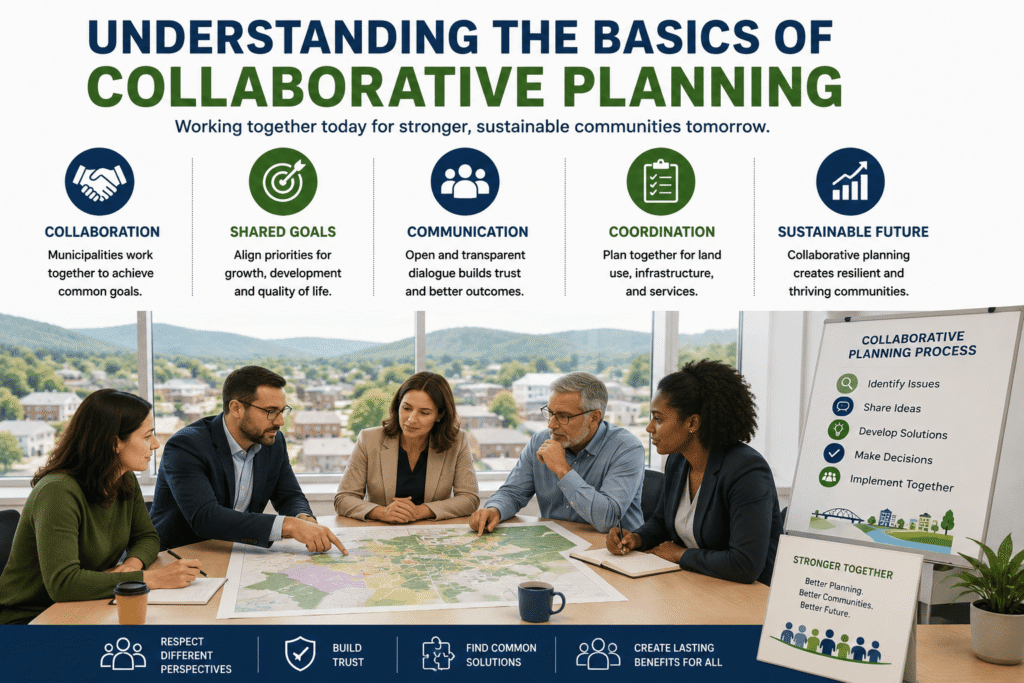
An Intermunicipal Development Plan serves as a framework that guides future growth and development between neighboring municipalities. It establishes policies regarding land use, transportation networks, environmental management, infrastructure planning, and economic development opportunities.
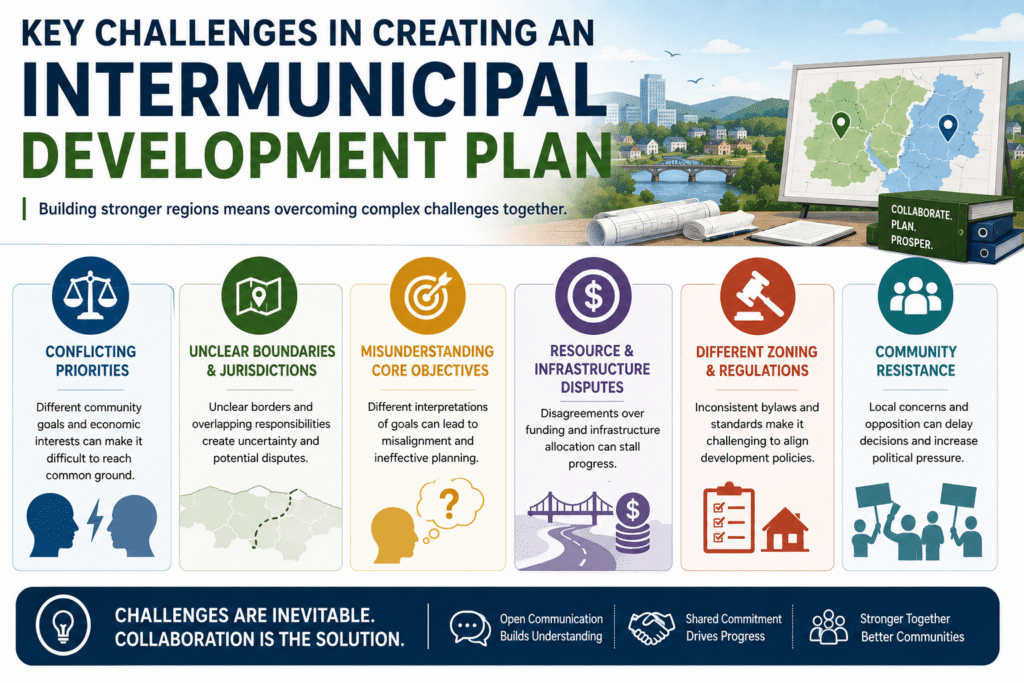
One of the first challenges involves conflicting priorities between neighboring towns. Every municipality has unique economic goals, population growth expectations, and infrastructure needs. What benefits one municipality may not necessarily align with the priorities of another.
Lack of clarity regarding shared borders and overlapping jurisdictions often creates additional complications. Municipal boundaries can become areas of disagreement when development pressures increase. Questions regarding service responsibilities, annexation possibilities, and future land use can create uncertainty among stakeholders.
Many municipalities also misunderstand the core objectives of joint development planning. Some view the process as a limitation on local decision-making rather than a tool for regional cooperation. This misconception can hinder productive discussions and delay progress during the early planning stages.
To establish a successful foundation, participating municipalities must clearly define shared goals and responsibilities before drafting policy frameworks. Early collaboration helps reduce misunderstandings and encourages long-term cooperation.
Key Challenges in Creating an Intermunicipal Development Plan
Developing an effective Intermunicipal Development Plan often requires resolving several complex issues before meaningful progress can occur.
Resource and infrastructure allocation disputes frequently emerge during planning discussions. Municipalities may disagree about who should fund roads, utilities, emergency services, recreational facilities, or future infrastructure improvements. These disagreements can delay negotiations and increase tensions between local governments.
Reconciling different local zoning bylaws presents another significant challenge. Each municipality may have unique development standards, land use regulations, and planning priorities. Aligning these regulations requires extensive review and compromise from all parties involved.
Community resistance can further complicate the planning process. Residents often express concerns regarding increased development, changes to community character, environmental impacts, or potential increases in local taxes. Vocal opposition can place pressure on elected officials and influence policy decisions.
Municipal leaders should prioritize evidence-based planning when addressing these challenges. Comprehensive studies, demographic forecasts, and infrastructure assessments can provide objective information that supports informed decision-making.
When municipalities focus on shared regional benefits rather than individual interests, collaborative planning becomes significantly more effective.
Strategies for Effective Communication Between Municipalities
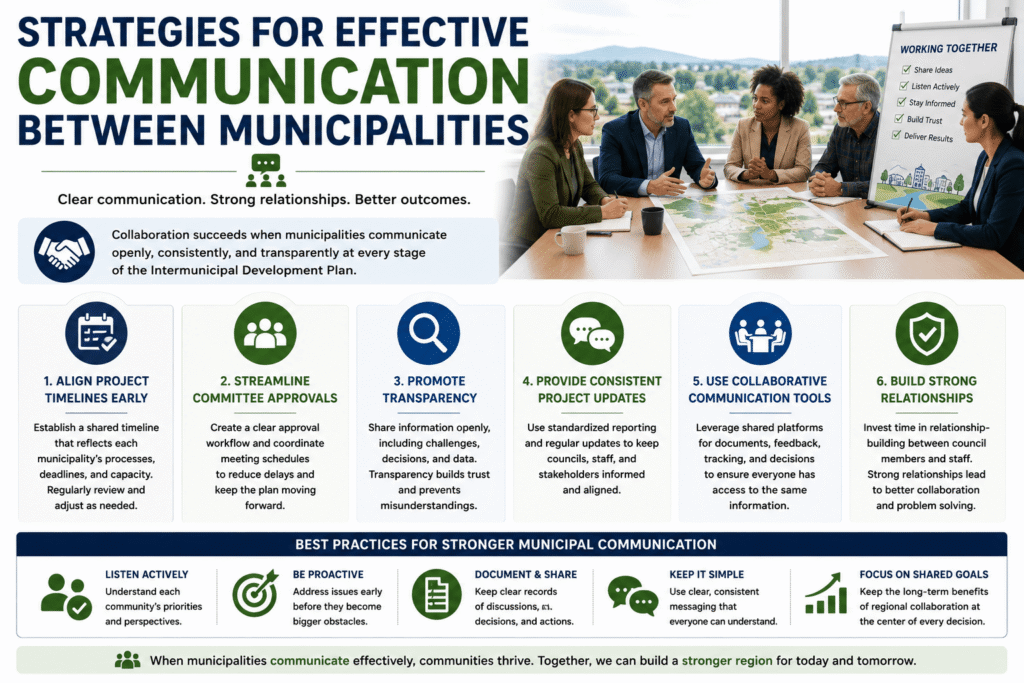
Communication plays a critical role in the success of every Intermunicipal Development Plan. Without strong communication systems, misunderstandings can quickly undermine even the most promising partnerships.
Misaligned project timelines represent a common source of frustration. Different municipalities often operate under separate budgeting cycles, approval processes, and political schedules. As a result, one municipality may be ready to move forward while another remains in earlier stages of review.
Delayed committee approvals can create additional bottlenecks. Important planning decisions often require review from multiple committees, departments, and elected officials. Slow approval processes can disrupt project schedules and create uncertainty among stakeholders.
Poor transparency frequently contributes to mistrust among council members and municipal staff. When information is not shared openly, assumptions and speculation can replace productive dialogue. This environment makes collaboration significantly more difficult.
Inconsistent project updates further complicate communication efforts. Stakeholders need timely access to accurate information regarding project status, policy changes, budget considerations, and implementation progress.
Regular meetings, shared reporting systems, and clearly defined communication protocols can improve coordination between municipalities. Transparent decision-making processes help build trust and encourage stronger working relationships among participating governments.
Securing Funding and Managing Shared Costs
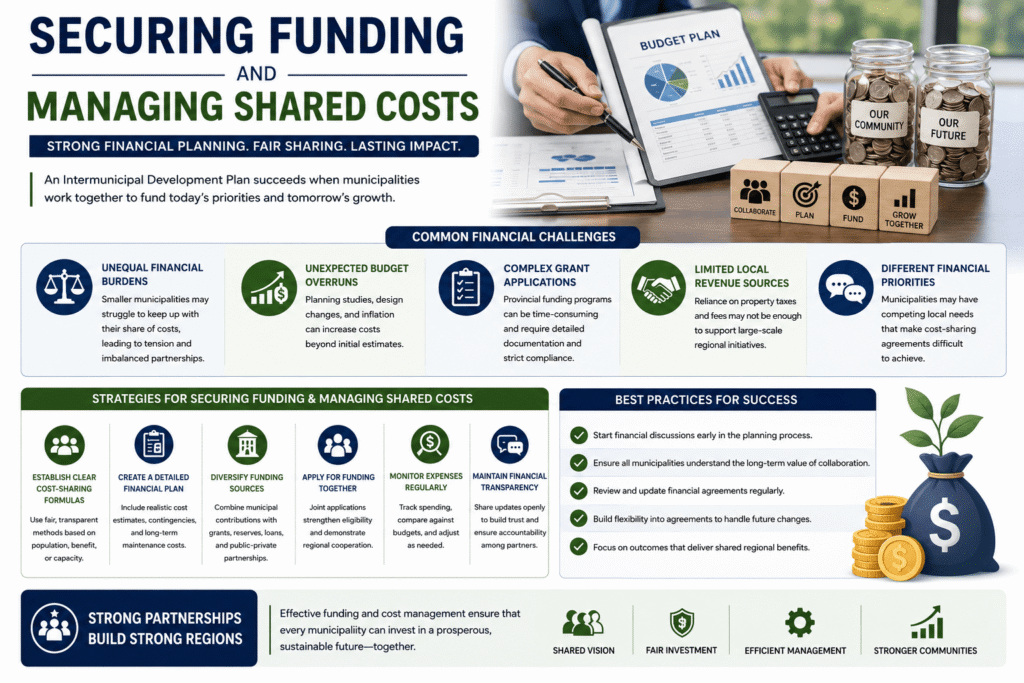
Financial management remains one of the most challenging aspects of implementing an Intermunicipal Development Plan. Even when municipalities agree on planning objectives, funding discussions can become highly complex.
Smaller municipalities often feel burdened by unequal financial responsibilities. Larger communities may have stronger tax bases and greater financial resources, while smaller municipalities face tighter budget constraints. Determining fair cost-sharing arrangements requires careful negotiation and mutual understanding.
Unexpected budget overruns during the planning phase can also create difficulties. Consulting services, technical studies, legal reviews, public engagement activities, and infrastructure assessments may exceed initial estimates. These additional costs can place strain on municipal budgets and delay project implementation.
Many municipalities encounter challenges when applying for provincial funding programs. Grant applications often require detailed documentation, technical studies, financial forecasts, and compliance with specific eligibility requirements. Navigating these processes can be time-consuming and resource-intensive.
To improve funding outcomes, municipalities should establish clear financial frameworks early in the planning process. Transparent cost-sharing agreements reduce uncertainty and help prevent future disputes.
Joint funding strategies can also strengthen grant applications by demonstrating regional collaboration and long-term planning commitment. Funding agencies often view cooperative projects more favorably because they provide broader regional benefits.
Long Term Implementation and Monitoring Success
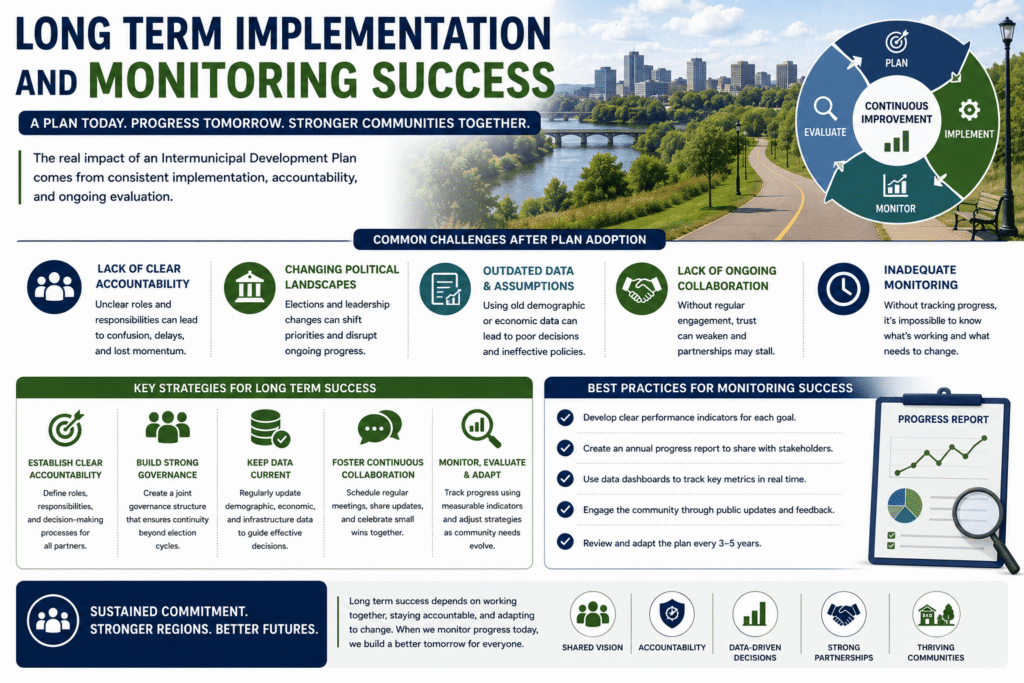
Creating an Intermunicipal Development Plan is only the beginning. Long-term implementation requires ongoing commitment, accountability, and adaptability from all participating municipalities.
One major challenge involves maintaining accountability after the final plan receives approval. Without clearly assigned responsibilities, important initiatives may lose momentum over time. Municipal staff changes, leadership transitions, and competing priorities can further weaken implementation efforts.
Political changes frequently affect long-term planning initiatives. Elections can bring new council members with different priorities and perspectives. These shifts may disrupt previously established agreements or alter the direction of ongoing projects.
Another concern involves the use of outdated demographic and economic data. Population growth patterns, housing demands, employment trends, and infrastructure needs can change significantly over time. Plans based on outdated information may lead to ineffective policy decisions and missed development opportunities.
Successful implementation requires regular monitoring and evaluation. Municipalities should establish measurable performance indicators that track progress toward key objectives. Periodic reviews help identify emerging challenges and allow planners to adjust policies when necessary.
Data-driven decision-making supports more accurate forecasting and improves the overall effectiveness of regional development strategies. Regular updates ensure that planning policies remain aligned with changing community needs and economic conditions.
As highlighted by Its Tech Club, long-term success depends not only on creating a comprehensive plan but also on maintaining strong partnerships after adoption. Continuous collaboration allows municipalities to respond effectively to future challenges and opportunities.
Conclusion
An Intermunicipal Development Plan provides a valuable framework for managing growth, coordinating infrastructure, and promoting regional cooperation. However, successful implementation requires municipalities to overcome challenges related to governance, communication, funding, community engagement, and long-term accountability.
By establishing shared objectives, maintaining transparent communication, developing fair funding arrangements, and regularly monitoring progress, municipalities can create stronger partnerships that benefit entire regions.
For readers of Its Tech Club, the most important lesson is clear. Effective intermunicipal planning succeeds when collaboration remains a priority long after the plan itself has been approved. Municipalities that work together consistently are better positioned to achieve sustainable growth, stronger economies, and improved quality of life for their residents.