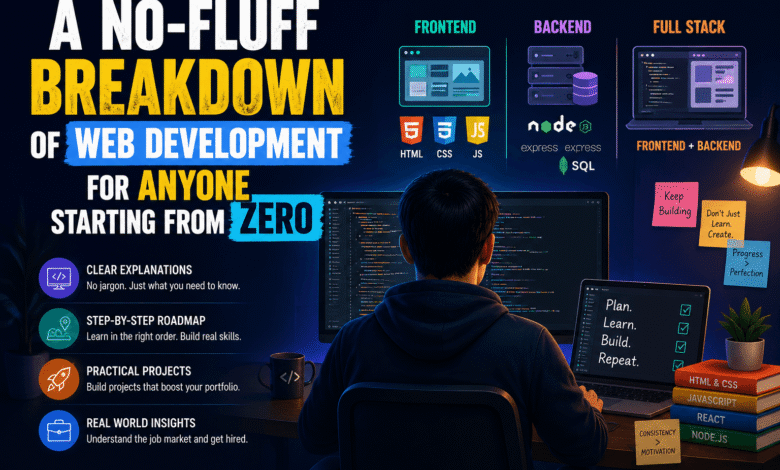
Web development often sounds intimidating and technical to beginners, yet it powers every website, application, and online business you interact with daily. From blogs and e-commerce stores to complex web applications, web development forms the backbone of the modern internet. Despite its ubiquity, most beginners don’t know where to start or which skills are truly essential. This guide breaks down web development in plain language, giving anyone starting from zero a realistic roadmap to follow without getting overwhelmed by jargon or flashy tutorials.
Understanding web development early helps you avoid wasted time on unnecessary tools and concepts. You don’t need to master everything at once, but you do need a clear understanding of the basics and the roles within the field. By the end of this guide, you’ll have a structured view of frontend, backend, and full-stack development, know which core technologies to prioritize, and understand how to approach learning in a way that prepares you for real-world projects and career opportunities.
Frontend vs Backend vs Full Stack: What These Actually Mean
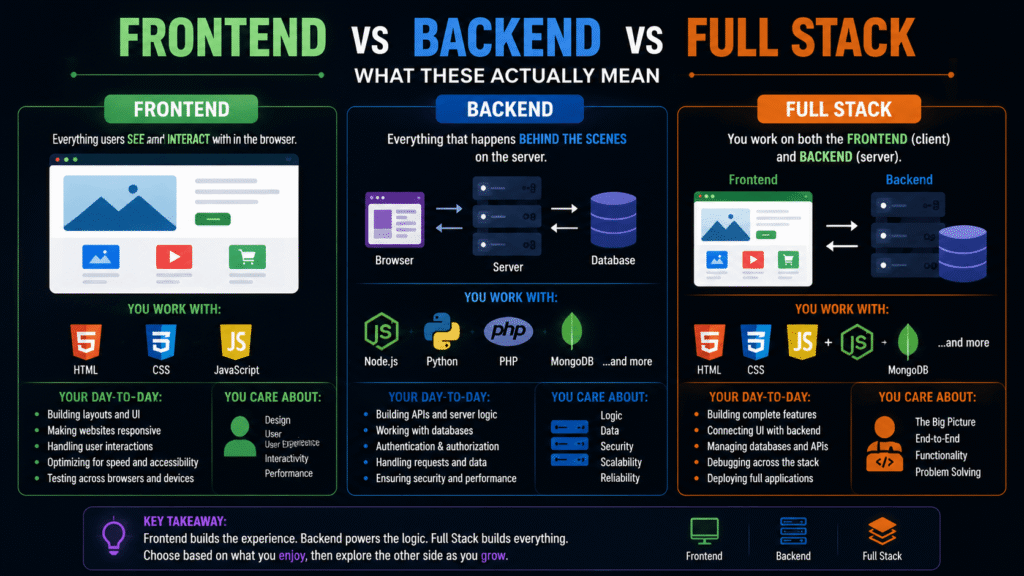
Terms like frontend, backend, and full stack are thrown around constantly, yet they are rarely explained in simple terms. The frontend is everything a user sees and interacts with on a website, including layouts, buttons, forms, and animations. Frontend developers focus on design, user experience, and making sure a website works smoothly across devices. Backend development, on the other hand, deals with the server side, databases, authentication, and business logic that power websites behind the scenes.
Full-stack development refers to the combination of both frontend and backend skills. While it sounds appealing, full-stack development requires mastering two very different skill sets, which can be overwhelming for beginners. Choosing the right path depends on your interests and goals. If you enjoy visual design and user interactions, frontend is a better start. If you like problem-solving, data, and building systems, backend might suit you. Understanding these distinctions early prevents wasted effort and helps you focus your learning on relevant skills.
The Core Technologies You Need Before Anything Else
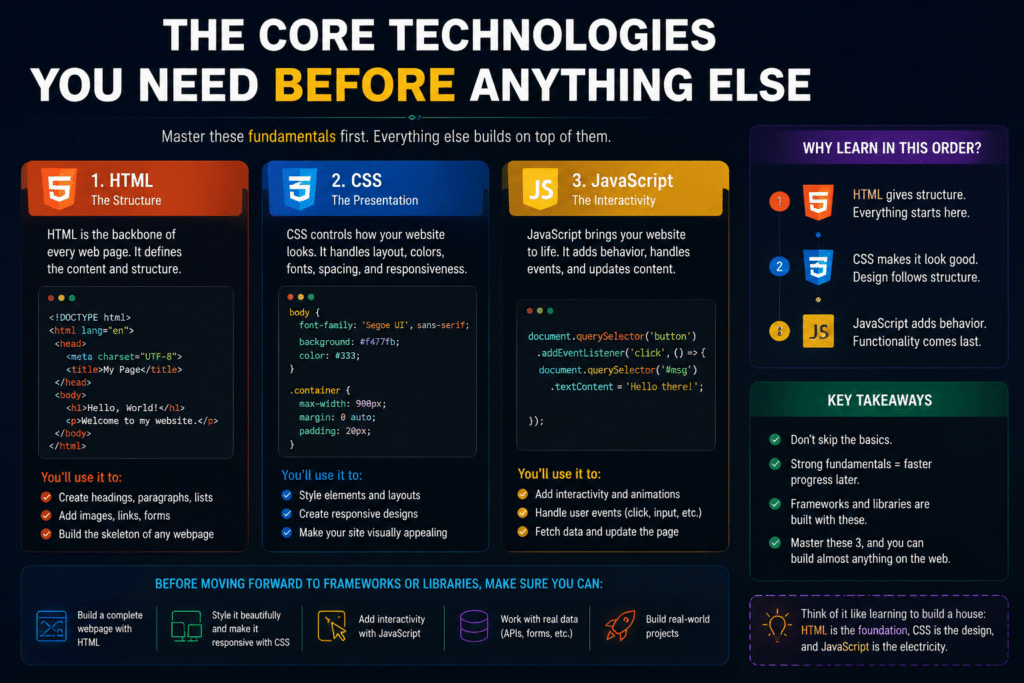
Before diving into frameworks or advanced tools, you need a strong foundation in HTML, CSS, and JavaScript. HTML provides the structure of web pages, CSS handles styling, and JavaScript makes pages interactive. Beginners often make the mistake of jumping into frameworks like React or Vue before mastering these basics, creating knowledge gaps that slow down progress and make debugging harder.
Learning HTML, CSS, and JavaScript in the correct order builds confidence and understanding of how websites function. HTML first allows you to structure content, CSS next to control layout and design, and JavaScript last to add interactivity. Skipping these fundamentals can leave you dependent on tutorials without fully grasping what’s happening behind the scenes. Solid core knowledge prepares you for frameworks, libraries, and more complex web development tasks later on.
How Long Web Development Actually Takes to Learn
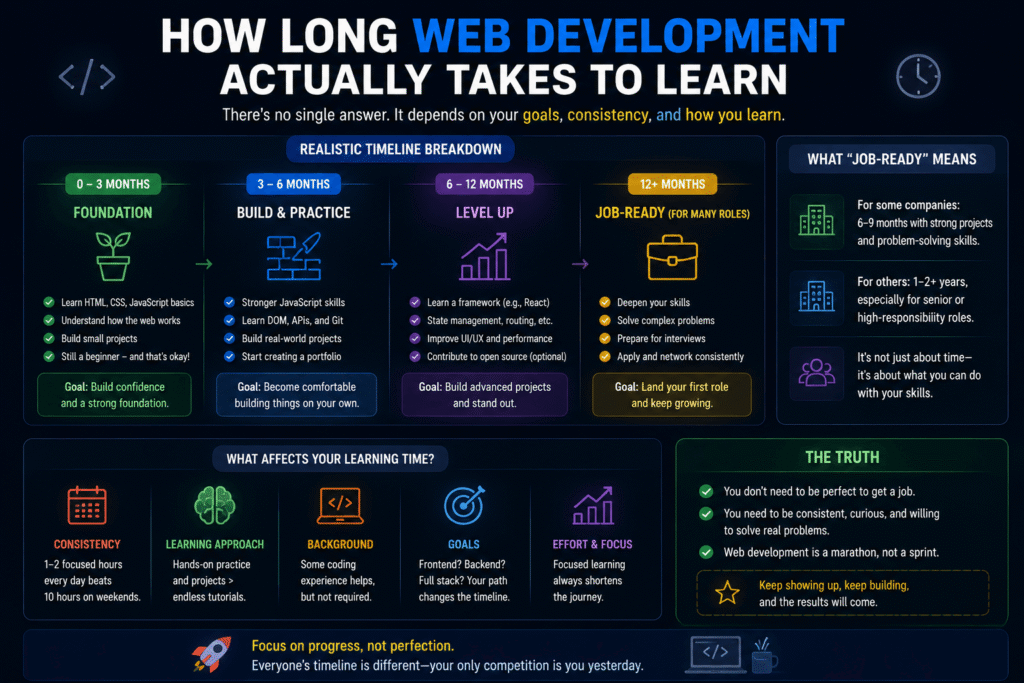
Many bootcamps and YouTube tutorials suggest you can learn web development in a few weeks or months, but this is misleading. Learning speed depends heavily on consistency, practice, and how effectively you apply what you learn. Spending focused time daily is far more effective than binge-learning over weekends. The timeline to reach a “job-ready” level varies significantly depending on the complexity of projects you take on and the roles you aim for.
Additionally, “job-ready” means different things at different companies. Some positions require proficiency in multiple frameworks and backend knowledge, while others value strong frontend skills or the ability to deploy functional websites. Understanding your target role and its expectations helps you plan a realistic learning path, avoid frustration, and measure progress against tangible outcomes rather than arbitrary timelines.
Choosing the Right Resources Without Getting Overwhelmed
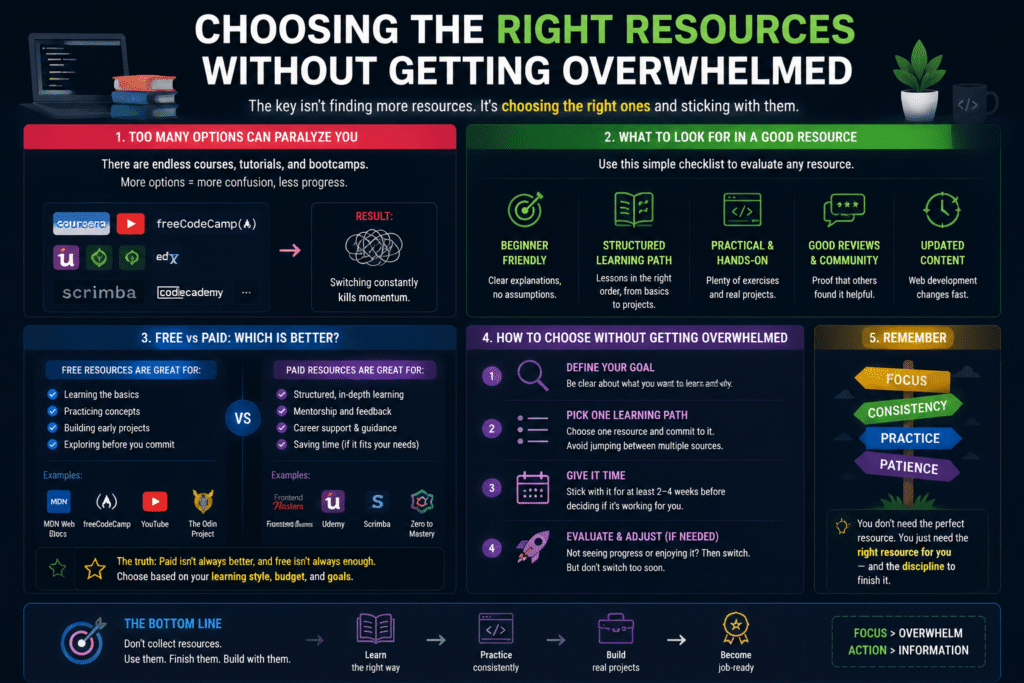
The internet is filled with free web development resources, but not all are high quality or beginner-friendly. Switching between too many resources can break momentum, confuse concepts, and reduce knowledge retention. Paid courses are not automatically better; they often emphasize flashy projects over fundamental understanding. Beginners need structured resources that balance theory and practice, with exercises that reinforce core concepts.
Start with one or two high-quality tutorials, books, or online courses and focus on completing projects within those resources. Avoid hopping between dozens of courses. Supplement your learning with forums, documentation, and real-world problem-solving exercises. The key is consistency and depth over quantity. A structured, focused approach ensures that you truly understand core concepts before moving on to frameworks or advanced tools.
Building Projects: The Step Most Learners Skip Too Early or Too Late
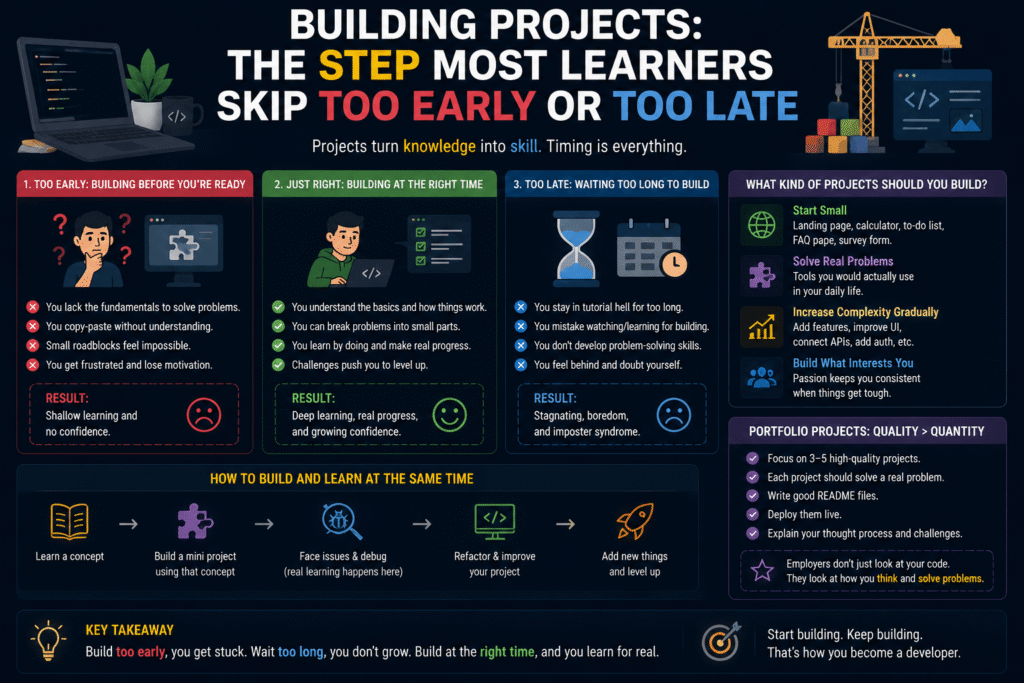
Building projects is the most critical step in web development learning, yet many beginners either start too early or wait too long. Starting projects without understanding the basics leads to frustration, copy-paste learning, and incomplete knowledge. Waiting too long keeps learners stuck in tutorials without applying skills practically. Projects should strike a balance between reinforcing fundamentals and challenging problem-solving.
Your early projects don’t need to be complex. Simple web pages, portfolios, or small interactive apps allow you to apply what you’ve learned in HTML, CSS, and JavaScript. As you grow, progressively tackle more complex projects that integrate APIs, databases, or backend logic. Portfolio projects should solve real problems or demonstrate functional skills rather than just showcasing syntax. This approach not only builds confidence but also prepares you for job interviews and practical work.
What the Web Development Job Market Actually Expects
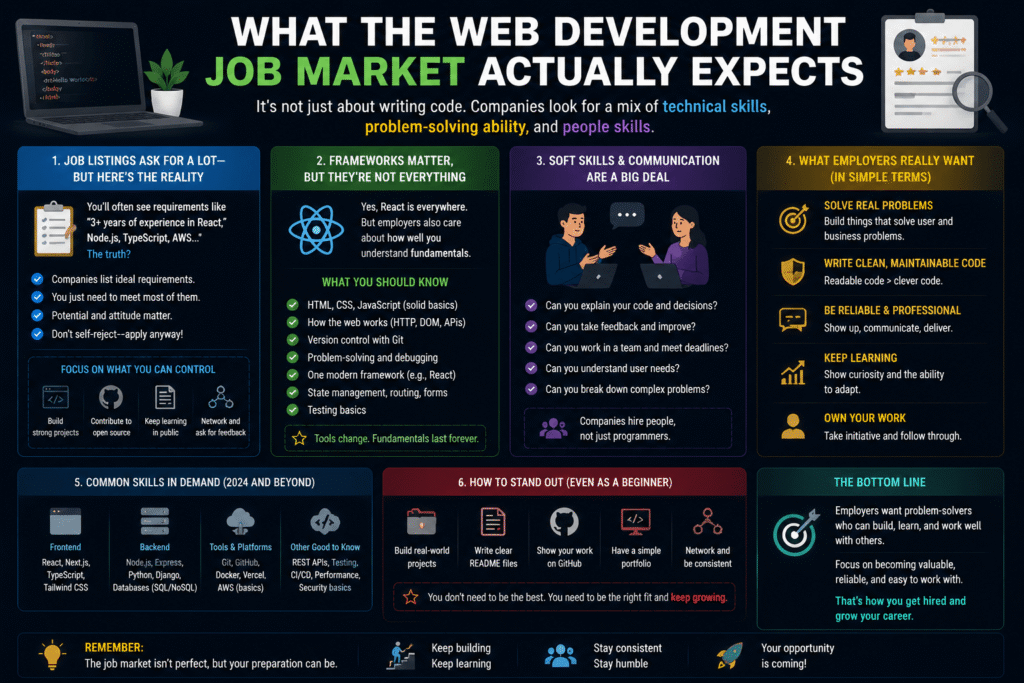
Job listings often ask for years of experience that self-taught beginners don’t have, creating an intimidating barrier. In reality, many companies prioritize practical skills and problem-solving ability over formal experience. Frameworks like React dominate job postings, but expertise in one framework is usually sufficient when combined with strong core web development knowledge.
Soft skills, communication, and collaboration are also evaluated heavily. Being able to explain your code, understand project requirements, and work effectively in a team is as important as technical ability. Understanding the job market’s expectations helps you focus learning on the right technologies, project types, and workflows that will prepare you for real opportunities. Demonstrating completed projects and clear understanding often outweighs formal experience in landing your first role.
Conclusion
Web development is a broad and exciting field that powers every website, app, and online business you interact with. Beginners can feel overwhelmed by jargon, frameworks, and countless tutorials, but focusing on the fundamentals, consistent learning, and practical projects provides a clear roadmap. Understanding frontend, backend, and full-stack roles, prioritizing HTML, CSS, and JavaScript, and building projects that solve real problems ensures steady progress.
By choosing high-quality resources, setting realistic timelines, and practicing regularly, anyone starting from zero can become competent in web development. Applying these skills in portfolio projects and understanding job market expectations prepares learners for professional opportunities. Starting small, building systematically, and reinforcing knowledge through projects makes web development achievable for anyone willing to put in consistent effort.
You May Also Like: